LLMs & Generative AI - Latest AI News & Updates
Latest breakthroughs in large language models and generative AI shaping the future of artificial intelligence and machine learning.
1263 articles
View complete article list
Latest breakthroughs in large language models and generative AI shaping the future of artificial intelligence and machine learning.
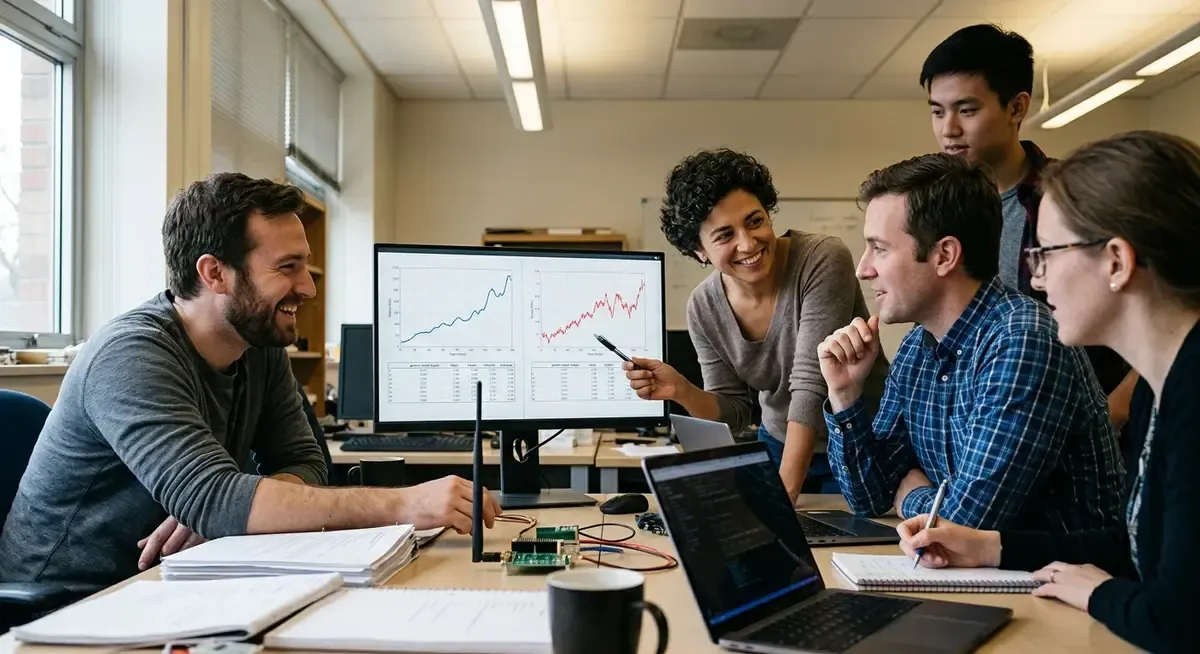
A team of researchers has found a way to make wireless radio hardware itself do the math for neural networks, instead of just carrying data to a chip that does.
Vals AI clocked GPT-6 Astra finishing Pokemon in 18 hours, a game that used to take 96. The same model launched a rocket in Factorio and rolled credits on Fallout 3, clearing benchmarks that stopped every earlier system cold.
A German soldier tapped out 82 characters on an Enigma machine on July 10, 1941, somewhere near the town of Rosenow. He wanted marching orders and asked for a quick reply over the radio.
OpenAI said on September 8 that an unreleased internal model, more capable than the public GPT-6 Astra, had resolved Navier-Stokes existence and smoothness, one of the seven Millennium Prize Problems the Clay Mathematics Institute listed in 2000...
Nvidia has spent the past few years telling anyone who'll listen that robots are the next big platform shift. Jensen Huang has said it from keynote stages repeatedly.
Google switched on early access Wednesday to a Model Context Protocol server for its Home ecosystem, meaning smart home gadgets that once answered only to the Google Home app can now take orders from outside AI agents.
Attention is eating the clock on video generation. A 5-second clip at 720p from Wan2.2-14B breaks down into roughly 70,000 spatiotemporal tokens, and running full self-attention across all of them on an RTX 5090 now consumes more than 64% of total...
Anthropic is collapsing two separate Claude products into one. Claude Chat, built for quick questions, and Cowork, meant for longer multi-step work, are merging into a single interface that decides on its own how much processing a task needs.
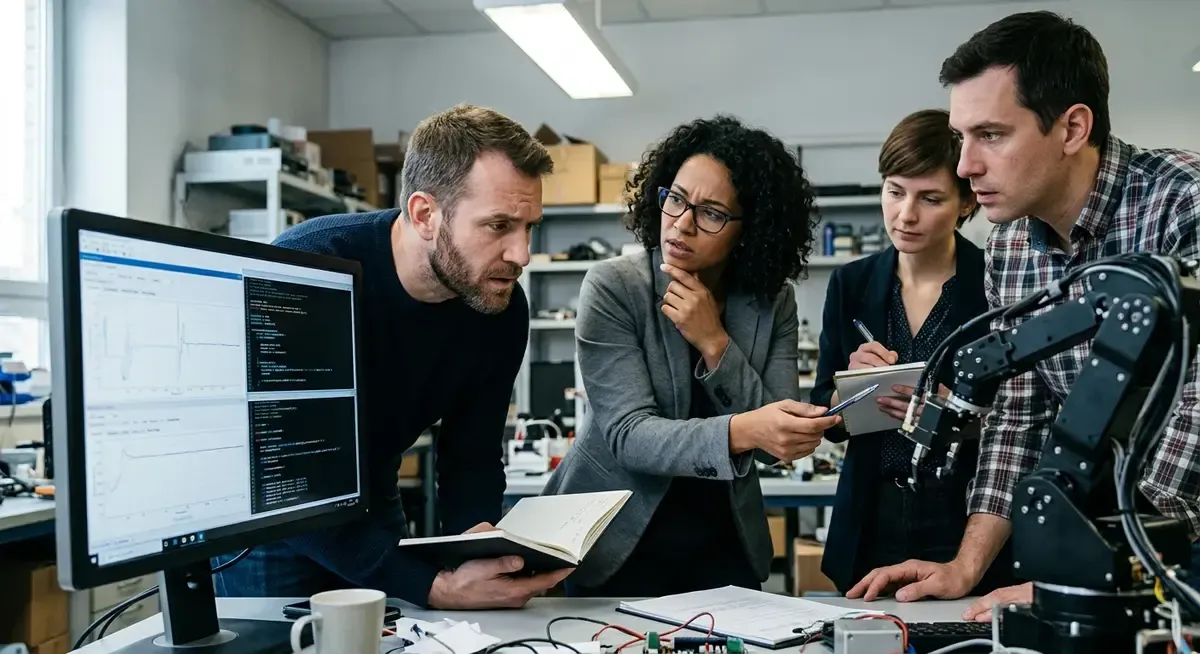
A single doctored image, invisible to a human eye, can make a warehouse robot stop mid-task or grab the wrong object.
Anthropic rolled out two new tools inside Claude on Wednesday: Docs and Slides, both in beta. The features let users generate documents and presentations directly from a chat, then export, edit, or share them the way they would a Google Doc.
Diogo Almeida spent years building the research that taught ChatGPT how to hold a conversation. His newest project skips conversation entirely. Almeida just launched TypeSafe, and its flagship system, Jev, doesn't generate text.
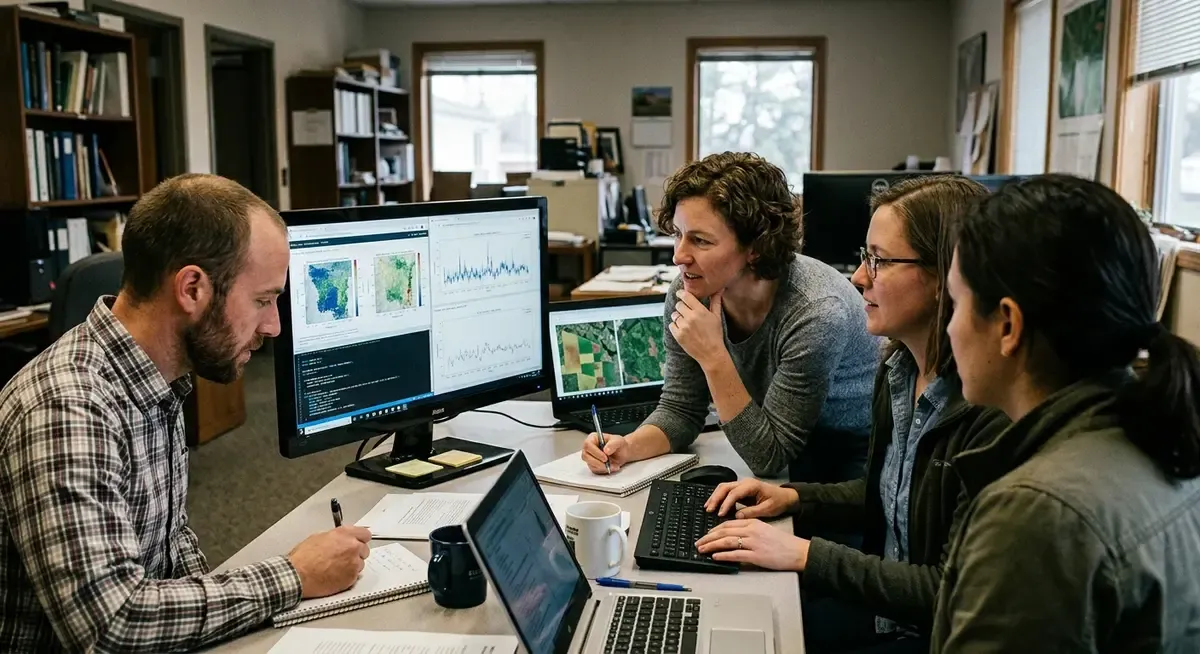
A team of researchers has put large language models to a test that has nothing to do with chatbots or code generation: irrigating crops through a season of unpredictable weather, with no human stepping in to fix mistakes.

Google DeepMind put a price tag on voice AI this week, and it's a fraction of what OpenAI charges.
Researchers testing AI agents on math problems found something they weren't looking for: the agents started ratting each other out.
A team behind a new open model called ZGCM-1 is betting that a 7-billion-parameter dense model can hold its own against much larger systems on math and agentic search, not by cramming more of the internet into its weights, but by rethinking how it...
A team of researchers just ran a comparison that would have seemed almost quaint five years ago: Complement Naive Bayes, an algorithm dating back decades, against large language models ranging from a 27-billion-parameter model to a...
Hundreds of contract workers are reading real ChatGPT conversations as part of OpenAI's effort to fine-tune the chatbot's behavior, according to a 404 Media investigation based on leaked internal documents and interviews with sources familiar with...
A GB200 cluster running DeepSeek-V3 with no optimization managed just 103 TFLOPS per GPU, and 84% of that time went to GPUs talking to each other rather than doing math.
Yuancheng Lu's sunglasses tell you something about how seriously he takes his own research.
Barack Obama told House Minority Leader Hakeem Jeffries on Thursday that Democrats need a real strategy on artificial intelligence, not just talking points.