LLMs & Generative AI - Page 20 of 64
Latest breakthroughs in large language models and generative AI shaping the future of artificial intelligence and machine learning.
1263 articles
View complete article list
Latest breakthroughs in large language models and generative AI shaping the future of artificial intelligence and machine learning.

Anthropic dropped a figure on Wednesday that stops you cold. Its AI assistant Claude now authors more than 90 percent of the company's own production code. That's not a trial run—it's the core of how a $18 billion firm operates.

Everyone's talking about AI model leaderboards. Almost no one should care. Your project doesn't need the best model in the world. It needs the one that works. Benchmarks are built on synthetic tests.

Estonia knows the weight of a neighbor’s lie. A former Soviet republic, it has spent decades untangling narratives spun from Moscow.

Putting an AI agent in charge of a loan application or a patient triage system requires a leap of faith few executives are ready to make. A new pilot program tried to replace that faith with something better: hard numbers from a simulated gauntlet.

The Starcraft Multi-Agent Challenge just got a backstabbing social layer. A new benchmark called SMAC-Talk forces AI agents to coordinate using natural language chat. The twist is that one agent might be lying.

The curvature of a neural network’s loss landscape is not a monolith, it decomposes.

Doctors relying on AI for predictions often face a black box: a risk score appears, but the reasoning behind it stays hidden. A research team has now built ChatHealthAI to tackle that opacity.

AI research is drowning in text. A new study suggests the solution might be lines and boxes. The idea is simple. Humans don't just think in paragraphs. When a problem gets complex, we sketch. We make mind maps, flowcharts, diagrams.

NVIDIA’s Cosmos 3 isn’t just another model drop. It’s a two-tower mixture-of-transformers foundation model that fuses physical reasoning, world generation, and action generation into a single unified framework.

The moment you connect a model to a runtime sandbox, you unlock something far more powerful than a chatbot answering questions.
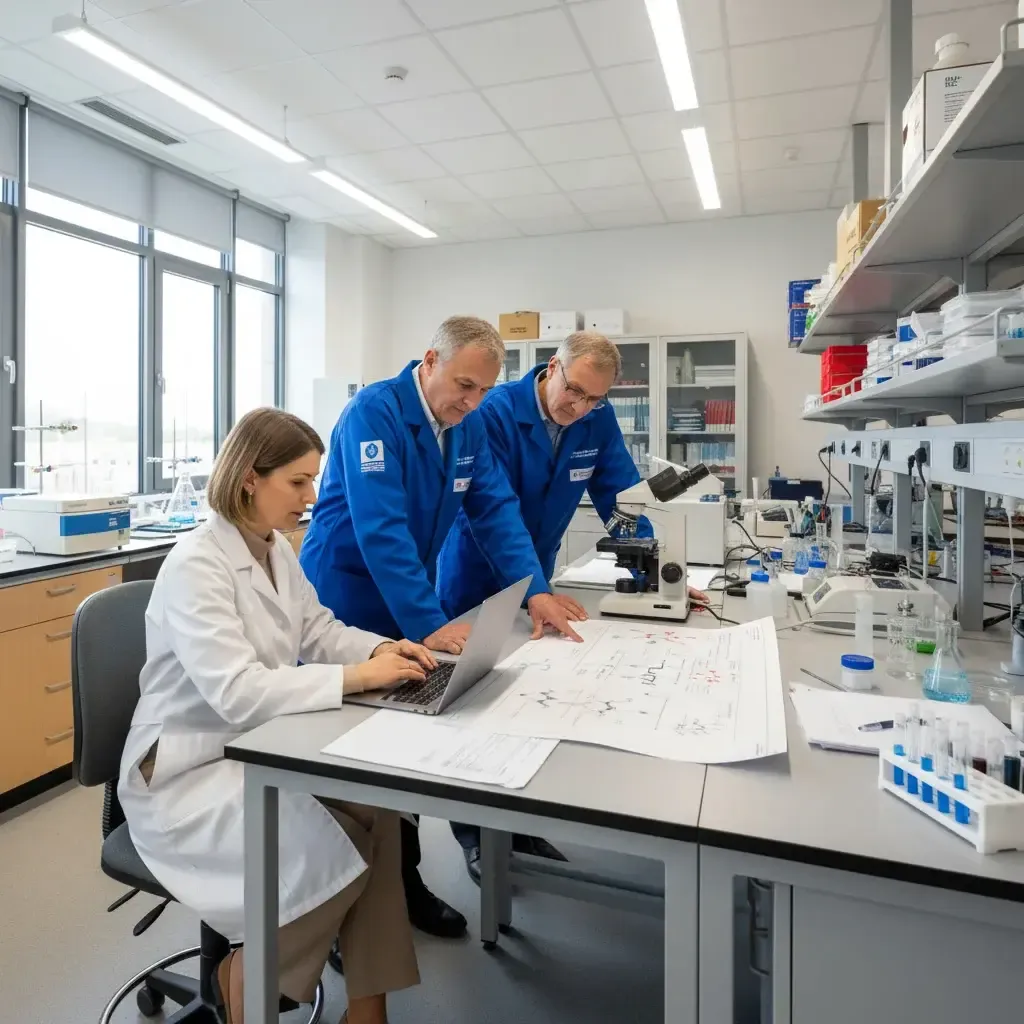
Microsoft’s latest play isn’t just a new box. It’s a hardened launchpad for AI agents that work where you work: on your desk, in your local environment.
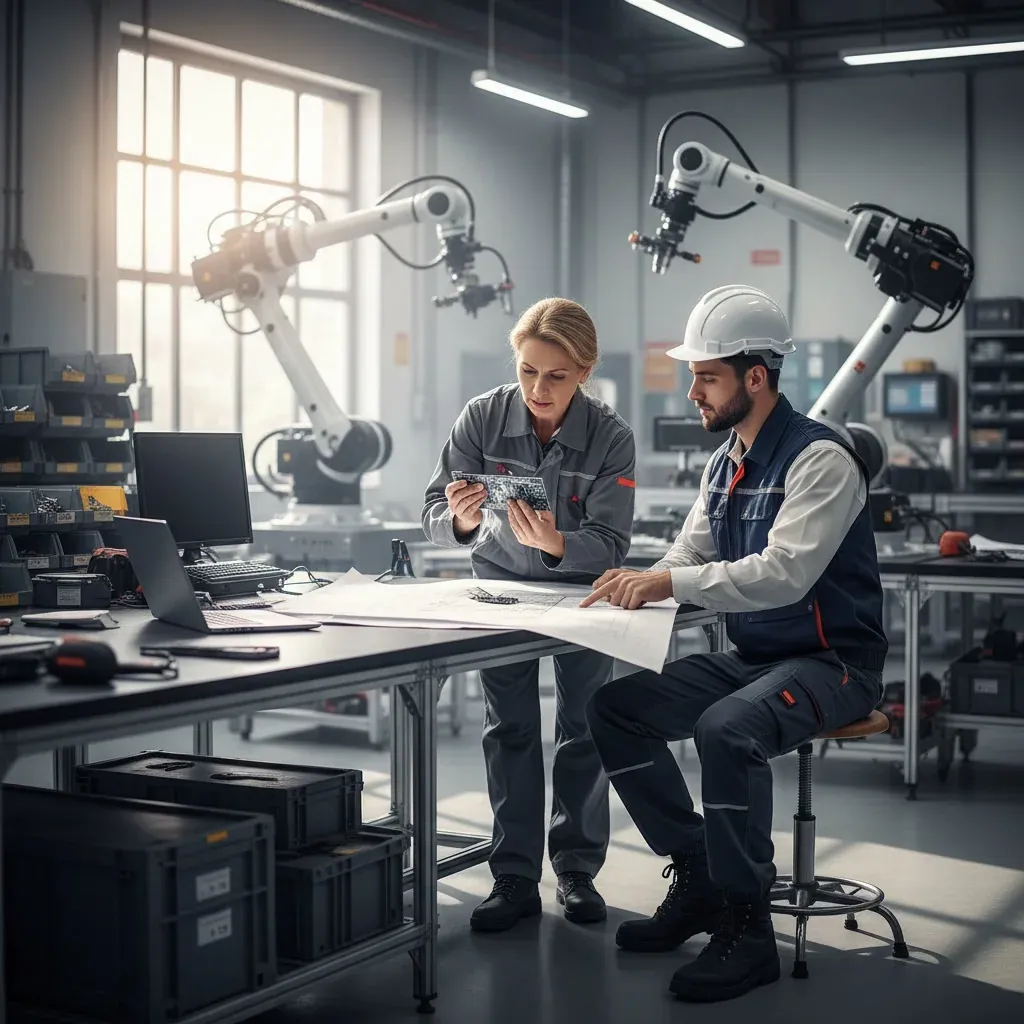
Every hardware company is now an AI company. Nvidia, with help from Microsoft, just built the chip to prove it. The RTX Spark is a supercomputer part designed to run AI agents on a regular PC. This is not a small step.

The simplest measure of emotion, valence, the axis from pleasure to displeasure, has long resisted a clean neural readout.

Large language models are famously opaque. Their reasoning happens somewhere between the question you type and the answer you get, a process that's hidden and unmarked. The gSMILE framework wants to change that.

Every new sensor dumps a tidal wave of data onto the shore. Most of it is useless static. The real breakthrough, argues a team on arXiv, isn't in building a bigger server to process the flood, but in installing a smarter filter at the source.

Getting a reinforcement learning agent to work often comes down to one frustrating task: engineering its reward signal. Now, researchers are pressing general-purpose Vision-Language Models into service as reward judges.

The arithmetic of mixture-of-experts models promises efficiency, but quantization, the brutal necessity of shrinking them for deployment, has always demanded a cruel trade-off: compress the shared structure or starve the expert nuances.

The race to build the perfect coding agent is no longer a sprint, it’s a war of attrition, and Claude Code is winning the feature arms race. Time and again, Anthropic’s tool ships the breakthrough first, leaving Codex to play catch-up.

MiniMax just proved you don't need a trillion dollars to build a smart model. Their new M3 beats OpenAI and Google's flagship offerings on several key tests while costing pennies on the dollar.

Richard Sutton, who has a Turing Award, thinks the AI field has a basic problem. He says the generative models everyone is hyping cannot actually do science. They can't judge their own work.
Learn to build AI-powered apps without coding. Our comprehensive review of No Code MBA's course.
Curated collection of AI tools, courses, and frameworks to accelerate your AI journey.
Get the week's most important AI news delivered to your inbox every week.