Market Trends - Latest AI News & Updates
Emerging AI industry trends, market forecasts, impact assessments, and strategic intelligence driving the AI revolution.
125 articles
View complete article list
Emerging AI industry trends, market forecasts, impact assessments, and strategic intelligence driving the AI revolution.
A surgeon steering a catheter through a blood vessel during a stroke intervention relies on live X-rays to see where the tool is going. The problem is that an X-ray is flat, and a blood vessel or a lesion isn't.

Google Research put out a new forecasting model this week called TimesFM-3, built to predict what happens next in a stream of numbers like daily sales, using more than just the numbers themselves.
The companies spending the most on AI just spent less of it. Ramp's AI Index for September 2026 shows median per-employee AI spending among the top 1 percent of US corporate spenders dropped 9.7 percent in August, settling at $7,205.

Contracts obtained by The Intercept show OpenAI, Anthropic, and other frontier AI companies are doing more for the Pentagon than selling software licenses.

Last week's reports on the OpenAI-Hugging Face hack were supposed to close the book on a July incident that already looked bad enough. Instead, they opened a new fight, this time over language.
Kelly Shen ’17 spends her days figuring out what a painting might sell for before it ever hits the block.

February 6, 2026, might mark a small milestone in AI history, the day humans stopped being the main users of their own technology.
A robot arm in Cambridge, Massachusetts, watched a short video of a person unzipping a purse and pulling out banknotes. Then it did the same thing to a different purse, one it had never seen.
DeepSeek's V4 Flash has spent the past few weeks sitting near the top of model leaderboards, with developers on X calling it a "total monster" for coding and agent work.

Writer put a number on the problem everyone in enterprise AI has been dancing around: token spending.
Tim O'Reilly has been repeating the same line for three decades: create more value than you capture.

Ask a room of teenagers about the last election or the price of concert tickets, and you'll get an earful.
NVIDIA released NeMo Switchyard, a library for routing AI agent workloads across multiple language models instead of locking an application into one.

OpenAI cut the price of GPT-5.6 Luna by 80% this week, dropping the smallest model in its frontier lineup to $0.20 per million input tokens and $1.20 per million output tokens.
Andrew Ceja spent part of last week in a San Leandro warehouse pulling wooden blocks from a Jenga tower, slowly, one at a time, while wearing a headset that tracked his eyes and his brain waves.
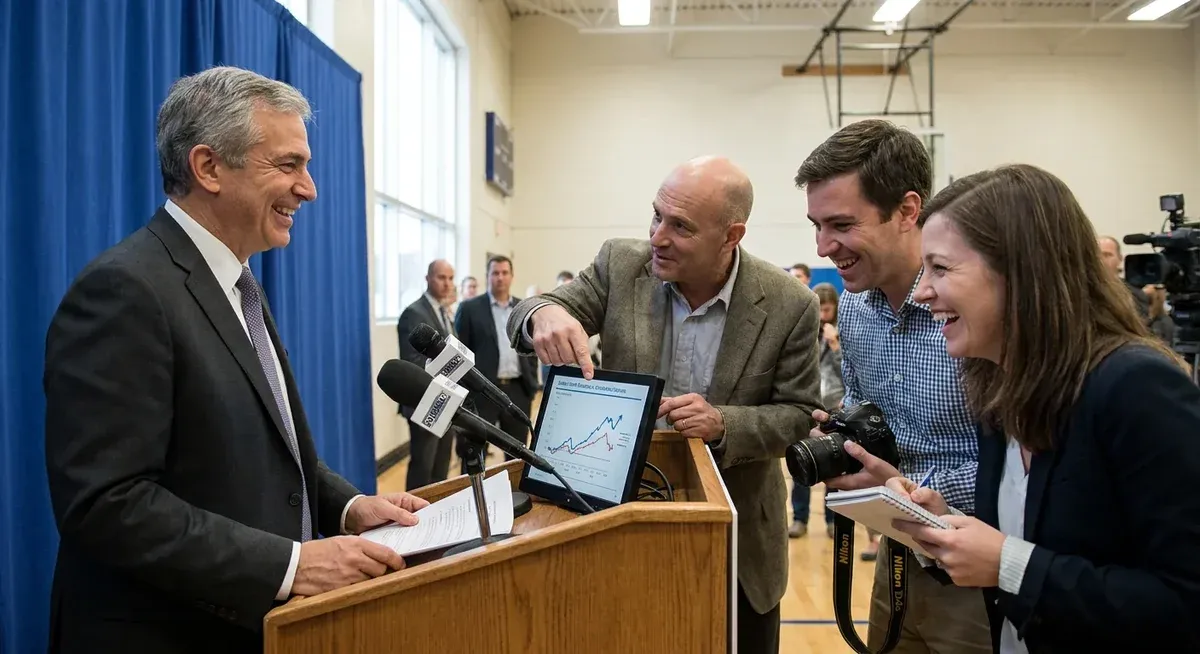
Nearly 200 utility companies and data center developers have signed on to President Trump's "rate payer protection pledge," a commitment his administration first floated in March to shield ordinary Americans from the rising cost of powering AI.

NVIDIA researchers say a new decoder built on Ising machine principles has knocked down logical error rates for color codes by more than 300 times compared to earlier methods.
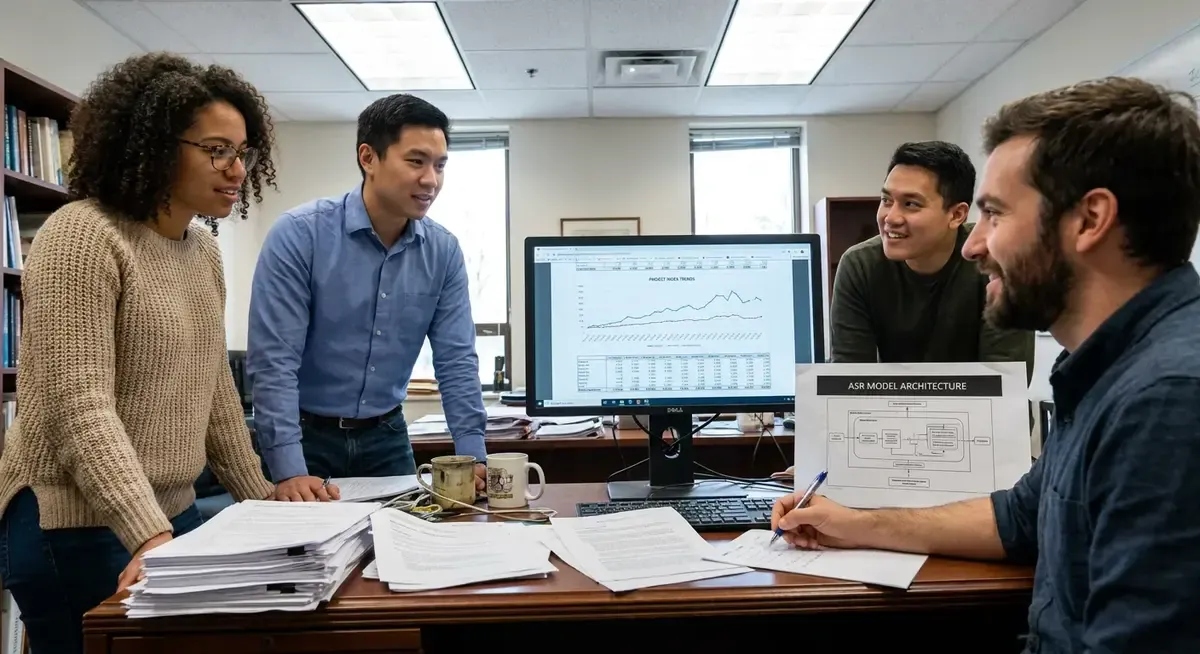
A team of six researchers, including Zijin Gu, Tatiana Likhomanenko and Navdeep Jaitly, is pushing back on the assumption that fixing speech-to-text errors requires a large language model.

The difference between an AI that predicts an outcome and one that makes a choice is what separates analytical AI from agentic AI.

Everyone is building AI brains. Now they's all shouting in different languages. The bet was simple: more data plus more computing equals smarter machines. It worked. Giants trained on internet-scale information can write, draw, and reason.