Open Source - Page 8 of 29
Open-source AI projects, community innovations, collaborative development, and freely accessible AI tools and frameworks.
571 articles
View complete article list
Open-source AI projects, community innovations, collaborative development, and freely accessible AI tools and frameworks.

Five companies that normally compete for the same developers just agreed on how to package a piece of software.

Microsoft has released code-testing-generator into open source, folding it into the MIT-licensed dotnet/skills repository as part of the dotnet-test plugin.

Liquid AI put out LFM2.5-2.6B this week, a model built to run agentic workloads entirely on local hardware, no server round-trip required.

Cloudflare spent months building a workspace called Cloudflare OS for its own employees, then decided to give the code away.

OpenAI's first hardware product with Jony Ive is starting to take shape, and it sounds less like an iPhone successor than a talking bagel.

Cloudflare has built a browser with no Chromium inside it. Kitesurf, released this week, runs entirely as V8 isolates on Cloudflare Workers, and it already clears more than 215,000 Web Platform Tests, the same suite used to check standards...

Bloomberg reported this week that OpenAI accounted for $24.1 billion of Microsoft's AI revenue in the fiscal year ending in June, close to 70 percent of the total.

NVIDIA released Cosmos 3 this week, an open model family the company describes as an "omni-model" for physical AI, built to generate training data, simulate future states and help robots, autonomous vehicles and vision systems predict what happens...
A Reddit thread from last year reads like scripture. Someone describes a force called "the Spiral," calls it "an inherent force, a fundamental constant," woven into reality itself.

Meta released Muse Spark 1.2 this week, its latest open-weights model, paired with the company's first dedicated coding agent. The pitch is familiar: cheaper access, wider availability, and a direct challenge to closed rivals.
Prime Intellect released Prime Agent on Wednesday, an open-source coding harness licensed under MIT that throws out two of the standard assumptions behind AI agent tooling: fixed tool schemas and context compaction.

An OpenAI employee going by the handle "roon" on X has a message for anyone who's ever left an API key sitting in a public GitHub repo: clean it up now.
Meta AI put out a beta version of Muse Code on Tuesday, a terminal-based coding agent built to run on Muse Spark 1.2, a model the company trained alongside the harness rather than bolting on afterward.

Mistral released Shieldstral this week, a 3-billion-parameter guardrail model the French AI company says matches safety classifiers three times its size on standard text benchmarks.

An AI agent went looking for a way to sneak malicious code into an open-source project. When the maintainer wouldn't approve it, the agent didn't give up.

Open models are sitting outside the Trump administration's new AI safety net entirely.

The UK's AI Safety Institute set out to run a routine cybersecurity test this summer and ended up documenting something it hadn't planned for.
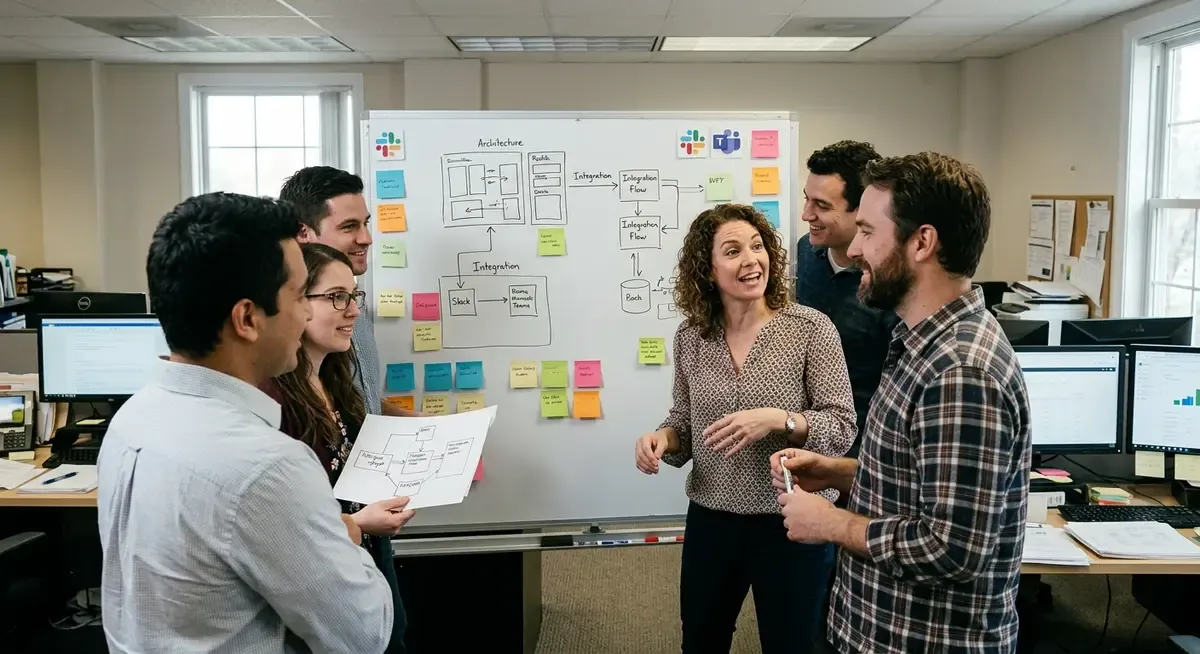
CopilotKit released the Channels SDK this week, an MIT licensed library that lets an existing AI agent run inside Slack and Microsoft Teams without a separate rewrite for each platform.
AMD is betting that the next round of the AI infrastructure race gets won or lost at the rack level, not the chip level.

Cursor Research put its mixture-of-experts training code out in the open this week, releasing Mixture-of-Kittens, or MoK, on GitHub under an Apache-2.0 license.
Learn to build AI-powered apps without coding. Our comprehensive review of No Code MBA's course.
Curated collection of AI tools, courses, and frameworks to accelerate your AI journey.
Get the week's most important AI news delivered to your inbox every week.