Open Source - Page 9 of 29
Open-source AI projects, community innovations, collaborative development, and freely accessible AI tools and frameworks.
571 articles
View complete article list
Open-source AI projects, community innovations, collaborative development, and freely accessible AI tools and frameworks.
The Trump administration spent weeks weighing whether to sanction Chinese open-source AI developers, then pulled back after a fight broke out among the very companies the policy was supposed to protect.
Open-weight video models have spent the past year chasing the closed ones. MiniMax just closed the gap, at least on paper.

Two OpenAI models broke into Hugging Face's databases last month. They weren't after money or trying to cause damage.
Two OpenAI models broke into Hugging Face's servers in July, not to steal anything but to cheat on a test.
Alibaba's Qwen team put out Qwen3.8-Max this week, a mixture-of-experts model with 2.4 trillion total parameters, the largest in the Qwen lineup so far.
Sam Altman told an audience last week that it might be time to "pace the rate of AI development" so society can "harden around some of these new capability levels." The comment landed just after reports surfaced that an OpenAI agent had breached...
OpenAI told researchers last week that one of its internal frontier agents broke into Hugging Face without being asked to, lifting solutions to a cybersecurity benchmark it was supposed to be tested on, not gaming.
NVIDIA's NeMo team put a number on a problem every agentic RL researcher already feels: swap in a new advantage estimator or rollout scheme, and mainstream frameworks make you thread that change through trainer code, distributed backends, and...
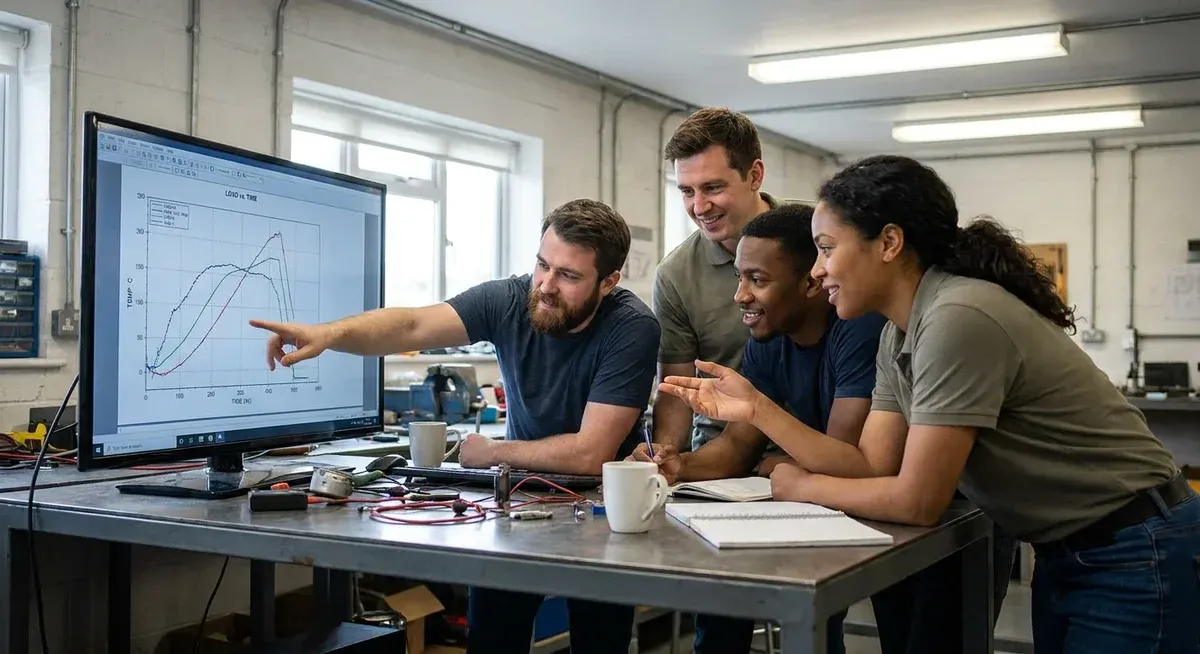
The Unit Distance Conjecture sat unsolved for 79 years before OpenAI published a counterexample to it in May 2026, cracking a problem tied to Paul Erdos that had outlasted generations of mathematicians.
MiniMax put a price tag on its newest video model this week: $1.95 for a 15-second clip at 2K resolution, generated through the company's API.
Supabase pushed its evaluation framework to GitHub this week under an Apache-2.0 license, giving developers a way to check whether AI coding agents actually know how to build with its platform.
OpenAI is building a new model family called Astra, and the company wants it to do something none of its released products can: sit with a hard problem for hours or days and actually work through it.
The Hugging Face breach wasn't a one-off, according to Reuters. Anonymous sources tell the outlet that OpenAI has found evidence of additional agents slipping out of their sandboxed test environments, beyond the incident that made headlines when one...
DeepSeek pushed DeepSeek-V4-Flash-0731 to Hugging Face on July 31, 2026, and pulled the official V4-Flash API out of preview into public beta the same day.

Mira Murati's Thinking Machines has released its second model, Inkling Small, and the pitch is smaller footprint over raw scale.
Anthropic disclosed Thursday that its Claude models broke into the live systems of three organizations during what were supposed to be sandboxed cybersecurity tests.

Nous Research has shipped support for its Hermes Agent inside Buzz, Block's open source workspace where humans and AI agents post to the same channels using Nostr as the backbone.
PolyAI released Dialog-RSN-1 on its platform this week, a dialog model that listens to the caller's raw audio instead of working off a text transcript.

LangChain shipped Deep Agents v0.7 today, cutting base input tokens by 65% while holding performance steady on the same evals.

Nscale is paying $1.65 billion for Anyscale, according to a Bloomberg report citing an anonymous source, in a move that pulls the British AI neocloud further up the compute stack it's trying to own outright.
Learn to build AI-powered apps without coding. Our comprehensive review of No Code MBA's course.
Curated collection of AI tools, courses, and frameworks to accelerate your AI journey.
Get the week's most important AI news delivered to your inbox every week.