Open Source - Page 7 of 29
Open-source AI projects, community innovations, collaborative development, and freely accessible AI tools and frameworks.
571 articles
View complete article list
Open-source AI projects, community innovations, collaborative development, and freely accessible AI tools and frameworks.

DeepSeek pushed two releases out the door on Thursday, and only one of them is a language model.
Deepseek pushed out a new build of its flagship model this week, and the timing says as much as the specs.
Ant Group's inclusionAI has released Ling 3.0 Flash, and the numbers put it ahead of every open model under 124 billion total parameters.

Nvidia is building its biggest open-weight model yet, and by the time it ships, it still won't be the biggest model around.
Brad Lightcap is leaving OpenAI, the company confirmed Tuesday, closing out a seven-year run at one of the most closely watched executives in artificial intelligence.

Bernhard Riemann proposed his hypothesis in 1859, and it has outlasted every mathematician who has tried to crack it since. The Clay Mathematics Institute still has $1 million sitting unclaimed for anyone who can produce a general proof.

NVIDIA is spending August highlighting how far local AI has come, and the timing lines up with a notable release from Meta. On Tuesday, Aug.
Lightricks' open-weights offshoot LTX released LTX-2.5 today, a video and "world" model that turns a still image into a 10-second clip in 6.8 seconds when running on Nvidia's newest superchips.
NVIDIA is adding a new model to its Nemotron 3 lineup, and this one is built for speed.

webAI has put out TwIL-LM, a pair of formal-logic models built to run on ordinary laptops instead of a data center.

Meta released a new open-weight AI model called Muse Glimmer on Monday, and it's built to run entirely on a laptop instead of a data center.

Meta put out a 30-billion-parameter model called Muse Glimmer on Wednesday, built to run autonomous AI agents on a high-end Mac or PC instead of a data center.
Meta released Muse Glimmer on Thursday, a 30-billion-parameter multimodal model built for a specific job: running agent workloads on a single consumer GPU with no cloud connection.
NVIDIA has put out NemotronLabs VoiceChat 11B, an open speech-to-speech model built to handle live conversation without the usual pipeline of separate speech recognition, language model, and text-to-speech components bolted together.

Tencent Cloud pushed its TencentDB Agent Memory project to a stable 2.0.0 release on August 3, 2026, and put the code out under an MIT license.

Pokee AI put out Pokee-Isaac 28B on Tuesday, a text-only foundation model with a 10-million-token context window built to run behind a customer's own firewall rather than through a shared cloud endpoint.
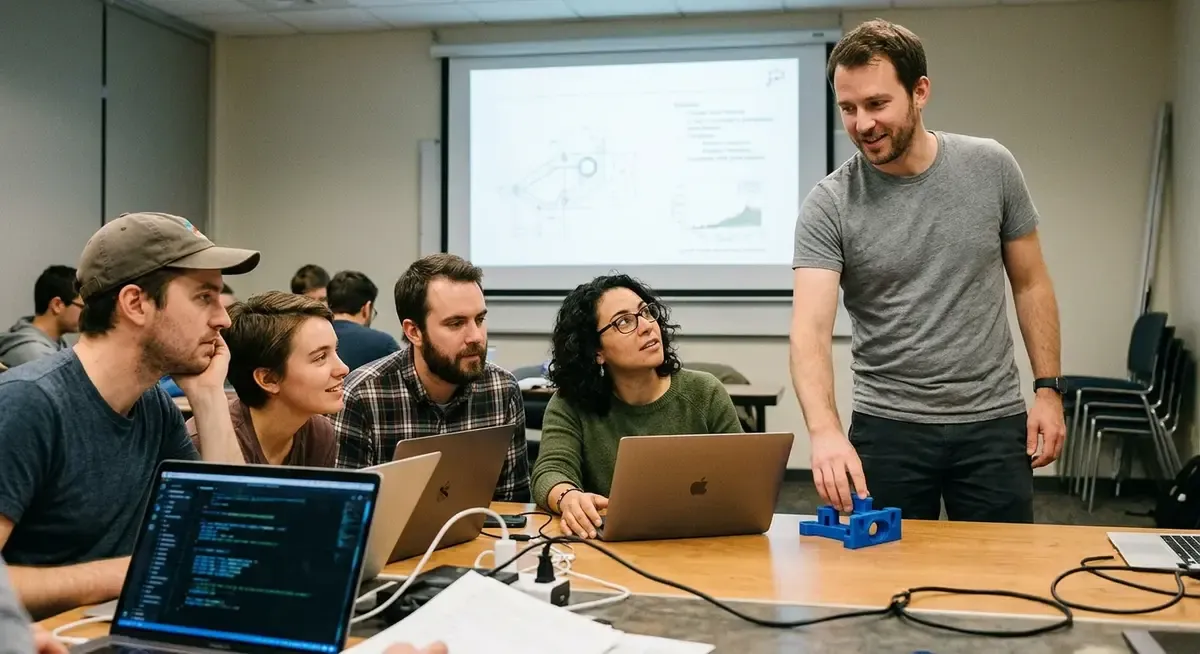
Backflip AI released the second version of its CAD generation model this week, aimed at a problem most factory floors know well: parts exist in the physical world but not in any digital design file.
Mistral AI put out Shieldstral 1.0 3B this week, a content-moderation model that scores 84.9% average F1 on text safety, tying GPT-OSS-Safeguard-20B, a model nearly seven times its size.
NVIDIA Labs has put out NOOA, short for NVIDIA Object-Oriented Agents, an open-source Python framework that rethinks how AI agents get built.
OpenAI is reportedly weighing a price tag north of $300, possibly as high as $400, for its first smart speaker, according to people familiar with the matter cited by Bloomberg's Mark Gurman.
Learn to build AI-powered apps without coding. Our comprehensive review of No Code MBA's course.
Curated collection of AI tools, courses, and frameworks to accelerate your AI journey.
Get the week's most important AI news delivered to your inbox every week.