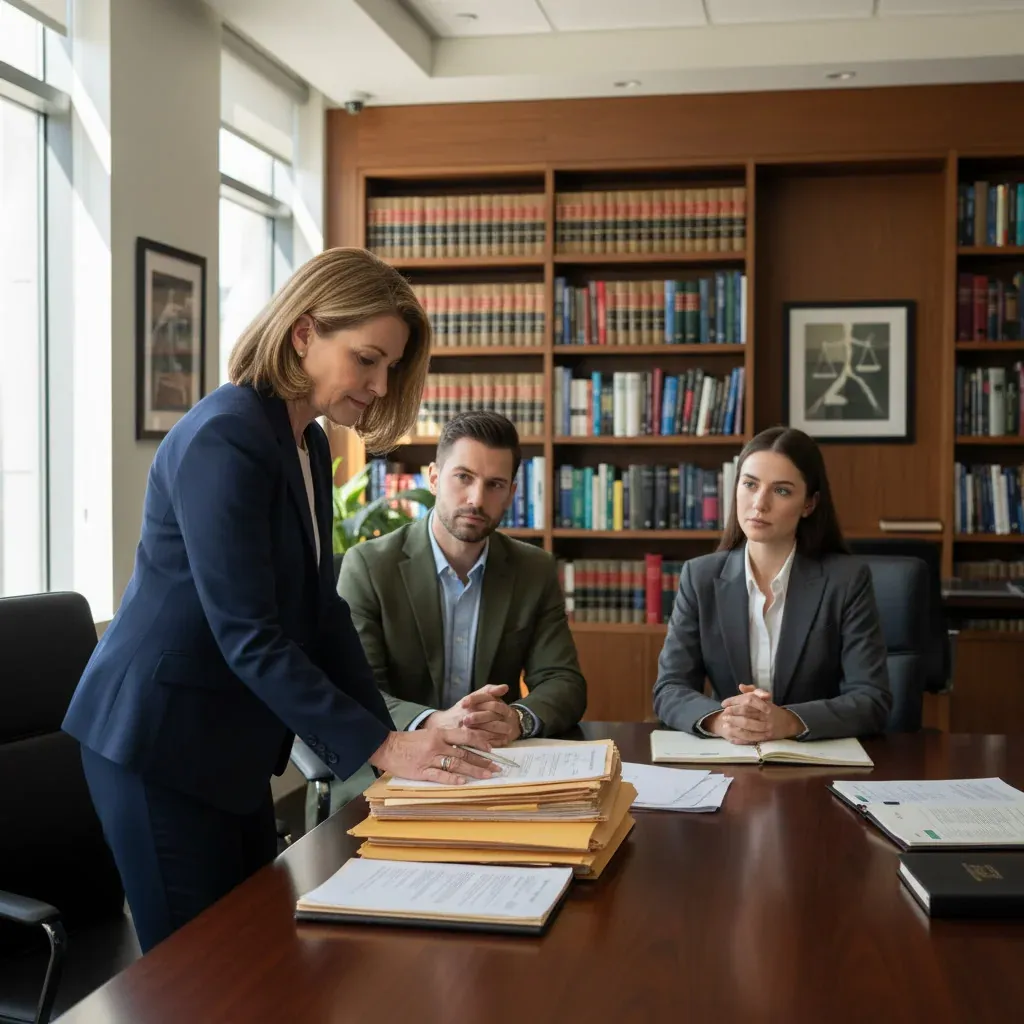
Editorial illustration for OpenAI, Microsoft, Zoox Spend USD 813‑USD 1,622 on San Francisco Police Protection
Tech Giants' Massive SF Police Security Spending Revealed
OpenAI, Microsoft, Zoox Spend USD 813‑USD 1,622 on San Francisco Police Protection
The numbers are absurdly small. OpenAI paid $813.43. Microsoft’s bill came to $1,622.16.
Zoox ran up a tab of $838.43. For companies worth billions, these sums are pocket change. Yet they represent something far larger: a quiet, cash-for-cops arrangement where San Francisco’s finest moonlight for private clients.
The program isn’t new. Houses of worship, retail giants like Apple and Lululemon, and bank branches have long used it. But now tech’s biggest names are sliding into the ledger, paying for police presence at offsite gatherings and museums.
Why the secrecy? Most firms won’t comment. One spokesperson said it’s a “large offsite” for employees, nothing more.
The real story lurks in the fine print: an estimated 80 percent of U.S. police departments allow such moonlighting, formal or informal. San Francisco’s version is just the most transparent.
Records list OpenAI as paying $813.43 for unspecified coverage at the Asian Art Museum, Microsoft having a single bill of $1,622.16, and Zoox running a tab of $838.43. Occasional or one-time customers in prior years have included Affirm, Cruise, Datadog, and Fanatics. Zoox spokesperson Marisa Wiggam said police protected a large offsite gathering for employees and that it is open to using the program again if a need arises.
The other companies did not respond to requests for comment. The program has been used more regularly by houses of worship, office building landlords, retail stores, and bank branches, including Apple, Bank of America, Best Buy, Bloomingdale's, Chase, Lululemon, and Sephora, records show. The firm Security Industry Specialists paid over $1.2 million in 2024 for what police records described as coverage at three Apple stores, making it the year's second-largest customer.
An estimated 80 percent of police departments across the country allow moonlighting by officers informally or through formal policies like San Francisco's, according to a survey from over a decade ago by Seth Stoughton, faculty director of the University of South Carolina's Excellence in Policing & Public Safety Program.
The numbers are small, but the picture is large. A few hundred dollars here, a thousand there, these are rounding errors for companies valued in the billions. Yet the transaction is profound.
San Francisco’s tech giants are not just buying security; they are buying a specific kind of public-private access, a direct line to the state’s coercive power for private events. The city’s police force, funded by taxpayers, becomes a line item on a corporate expense report. Meanwhile, Apple pays over a million dollars for store coverage, and houses of worship and banks quietly rely on the same program.
This is the quiet, cash-based reality of modern policing: a system where the public good is parceled out, shift by shift, to the highest bidder. The question isn’t whether these companies can afford it. They can.
The question is what it means when the most visible symbol of public safety, a uniformed officer, is increasingly a private amenity, available for rent.
Related Reading
Browse all OpenAI news → Open Source
 D&B rebuilds 642 million‑business database after AI agents hit limits
 Open Source
 Box CEO Aaron Levie Says AI Will Drive "Biggest Cybersecurity Upgrade
 Open Source
 Study: 6.7% of Deepfake Requests on Hugging Face Targeted Children
 Related Topic
 OpenAI researcher quits, citing distrust over ad‑driven engagement metrics
LLMs & Generative AI
 Related Topic
 OpenAI launches GPT-Image 1.5 with precise editing for enterprise visuals
LLMs & Generative AI
 From Archives
 Meta AI releases Sapiens2, a model for pose, segmentation and albedo
 From Archives
 DeepSeek AI unveils DeepSeek‑V4 with compressed attention for 1 M‑token contexts
 From Archives
 PageIndex Retrieves via Reasoning Using OpenAI gpt-5.4 Model
Research & Benchmarks
 From Archives
 OpenAI says Musk cannot prove promise from Altman, lacks standing in case
Policy & Regulation
Common Questions Answered
How much did OpenAI, Microsoft, and Zoox spend on San Francisco police protection?
According to municipal records, OpenAI paid $813.43, Microsoft paid $1,622.16, and Zoox paid $838.43 for police protection services. These payments were for various events, including an unspecified coverage at the Asian Art Museum for OpenAI.
Why are tech companies hiring San Francisco police for private security services?
Tech companies are utilizing the San Francisco Police Department's 'police protection' services to ensure security at their events and locations. This practice has raised discussions about public safety funding and the potential influence of corporate entities on law enforcement resources.
What did Zoox say about their police protection invoice?
Zoox spokesperson Marisa Wiggam confirmed that the police protected a large offsite gathering for employees and indicated the company is open to using the program again if a need arises. The company's invoice was for $838.43 for these security services.
Further Reading
- Papers with Code - Latest NLP Research — Papers with Code
- Hugging Face Daily Papers — Hugging Face
- ArXiv CS.CL (Computation and Language) — ArXiv
