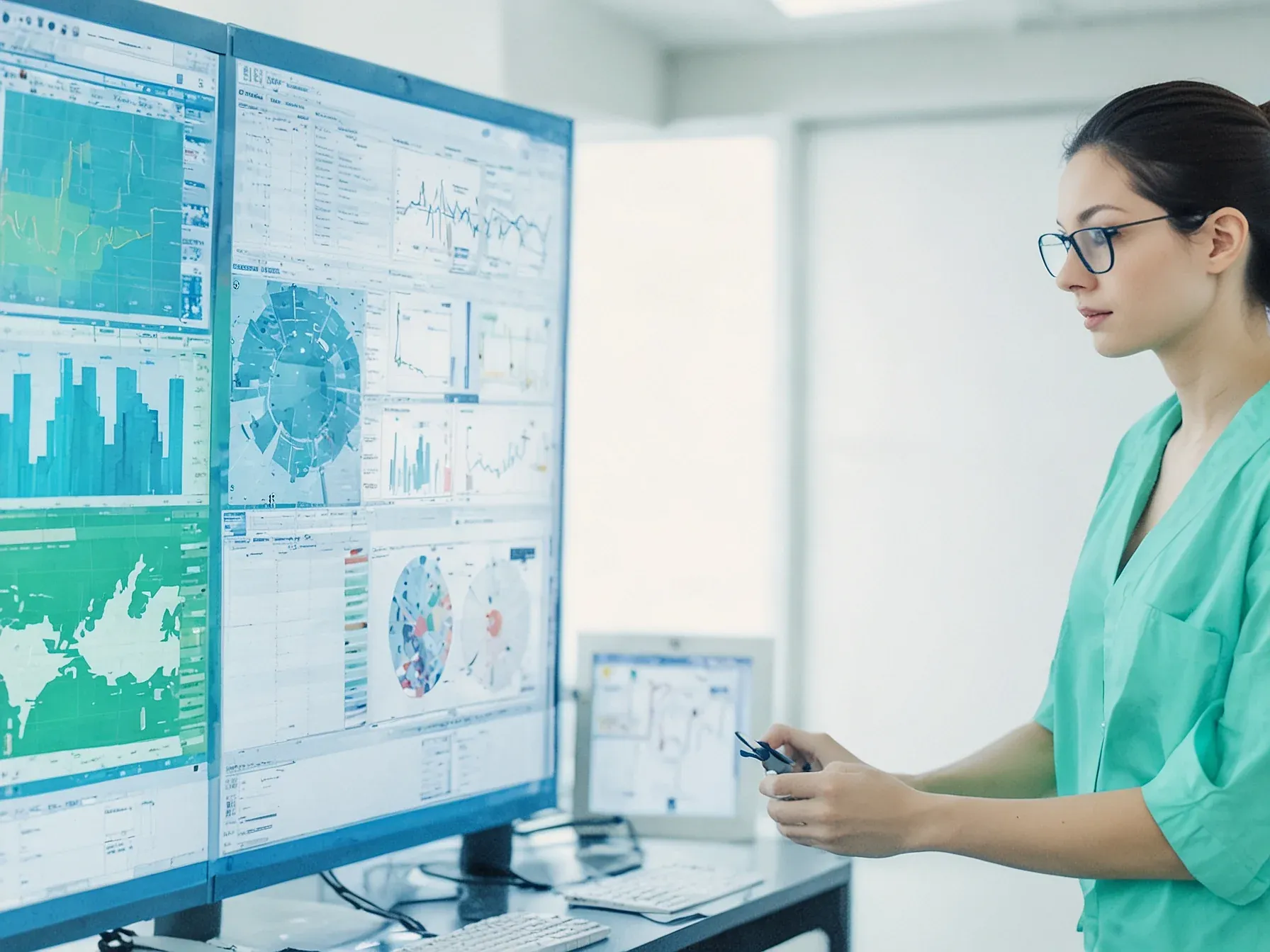
Editorial illustration for OpenAGI Claims Top AI Performance, But Researchers Dispute Breakthrough
OpenAGI's AI Performance Claims Spark Heated Research Debate
OpenAGI agent says it beats OpenAI and Anthropic; study deems over-optimistic
The promise of an autonomous web agent that could finally outpace the industry’s best has a familiar, almost seductive ring. OpenAGI emerged from stealth with exactly that claim: its system, powered by a novel training method called Agentic Active Pre-training, purportedly crushes OpenAI and Anthropic. The headlines wrote themselves.
But a new study from Ohio State tells a far more sobering story. When the researchers put five leading agents through rigorous human evaluation, the results painted a very different picture of competency. Many recent systems, despite heavy investment and marketing fanfare, failed to outperform SeeAct, a relatively simple agent released in January 2024.
Even OpenAI’s Operator, the best commercial performer in the study, managed only a 61 percent success rate. The gap between benchmark hype and real-world capability, it turns out, remains stubbornly wide.
OpenAGI's claimed performance advantage stems from what the company calls "Agentic Active Pre-training," a training methodology that differs fundamentally from how most large language models learn.
The gap between a glowing press release and a grueling human evaluation is where the truth lives. OpenAGI’s "Agentic Active Pre-training" may sound like a revolution, but the Ohio State study reminds us that benchmarks are not reality. They are curated snapshots, easily gamed, rarely representative of the messiness of the web.
A 61% success rate from OpenAI’s Operator is not a triumph; it is a ceiling. And when a simple agent from January 2024 holds its own against heavily marketed newcomers, the story shifts from "breakthrough" to "work in progress." The field is sprinting, but it has not yet learned to walk. For every flashy claim of supremacy, there is a human evaluator watching an agent fail at a task their grandparents could complete.
That humbling fact is the real headline. The path to autonomous agents is not paved with press stunts or leaderboard climbs. It is built on the slow, unglamorous work of closing the gap between 61% and reliable, between hype and competence.
Until then, treat every "SoTA" with a grain of salt, and a human rater.
Related Reading
Browse all OpenAI news → Research & Benchmarks
 Microsoft AI Chief: "If It Isn't Safe We Shouldn't Build It
 Research & Benchmarks
 Google's FACTS benchmark shows 70% factuality ceiling across four tests
 Research & Benchmarks
 Nvidia's DLSS 4.5 beta adds 6x Multi Frame Generation for RTX 50 GPUs
 Related Topic
 OpenAI researcher quits, citing distrust over ad‑driven engagement metrics
LLMs & Generative AI
 Related Topic
 OpenAI launches GPT-Image 1.5 with precise editing for enterprise visuals
LLMs & Generative AI
 From Archives
 Google's self-modifying model needs extra engineering, smarter compute for complex training
 From Archives
 ARC benchmark declines as labs tune AI to optimize its specific logic
 From Archives
 User on X reports first ad appearing in live ChatGPT conversation
LLMs & Generative AI
 From Archives
 Gen AI app sessions up fivefold, downloads jump 778% as ChatGPT leads traffic
LLMs & Generative AI
Common Questions Answered
What did the Ohio State research team discover about AI performance claims?
The research team found that many recent AI systems did not actually outperform SeeAct, a simple agent released in January 2024. Their careful human evaluation revealed significant gaps between marketing claims and actual technological capabilities, suggesting over-optimism in previously reported AI performance results.
How did OpenAI's Operator perform in the Ohio State research team's evaluation?
OpenAI's Operator was the best performer among commercial AI offerings in the study, but still failed to definitively outperform SeeAct. The research highlighted that even top-tier commercial AI systems have substantial limitations in real-world performance testing.
Why are researchers skeptical of OpenAGI's performance claims?
Researchers are skeptical because the claims appear to be more marketing hype than substantive technological advancement. The Ohio State team's rigorous human-based evaluations exposed significant discrepancies between promotional language and actual AI agent capabilities.
Further Reading
- Papers with Code Benchmarks — Papers with Code
- Chatbot Arena Leaderboard — LMSYS
