
Editorial illustration for NVIDIA Sweeps MLPerf Training and Endpoints as Vera Rubin Debuts
NVIDIA Sweeps MLPerf With Vera Rubin Platform
NVIDIA Sweeps MLPerf Training and Endpoints as Vera Rubin Debuts
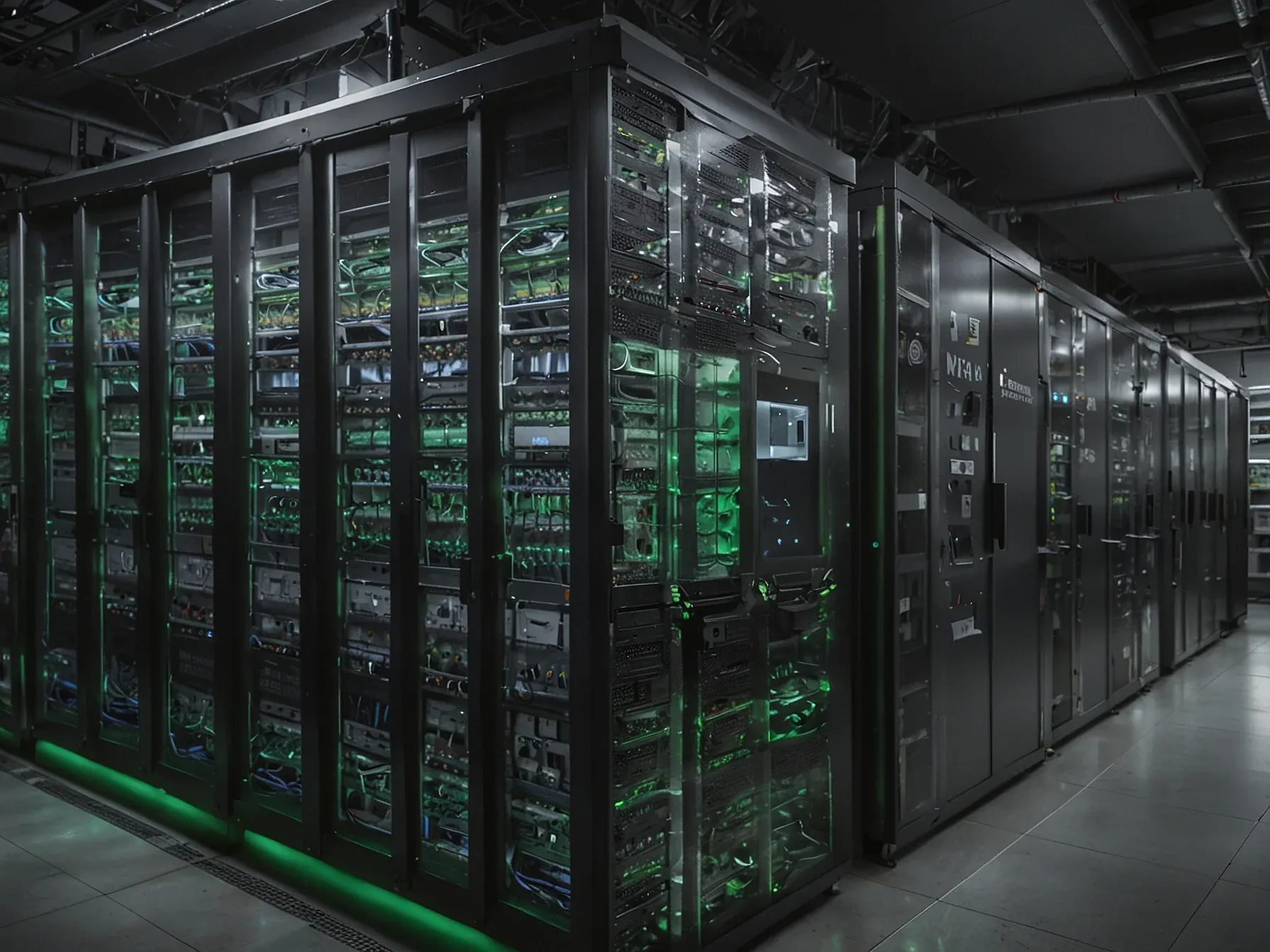
NVIDIA's Vera Rubin platform just posted its first benchmark results, and the numbers explain why the company spent two years talking it up. MLPerf released its Training v6.1 and new Endpoints results today, and NVIDIA was the only vendor with entries across every single Training benchmark, cover
NVIDIA swept every MLPerf Training v6.1 benchmark and, in its first MLPerf Endpoints submission, delivered more than 10x generational gains in throughput per watt for agentic AI — measuring how much agentic work a system delivers with each watt of power.
Why this matters
NVIDIA being the only vendor with a result on every MLPerf Training v6.1 benchmark tells us less about raw silicon and more about who gets to set the terms of the conversation. When one company covers LLMs, image generation, recommenders and reinforcement learning post-training in a single submission, the comparison baseline becomes whatever NVIDIA decides to measure. That's worth watching for anyone budgeting GPU clusters or pitching a training run to investors this quarter.
The throughput-per-watt number is the more interesting detail here. A 10x generational jump for agentic AI workloads, if it holds up outside NVIDIA's own test harness, changes the math on running always-on agents rather than batch inference jobs. Power costs, not chip price, increasingly decide whether agentic products are viable at scale.
Vera Rubin NVL72 hitting 2x performance per GPU over Blackwell, in a first-ever submission, is a strong opening claim. We'd want to see how that number moves once independent workloads and a full generation of competing hardware show up. Benchmarks reward whoever ships first and defines the test.
Related Reading
 Research & Benchmarks
Microsoft AI Chief: "If It Isn't Safe We Shouldn't Build It
 Research & Benchmarks
Google's FACTS benchmark shows 70% factuality ceiling across four tests
 Research & Benchmarks
Nvidia's DLSS 4.5 beta adds 6x Multi Frame Generation for RTX 50 GPUs
 Related Topic
NVIDIA NeMo powers telco reasoning model for autonomous network workflows
Industry Applications
 Related Topic
China offers cheaper electricity to AI firms abandoning NVIDIA chips
Business & Startups
 From Archives
NVIDIA Nemotron for Science SFT adds 12%, RL post-training lifts 17%
 From Archives
NVIDIA Vera Rubin NVL72 Leads MLPerf Endpoints v1.0 Agentic Inference
 From Archives
NVIDIA Vera Rubin NVL72 Hits Up to 2x Blackwell Ultra in MLPerf Training
 From Archives
Meituan releases 1.6T LongCat-2.5 agent model that never touched an Nvidia GPU
Open Source
Common Questions Answered
What benchmarks did NVIDIA sweep in MLPerf Training v6.1?
NVIDIA was the only vendor to submit results across every single MLPerf Training v6.1 benchmark, covering LLMs, image generation, recommenders, and reinforcement learning post-training in a single submission. This comprehensive coverage across all benchmark categories demonstrates NVIDIA's dominance in the machine learning performance testing landscape.
What performance gains did NVIDIA's Vera Rubin achieve in MLPerf Endpoints for agentic AI?
In its first MLPerf Endpoints submission, NVIDIA's Vera Rubin platform delivered more than 10x generational gains in throughput per watt for agentic AI. This metric measures how much agentic work a system can deliver with each watt of power consumed, representing a significant efficiency improvement.
Why does NVIDIA's complete MLPerf Training v6.1 coverage matter for GPU cluster budgeting?
When NVIDIA is the only vendor submitting results across all MLPerf Training benchmarks, the company essentially sets the terms of the conversation and determines what gets measured for comparison. This means anyone budgeting GPU clusters or pitching training runs to investors must evaluate performance against NVIDIA's chosen metrics and baselines, giving the company significant influence over industry benchmarking standards.
What is the Vera Rubin platform and why did NVIDIA invest two years in developing it?
Vera Rubin is NVIDIA's new platform that just posted its first benchmark results in MLPerf Training v6.1 and Endpoints testing. NVIDIA spent two years developing and talking up the platform because the benchmark results demonstrate significant performance advantages, particularly in throughput per watt efficiency for agentic AI workloads.
Further Reading
- MLPerf Inference v6.1: 5.7x Per-Accelerator Gains, a 512-GPU Run, and Vera Rubin’s First Peer-Reviewed Numbers - StorageReview
- NVIDIA Vera Rubin NVL72 Delivers Leading Performance in First MLPerf Inference Preview - NVIDIA
- MLPerf Inference v6.1 Results: NVIDIA Vera Rubin NVL72 - Nebius
- MLPerf Benchmarks - NVIDIA
- Inference Performance for Data Center Deep Learning - NVIDIA Developer
