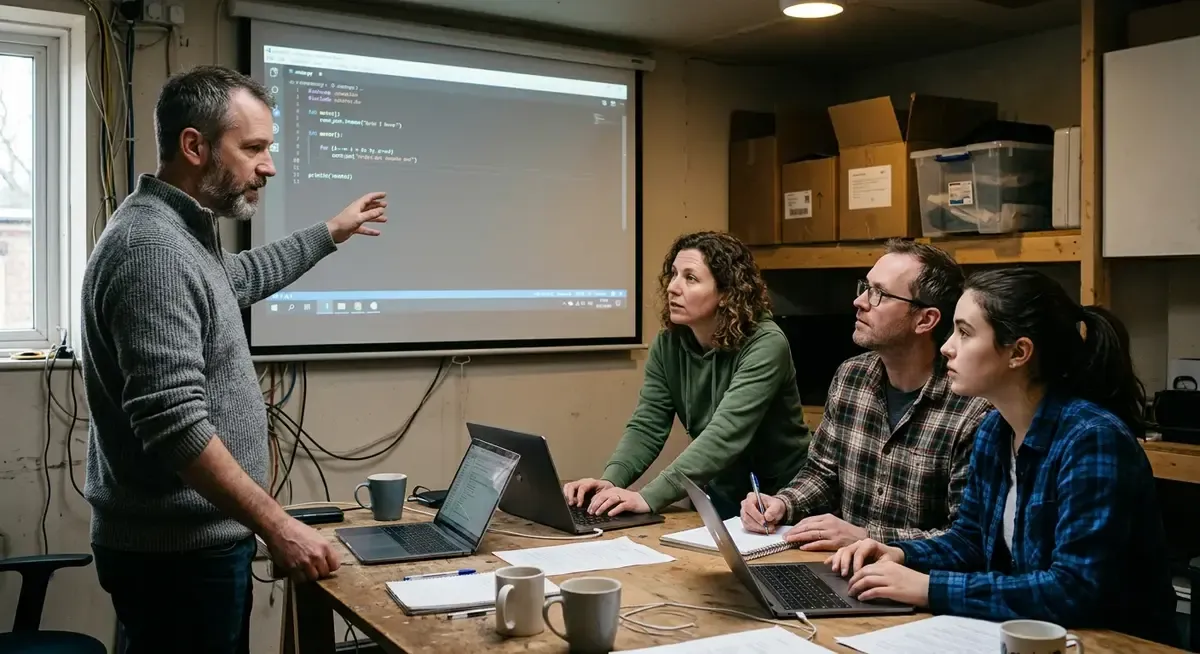
Editorial illustration for Open-source movement wants Jensen Huang back amid guardrails and China concerns
Open-Source Backlash: 115K Sign Petition for Huang
Open-source movement wants Jensen Huang back amid guardrails and China concerns
A petition to reinstate Jensen Huang as Nvidia's CEO started making the rounds on social media Friday, even though Huang never actually left the job. By Monday it had more than 115,000 signatures, including Elon Musk and a cluster of Nvidia researchers. Look past the headline names, though, and the list skews heavily toward one corner of the tech industry: executives at Hugging Face, the model-sharing hub, and partners at venture firms Andreessen Horowitz and Sequoia Capital.
That's not a coincidence. All three have money riding on open-source AI, the category of models that anyone can download and run without going through a company like OpenAI or Anthropic. The pitch from supporters is that locking AI development inside a handful of giant firms leaves everyone else at a disadvantage, an argument that sounds populist until you notice how many of the people making it are venture capitalists positioned to profit once startups can build on cheap, open models instead of paying Big Tech licensing fees.
Huang has spent the past couple of years playing defender for that camp, pushing back on policymakers worried that open models ship without enough guardrails, and on a newer set of concerns tied to China.
Supporters are signing a petition to reinstate Huang. But findings on Nvidia chips in China and a new Commerce rule are threatening open-source AI’s reputation and progress regardless.
Why this matters
A CEO petition is a strange thing to watch become a referendum on open-source AI policy, but that is where we are. Huang's appeal wasn't his chip roadmap, it was his willingness to stand in front of policymakers and argue that open weights don't automatically mean no guardrails and don't automatically hand China the lead. That argument is harder to make without him, and the timing is bad: a new Commerce rule and fresh scrutiny of Nvidia chips turning up in China are exactly the kind of headlines that give restriction-minded lawmakers cover.
For developers and founders building on open models, the practical risk isn't abstract, it's export controls, licensing friction, and compliance costs creeping into tooling that used to be free to grab and fine-tune. Researchers should pay attention to who fills the advocacy vacuum, because open source in the US doesn't have many messengers with Huang's credibility on a Senate floor. If nobody steps up, the policy conversation gets written by people who've never shipped a model.
Related Reading
 Open Source
Study: 6.7% of Deepfake Requests on Hugging Face Targeted Children
 Open Source
D&B rebuilds 642 million‑business database after AI agents hit limits
 Open Source
Axiom Math raises USD 200M Series A led by Menlo to keep AI slop out of math
 From Archives
OpenAI will embed safety researchers to investigate AI subversion after Apollo
 From Archives
Alibaba Qwen4-Max: 2.4T MoE, 71B active, 1M context, 5-13% lower bits/byte
Common Questions Answered
Why did a petition to reinstate Jensen Huang as Nvidia CEO gain over 115,000 signatures if he never actually left his position?
The petition became a symbolic referendum on open-source AI policy rather than a literal call for leadership change. Supporters, including Elon Musk and executives from Hugging Face, Andreessen Horowitz, and Sequoia Capital, were using the petition to advocate for Huang's policy stance that open-source AI can have guardrails without automatically giving China a competitive advantage.
What is the connection between the Huang petition and concerns about Nvidia chips in China?
The petition timing coincides with new Commerce Department rules and fresh scrutiny of Nvidia chips being discovered in China, which threatens open-source AI's reputation and progress. Huang's appeal to policymakers was his argument that open weights don't automatically mean no guardrails and don't automatically benefit China, making his public advocacy particularly valuable during this period of regulatory pressure.
Why is the petition signatory list heavily concentrated among open-source AI advocates and venture capital firms?
The concentration of signatures from Hugging Face executives, Andreessen Horowitz, and Sequoia Capital partners reflects the petition's true purpose as a policy statement rather than a genuine leadership challenge. These organizations represent the open-source AI movement's core stakeholders who are concerned about balancing open-source development with security guardrails and geopolitical considerations.
What argument does Jensen Huang make regarding open-source AI and China that the petition supporters want to preserve?
Huang argues that open weights in AI models do not automatically mean the absence of guardrails, nor do they automatically give China a technological advantage. This nuanced position is difficult for other leaders to maintain, particularly given current Commerce Department regulations and evidence of Nvidia chips appearing in China.
Further Reading
- Papers with Code - Latest NLP Research - Papers with Code
- Hugging Face Daily Papers - Hugging Face
- ArXiv CS.CL (Computation and Language) - ArXiv
