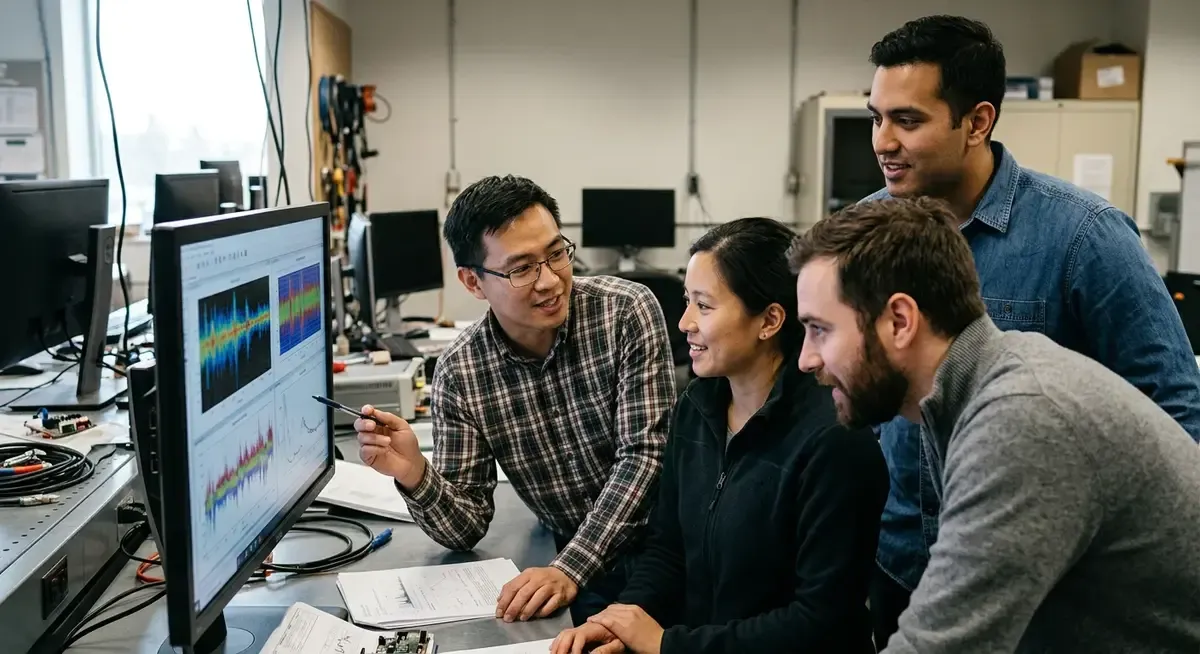
Editorial illustration for Meituan releases 1.6T LongCat-2.5 agent model that never touched an Nvidia GPU
Meituan's 1.6T LongCat-2.5 Model Trained Without Nvidia
Meituan releases 1.6T LongCat-2.5 agent model that never touched an Nvidia GPU
Meituan, the Chinese food delivery giant better known for bike couriers than foundation models, has released the weights for LongCat-2.5. The model carries 1.6 trillion parameters and was trained entirely on domestic chips, with no Nvidia hardware involved at any stage. That detail matters as much as the model's size: it lands a week after LongCat-2.5's official unveiling and arrives at a moment when Chinese labs are racing to prove they can match Western frontier models without relying on export-restricted GPUs.
The LongCat team built this one specifically for agents, the kind of AI systems meant to chain together long sequences of steps on their own, with coding as the main target. Meituan says the model closes much of the gap with top-tier Western systems on several benchmarks, putting it in range of where Claude Opus stood a few months back. Under the hood, LongCat-2.5 is a mixture-of-experts design, so only a fraction of its total parameters fire for any given token, keeping inference costs down despite the model's enormous scale. The release also marks a shift in how the model handles images, a change worth looking at closely.
Meituan releases the weights for LongCat-2.5, a 1.6-trillion-parameter model built for AI agents. It was trained entirely on Chinese hardware and performs at the level US models like Claude Opus 5 reached a few months ago on coding benchmarks.
Why this matters
A 1.6-trillion-parameter model landing within a point or two of Claude Opus 5 on Terminal Bench v2.1, without a single Nvidia chip in its training run, is the kind of data point that should make US chip export controls look a lot less airtight than policymakers hoped. Meituan isn't a lab chasing AGI headlines, it's a food delivery company, which tells us open-weight frontier models are becoming commodity infrastructure rather than a moat. For developers and founders, that means more real options for agent tooling outside the Nvidia-Anthropic-OpenAI axis, and a credible signal that Chinese domestic hardware has closed enough of the gap to train at this scale.
Researchers should pay attention to the benchmark spread itself: Deepseek-V4.1-Flash topping the Terminal Bench table at 90.6 means the leaderboard for agentic coding is now genuinely contested across at least four labs, not dominated by one. We'd want to see independent verification of these numbers and more detail on what "Chinese hardware" actually means here before treating this as settled, but the gap between US and Chinese frontier releases keeps shrinking faster than most roadmaps assumed.
Related Reading
 Open Source
Study: 6.7% of Deepfake Requests on Hugging Face Targeted Children
 Open Source
D&B rebuilds 642 million‑business database after AI agents hit limits
 Open Source
Axiom Math raises USD 200M Series A led by Menlo to keep AI slop out of math
 Related Topic
NVIDIA and Google Cloud let developers scale AI from prototype to production
Market Trends
 Related Topic
NVIDIA NeMo powers telco reasoning model for autonomous network workflows
Industry Applications
 From Archives
Runway's open-source Praxis-1 turns video AI into a robot controller
 From Archives
Vercel Releases UI SDK With 50+ Behaviors for AI Coding Agents
 From Archives
Former OpenAI researcher maps six Chinese AI models to Nvidia Blackwell
Research & Benchmarks
 From Archives
Nvidia CEO Exit, Hugging Face Deal in Doubt
Common Questions Answered
What are the key specifications of Meituan's LongCat-2.5 model?
LongCat-2.5 is a 1.6 trillion parameter agent model that was trained entirely on domestic Chinese hardware without any Nvidia GPUs involved in its development. The model performs at a level comparable to US frontier models like Claude Opus 5 on coding benchmarks, achieving competitive results on Terminal Bench v2.1.
Why is Meituan's decision to train LongCat-2.5 without Nvidia hardware significant?
Training a frontier-level model entirely on Chinese domestic chips demonstrates that Chinese labs can match Western AI capabilities without relying on Nvidia exports, which challenges the effectiveness of US chip export controls. This achievement suggests that advanced AI model development is no longer dependent on specific foreign hardware, undermining the intended impact of these restrictions.
How does LongCat-2.5's performance compare to Western AI models?
LongCat-2.5 performs within a point or two of Claude Opus 5 on Terminal Bench v2.1 coding benchmarks, placing it at the level that US frontier models reached a few months prior. This competitive performance on standard benchmarks indicates that the 1.6 trillion parameter model achieves parity with leading Western AI systems.
What does Meituan's release of LongCat-2.5 indicate about the AI industry landscape?
The fact that Meituan, a food delivery company rather than an AI research lab, can release an open-weight frontier model suggests that advanced AI models are becoming commodity infrastructure rather than exclusive competitive advantages. This democratization of frontier-level models means that open-weight AI capabilities are increasingly accessible to a broader range of organizations and developers.
Further Reading
- Papers with Code - Latest NLP Research - Papers with Code
- Hugging Face Daily Papers - Hugging Face
- ArXiv CS.CL (Computation and Language) - ArXiv
