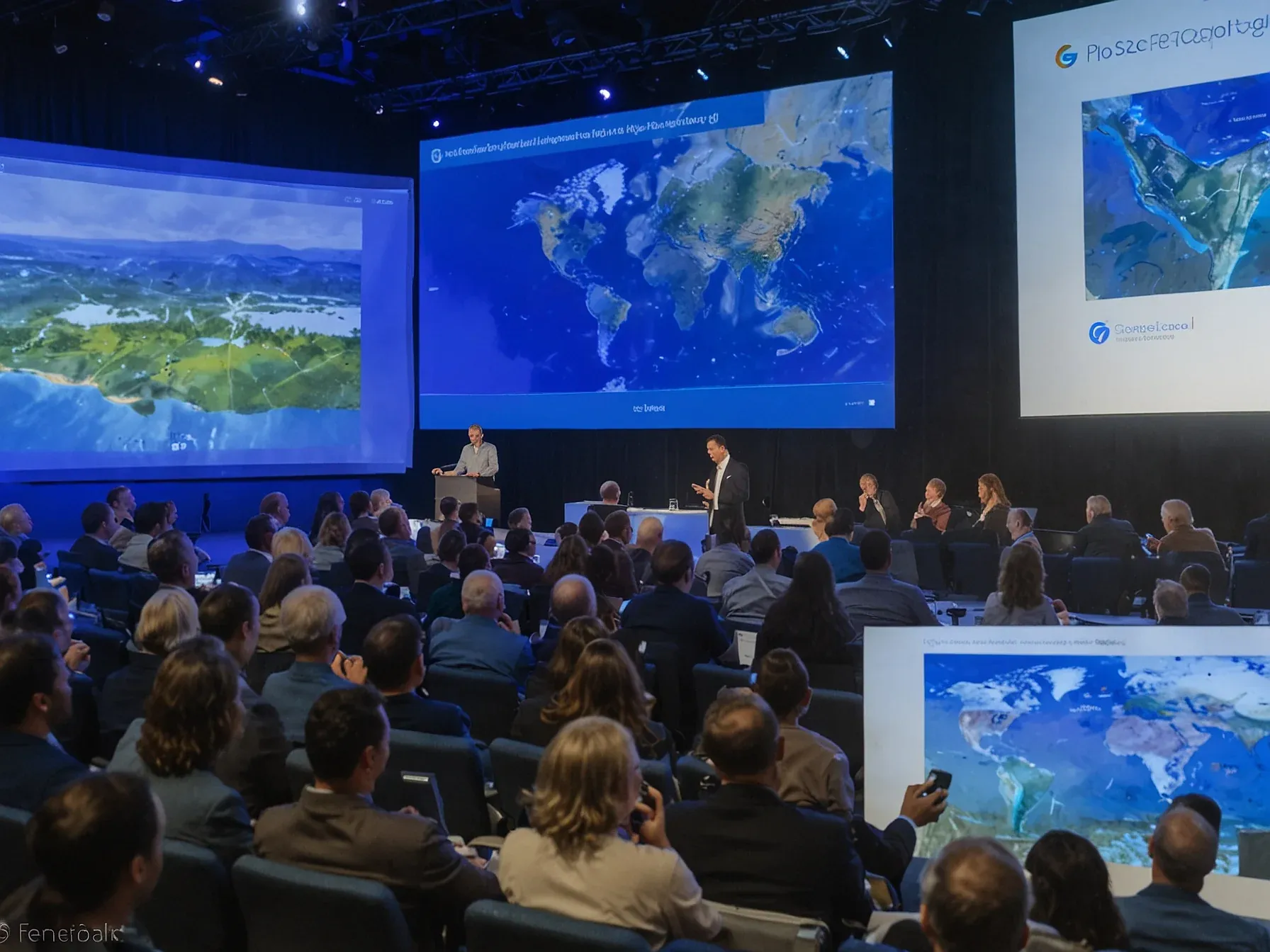
Editorial illustration for Google Expands Earth AI Tools to Enhance Flood Forecasting and Disaster Response
Google AI Predicts Floods with Unprecedented Global Accuracy
Google expands Earth AI access, adds updates for flood forecasting
Google is widening the pipes to its Earth AI platform. The focus is flood forecasting, a grim but necessary market that’s expanding as the weather gets worse. The company wants more governments and aid groups using its tools, betting that better machine learning can shave precious hours off disaster warnings.
This isn't speculative research. Google claims its flood alerts already cover two billion people. The push now is to make the underlying AI models more accessible and accurate, turning raw satellite data and weather simulations into something a city planner or a World Vision field officer can actually use.
When disasters strike, Google products like Search and Maps help billions of people make critical decisions to stay safe. Our flood forecasting information — now covering more than two billion people — provides life-saving forecasts before the most significant river floods.
That blog post is the press release, of course. It frames this as humanitarian work, which it is. It also frames it as a business product for enterprises and cities, which it also is. The through-line is a belief that Google’s particular blend of data, mapping, and AI reasoning can model planetary systems better than anyone else.
The proof will be in the predictions. Can these models consistently beat traditional meteorological forecasts for river basins in Bangladesh or rural Kenya? Google points to its wildfire alerts in California as a prototype.
The real test is whether the expanded Earth AI access leads to more evacuations ordered in time, more aid prepositioned. Not just more data on a dashboard.
It’s a heavy bet on geospatial intelligence as a core utility. One that might actually matter.
Further Reading
- NeuralGCM harnesses AI to better simulate long-range global precipitation - Google Research
- Google 2025 recap: Research breakthroughs of the year - Google Official Blog
- Google's GenCast: The AI-Driven Revolution Outperforming Traditional Weather Systems - Financial Content
- How AI is changing weather forecasting - Latitude Media
Related Reading
Browse all Google news → Business & Startups
 Nordic pilot adds Gemini for Education, NotebookLM to boost AI literacy
 Business & Startups
 Kling launches Video O1, all-in-one model with MVL bridge using transformer
 Business & Startups
 DeepSeek Seeks More Capital Weeks After USD 7B Funding Round
 Related Topic
 NVIDIA and Google Cloud let developers scale AI from prototype to production
Market Trends
 Related Topic
 Google tests visual 'magazine-style' UI for Gemini 3 Pro users
LLMs & Generative AI
 From Archives
 Thinking Machines challenges OpenAI scaling, says superintelligence is a learner
 From Archives
 Indian IT lays off staff, calls it restructuring; AI tasks need human effort
 From Archives
 GitHub Copilot, Claude, and Google’s Jules become autonomous coding agents
AI Tools & Apps
 From Archives
 Google AI Studio Enhances Developer Experience with Seamless Workflow
AI Tools & Apps
Common Questions Answered
How does Google's Earth AI platform improve flood forecasting for vulnerable regions?
Google's Earth AI platform uses advanced artificial intelligence to provide more precise and timely flood prediction technologies. The system now covers flood forecasting for over two billion people, helping communities and organizations prepare for significant river floods before they occur.
What specific ways can Google's flood forecasting tools help during natural disasters?
Google's flood forecasting tools enable critical decision-making through platforms like Search and Maps, helping people stay safe during extreme weather events. The technology has already assisted organizations like World Vision in delivering essential resources such as drinking water and food to communities in need during flood emergencies.
How extensive is Google's current flood forecasting coverage?
Google's flood forecasting information currently covers more than two billion people worldwide, representing a significant expansion of their Earth AI platform's disaster response capabilities. This broad coverage allows for life-saving forecasts that can help communities and relief organizations prepare for potential river floods.
Further Reading
- Google Earth AI Gets Major Updates: Geospatial Reasoning — How AI Works
- Google Earth AI: Unlocking geospatial insights with foundation models and cross-modal reasoning — Google Research Blog
- New updates and more access to Google Earth AI — Google Blog
- Google Earth AI Integrates Gemini for Storm Forecasting and Crisis Aid — WebProNews
- How WorldPop Data Powers Google's Global Flood Forecasting Revolution — WorldPop
