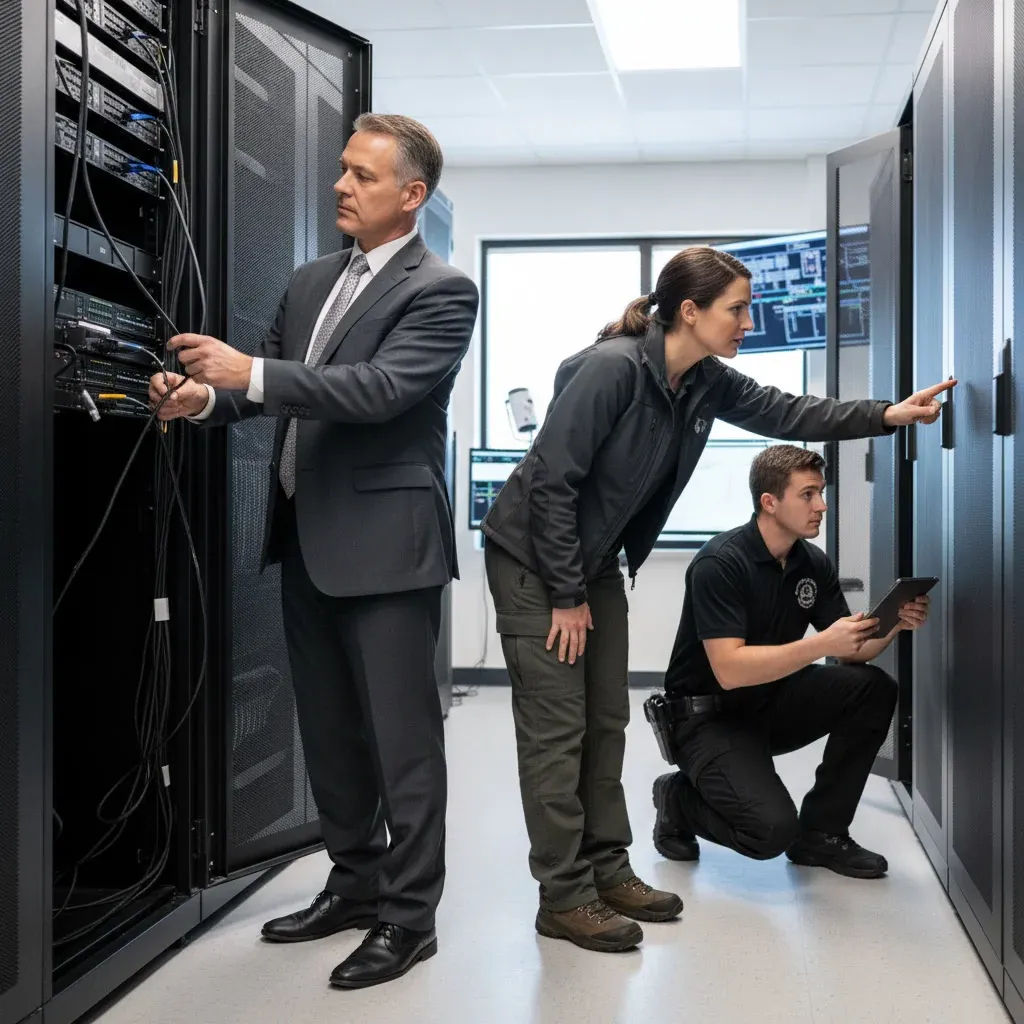
AI news illustration: Zuckerberg Unveils Meta Compute to Build Global AI Infrastructure
Meta Compute: Zuckerberg's Massive AI Infrastructure Push
Zuckerberg Unveils Meta Compute to Build Global AI Infrastructure
Mark Zuckerberg is done renting. Meta will now build its own power plants. The company’s audacious plan to construct a global computing network for AI pits it directly against cloud giants like Amazon.
But that ambition requires a colossal, dedicated energy supply. Just look at the deals: Meta recently secured agreements for up to 6.6 gigawatts of U.S. electricity capacity by 2035, a staggering commitment often linked to nuclear projects, to feed its hungry new data centers.
"I'm looking forward to working closely with Daniel, Santosh, Dina and their teams to scale Meta Compute and deliver personal superintelligence to billions of people around the world," Zuckerberg wrote. The announcement signals Meta's intent to treat large-scale compute capacity as a core pillar of its future AI strategy, alongside software and model development. The social media giant recently announced agreements linked to nuclear energy projects that could support up to 6.6 GW of new and existing electricity capacity in the United States by 2035, as the company plans for rising power demand from its data centres and AI infrastructure.
Owning the grid is the new corporate strategy. The push for dedicated infrastructure marks a profound shift, making long-term energy access as critical as any algorithm. Consider the scale.
That 6.6-gigawatt target could power several million homes. It underscores the raw, physical compute required to deliver the advanced AI Zuckerberg is promising.
Related Reading
Browse all Meta news → Business & Startups
 Nordic pilot adds Gemini for Education, NotebookLM to boost AI literacy
 Business & Startups
 Kling launches Video O1, all-in-one model with MVL bridge using transformer
 Business & Startups
 DeepSeek Seeks More Capital Weeks After USD 7B Funding Round
 Related Topic
 Meta’s Muse Tracks Your Email and Bank Data While You Work
AI Tools & Apps
 Related Topic
 Meta Faces Lawsuit Over AI Training Data, Facial Recognition
Policy & Regulation
 From Archives
 Nvidia Rubin Boosts Enterprise AI Security as 75% of Orgs Embrace Confidential Computing
 From Archives
 TCS Cuts 11,151 Jobs While Growing AI Workforce to 217,000 in Q3
 From Archives
 Beijing May Scrutinize Manus–Meta Deal After USD 75M Series B Funding
 From Archives
 Meta acquires Manus as version 1.6 adds autonomous, creative AI capabilities
Common Questions Answered
What is Meta Compute and how does it fit into Zuckerberg's AI strategy?
Meta Compute is a strategic initiative by Mark Zuckerberg to dramatically expand the company's computational capabilities for AI development. The project aims to build massive computing resources that could reshape large-scale AI system construction and deployment, with Zuckerberg targeting an ambitious scale of 'tens of gigawatts' this decade.
How does Meta plan to support its massive computational infrastructure?
Meta has recently announced agreements linked to nuclear energy projects that could support up to 6.6 gigawatts of power capacity. Zuckerberg's long-term vision extends beyond incremental improvements, with plans to potentially reach 'hundreds of gigawatts' of computing capacity in the future.
What is the ultimate goal of Meta's computational infrastructure investment?
According to Zuckerberg, the goal is to deliver 'personal superintelligence to billions of people around the world'. The Meta Compute initiative represents more than a technical upgrade, but a strategic play to position the company as a long-term AI infrastructure leader.
Further Reading
- Meta launches new "Meta Compute" initiative to build AI infrastructure — Axios
- Mark Zuckerberg says Meta is launching its own AI infrastructure initiative — TechCrunch
- Meta sets up 'Meta Compute' organization for gigawatt-scale AI data centers — Tom's Hardware
- Meta Announces AI Infrastructure Initiative — MediaPost
- Meta establishes 'Meta Compute,' plans multiple gigawatt-plus scale AI data centers — Data Center Dynamics
