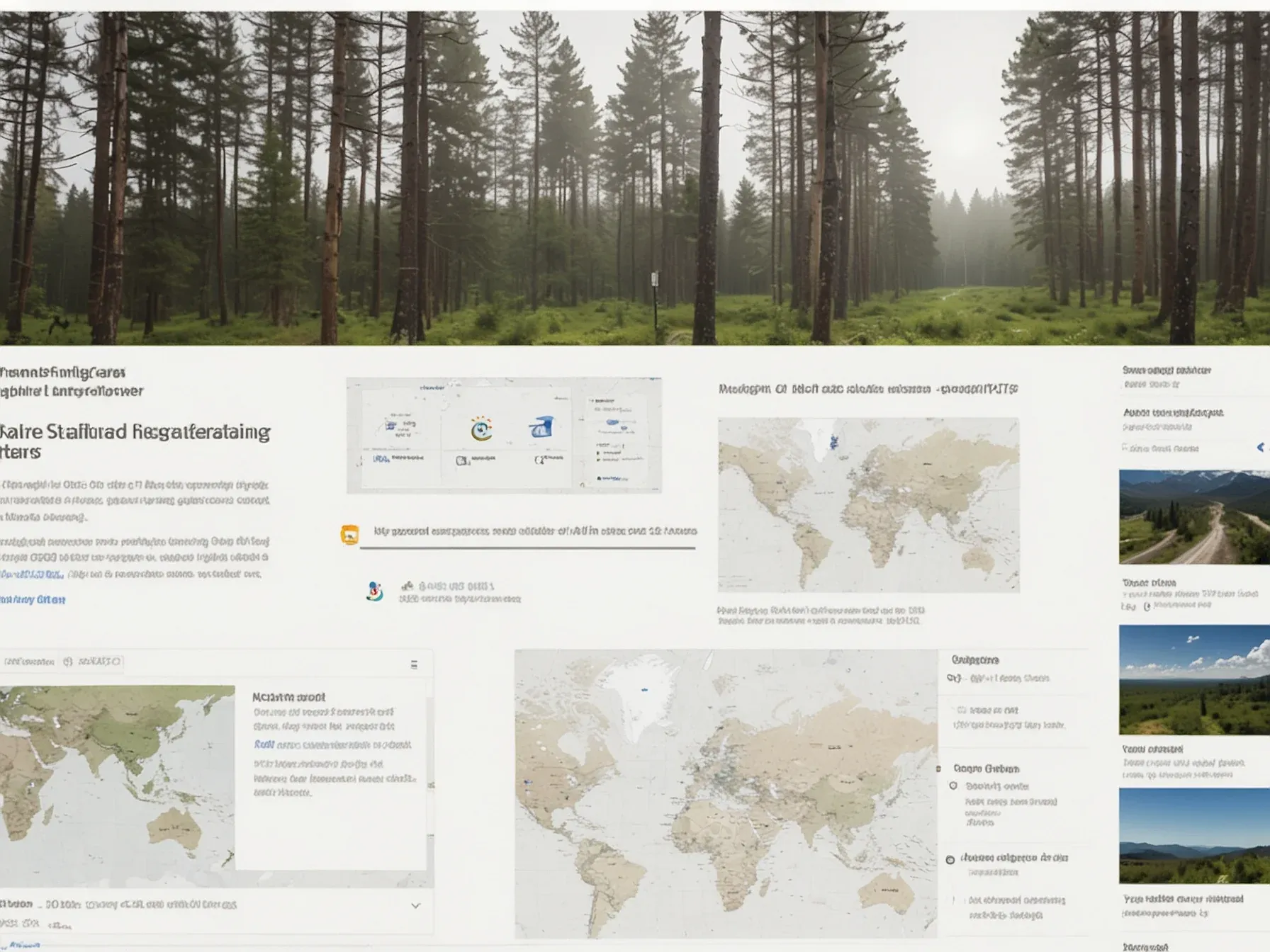
Editorial illustration for Google Uses AI to Advance Environmental Conservation and Restoration Efforts
Google AI Advances Nature Conservation Tech Strategy
Google applies AI principles to boost nature protection and restoration
Google's AI pitch is usually about selling ads or automating email. Now it's about fish. The company is trying to convince the world that the same principles guiding its chatbots can also guide conservation work, arguing that artificial intelligence should be a primary tool for protecting nature.
This isn't a hypothetical white paper exercise. They claim it's already happening.
Their method is essentially high-powered, planet-wide surveillance. The goal is to see everything, everywhere, all the time, because traditional monitoring can't keep up. It's a data solution for a data problem, applied to forests, oceans, and fields.
At the same time, AI must be managed and developed responsibly. We do this in line with Google's AI principles, to mitigate risks, including increasing resource demands, and maximize positive outcomes for nature.
Mapping all human activity at sea is a revealing example. It turns the ocean from a vast, anonymous space into a legible grid of ships and routes. The promise is accountability. The risk is that this immense power to watch comes from a company whose core business is watching.
Google's framing is careful. They talk about mitigating their own resource demands, a nod to the massive energy and water consumption of their data centers. They emphasize collaboration with outside experts. The message is they are applying a brake to their own technology.
It is a logical use of their strengths. Conservation has always been crippled by a lack of information. AI promises a firehose of it.
Whether that information leads to actual protection, or just better maps of the decline, is the harder question. For now, Google is betting its ability to see problems will be enough to start solving them.
Further Reading
- Protecting the Earth with the help of AI - The Express Tribune
- AI for Climate Innovation Factory 2025 live pitching session - ITU AI for Good
- 24 Sustainability Trends to Watch in 2025 and 2026 - WINS Solutions
- Google AI for Public Sector - Google Public Sector
Related Reading
Browse all Google news → Policy & Regulation
 Akamai Proposes SAFE Cybersecurity Guidelines for AI Threats
 Policy & Regulation
 After ditching AI fitness apps and a Fitbit, I return to Peloton classes
 Policy & Regulation
 Sony Music, Warner Chappell Sue Anthropic Over "Blatant Theft
 Related Topic
 Google to End Free Access to Gemini AI for Non-Subscribers
LLMs & Generative AI
 Related Topic
 NVIDIA and Google Cloud let developers scale AI from prototype to production
Market Trends
 From Archives
 Ghibli, Bandai Namco, Square Enix urge OpenAI halt AI; Sora opt-out breach law
 From Archives
 LexisNexis CEO: AI now core legal infrastructure, like email or word processor
 From Archives
 Google’s Gemma model controversy highlights lifecycle risks, says Blackburn
LLMs & Generative AI
 From Archives
 Coca-Cola’s AI holiday ad looks dated next to OpenAI’s Sora and Google’s Veo
LLMs & Generative AI
Common Questions Answered
How is Google using AI to monitor and protect natural ecosystems?
Google is leveraging artificial intelligence to gain real-time visibility into planetary environmental conditions, helping conservationists track and understand complex ecological systems. The technology allows researchers to monitor areas that were previously difficult or impossible to observe comprehensively.
What principles guide Google's approach to AI in environmental conservation?
Google follows its established AI principles to ensure responsible technological intervention in conservation efforts, carefully mitigating potential risks such as increased resource demands. The company prioritizes ethical considerations and works closely with global experts to maximize positive outcomes for nature.
What are the key barriers in conservation that Google's AI aims to break down?
According to Google's research, the three primary barriers in conservation include obtaining a real-time view of planetary conditions, improving monitoring capabilities, and increasing understanding of complex ecological systems. AI technology provides unprecedented insights by enabling comprehensive and continuous environmental observation.
Further Reading
- Google Drives Global Nature Preservation Efforts With AI — AI Magazine
- Google's Support for AI Nature Preservation Initiatives — Sustainability Magazine
- 3 new ways we're working to protect and restore nature using AI — Google Blog
- Unlocking AI's transformative potential to protect and restore nature — Google Blog
- AI is helping these organizations to protect and restore nature — World Economic Forum
