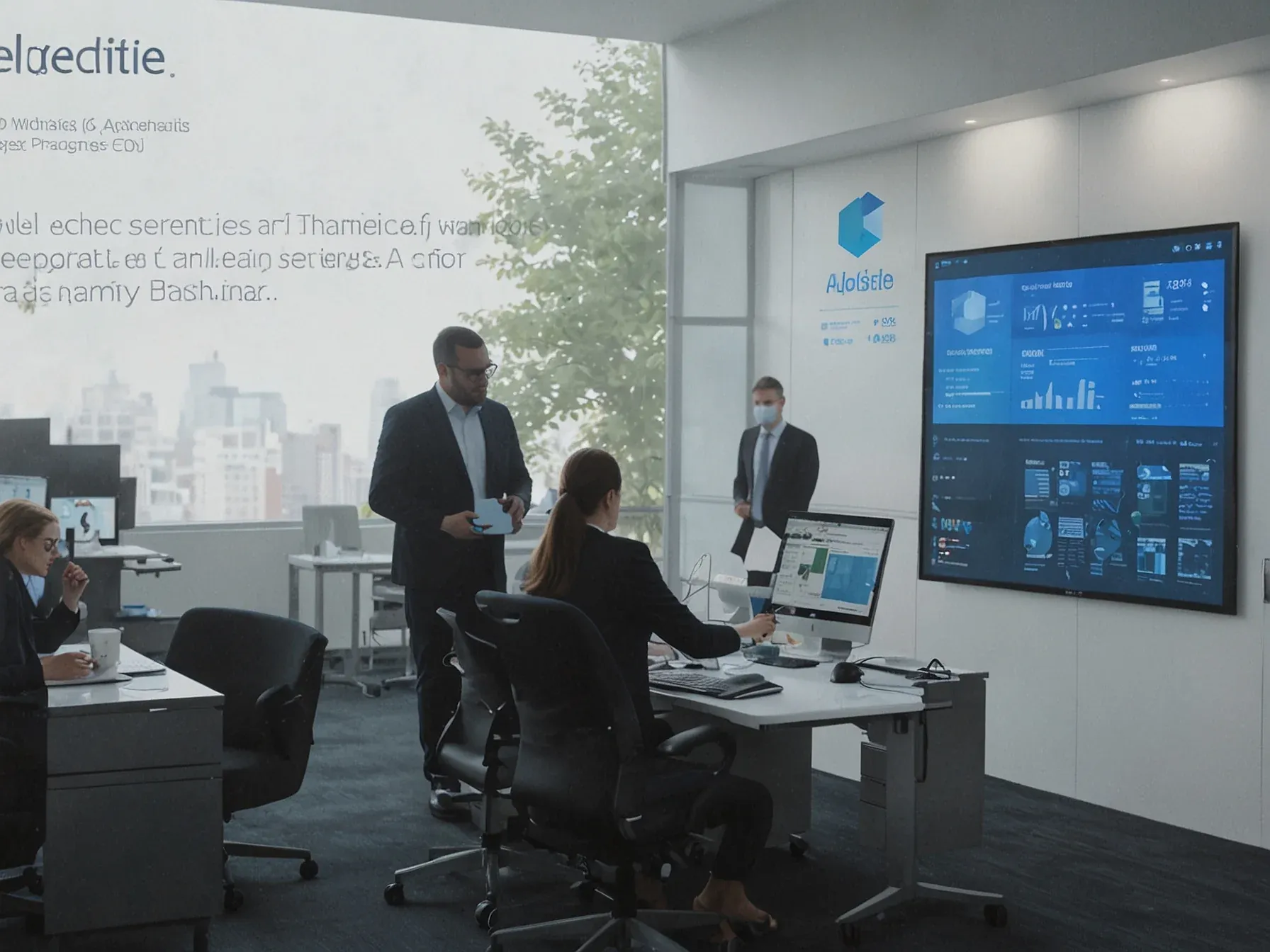
Editorial illustration for Deloitte: Over 60% of Large Firms to Scale Agentic AI by 2026
Agentic AI: 60% of Large Firms Set to Scale by 2026
Corporate AI is finally getting a job description. The consultants at Deloitte now predict that within two years, over 60% of large companies will have moved beyond dabbling with chatbots. They will have hardworking, specialized AI agents embedded in their actual operations.
This isn't about asking a model to draft an email. It's about building systems that can execute entire sequences of tasks, from parsing a vendor invoice to triaging a support ticket, without a human pressing go each time.
The shift from generic assistant to task-specific agent is the whole point. Gartner’s numbers frame the speed: they forecast that by the end of 2026, 40% of enterprise applications will contain these specialized agents. That’s up from less than 5% this year. The leap is enormous.
A Deloitte study predicts that by 2026, more than 60% of large enterprises will have deployed agentic AI at scale, marking a major increase from experimental phases to mainstream implementation.
That excerpt lands on the central technical hurdle: context engineering. Making an AI useful for real work means feeding it the right data at the right moment and teaching it which tools to use. It’s plumbing.
Unsexy, critical plumbing. Open standards like the Model Context Protocol are emerging to connect AI models to company data, but integrated platforms that handle this cleanly are still rare.
The forecasts from Deloitte and Gartner are clear. The path to get there is not. Every large firm now feels the competitive itch to automate, but most lack the internal wiring to make these agents work reliably.
They will try anyway. The next two years will be less about AI breakthroughs and more about messy, expensive implementation. The race is on to turn prediction into practice.
Related Reading
 Business & Startups
 Nordic pilot adds Gemini for Education, NotebookLM to boost AI literacy
 Business & Startups
 Kling launches Video O1, all-in-one model with MVL bridge using transformer
 Business & Startups
 DeepSeek Seeks More Capital Weeks After USD 7B Funding Round
 From Archives
 Mphasis launches quantum-safe AI tools for enterprise security and decisions
 From Archives
 Fortanix, NVIDIA unveil attestation-gated AI security for regulated industries
Common Questions Answered
What percentage of large enterprises does Deloitte predict will deploy agentic AI at scale by 2026?
According to Deloitte's research, over 60% of large enterprises will have deployed agentic AI at scale by 2026. This represents a significant shift from current experimental approaches to strategic, widespread AI integration in business operations.
How does Gartner forecast the integration of task-specific AI agents in enterprise applications?
Gartner predicts that by the end of 2026, 40% of enterprise applications will incorporate task-specific AI agents, a dramatic increase from less than 5% in 2025. This forecast highlights the rapid evolution of AI technologies and their growing importance in business contexts.
What does the shift to agentic AI represent for large companies?
The move to agentic AI signifies a transformation from experimental AI tinkering to strategic, deep integration of intelligent technologies into core business operations. This shift indicates that companies are no longer just testing AI, but preparing to fundamentally change how they approach technological innovation and business processes.
Further Reading
- Three New AI Breakthroughs Shaping 2026: AI Trends — Deloitte
- Agentic AI Stats 2026: Adoption Rates, ROI, & Market Trends — OneReach.ai
- Top 10 AI Trends to Watch in 2026 — USAII
- Agentic AI Implementation Guidelines for 2026: A Leader's Roadmap — Trixly AI
- The Future of AI Agents (2025-2026 Outlook) — Skywork.ai
