Editorial illustration for Anthropic Runs Biology Lab for AI Research, Says Life Sciences Head
Anthropic Opens Biology Lab to Test AI Models
Anthropic Runs Biology Lab for AI Research, Says Life Sciences Head
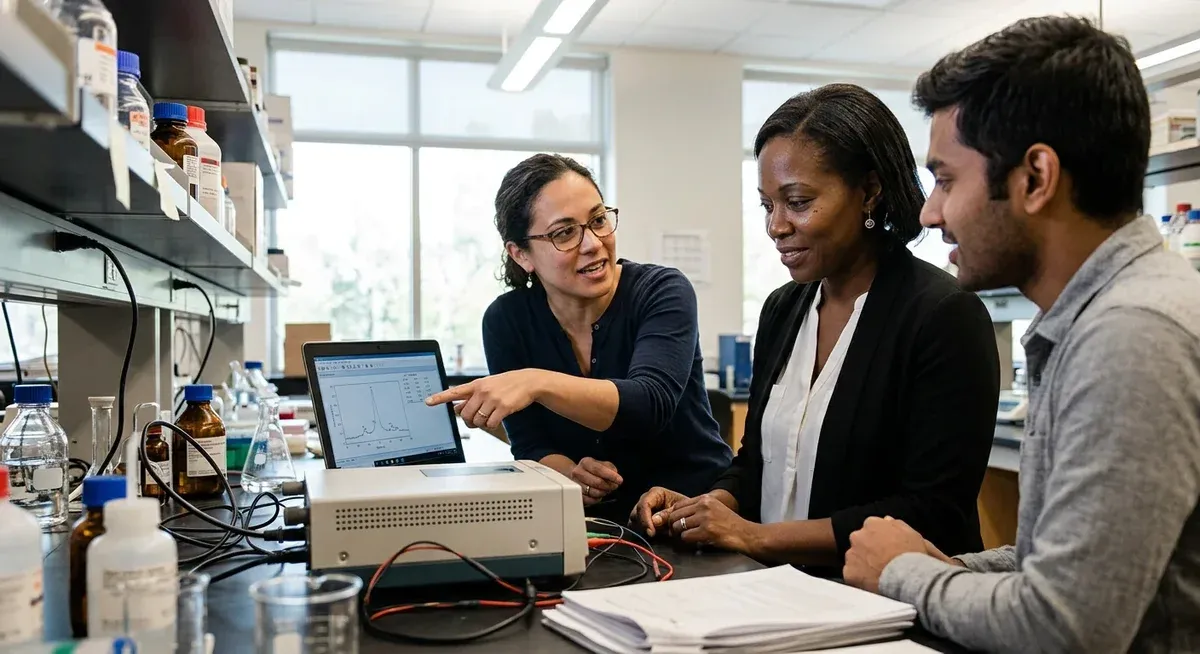
Anthropic has a wet lab. Not a metaphor, not a research partnership with someone else's beakers, an actual physical space where the company runs biology experiments and checks whether its AI models' predictions hold up against real cells and real chemistry. The company confirmed the setup to Reuters this week, ending months of speculation that started when Anthropic quietly acquired Coefficient Bio, a stealth AI biotech startup, back in April.
The timing matters. Dario Amodei told an audience just last week that AI could cure most major diseases within five to ten years, a claim that only holds up if there's some way to test an AI's biological theories outside a chatbot window. Anthropic won't say exactly what the lab is working on, only that drug discovery isn't the focus, a distinction that looks less like modesty and more like conflict avoidance given Anthropic's growing list of pharma partners, including a newly announced drug discovery collaboration with Novo Nordisk.
The company also rolled out a Life Sciences Verification Program this week, opening its strongest models to vetted researchers. Eric Kauderer-Abrams, Anthropic's head of life sciences, explained the reasoning behind keeping real lab work in the loop.
Anthropic bought Coefficient Bio, a stealth AI biotech, in April. It declined to say what the wet lab is working on, except that it’s not focused on drug discovery. Anthropic doesn’t want to give the appearance of competing with the pharma industry, where it has numerous major customers and partners.
Why this matters
Amodei's five-to-ten-year cure timeline sounds a lot less speculative once you learn Anthropic has an actual wet lab running actual experiments, not just a model spinning out hypotheses nobody checks. Kauderer-Abrams' point that "the final test is still in real lab work" is the tell here: Anthropic knows an LLM's biology output is worthless until it's validated against a physical assay, so they built the validation loop in-house rather than farming it out to a partner. For researchers, that's the detail worth tracking, not the cure claim itself.
A model paired with its own feedback mechanism can iterate on failed predictions in ways a model alone cannot, and that changes what "AI-driven biology" actually means in practice. For founders in the space, it also raises the bar. If frontier labs are now running physical experiments to close the loop on their own models, a chatbot wrapper with a biology prompt isn't a product.
We'd want to see what fraction of Anthropic's biology claims have actually been through that lab before taking the five-to-ten-year figure at face value.
Related Reading
Browse all Anthropic news → Research & Benchmarks
 Microsoft AI Chief: "If It Isn't Safe We Shouldn't Build It
 Research & Benchmarks
 Google's FACTS benchmark shows 70% factuality ceiling across four tests
 Research & Benchmarks
 Nvidia's DLSS 4.5 beta adds 6x Multi Frame Generation for RTX 50 GPUs
 Related Topic
 Claude gains shared context in Excel, PowerPoint; Microsoft adds Copilot Cowork
AI Tools & Apps
 Related Topic
 Anthropic: Hackers Stole Claude Tokens Via Compromised Session Key
LLMs & Generative AI
 From Archives
 AIPerf Benchmarks LLM Inference With Qwen3-0.6B
 From Archives
 Microsoft and OpenAI Workers Warn AI Is Harming the Web
 From Archives
 Anthropic Says Claude Leads Research, But Its AI Judge Could Repeat Errors
LLMs & Generative AI
 From Archives
 Anthropic's Claude Hacked OpenAI Systems in 72 Hours Via Forum Flaw
LLMs & Generative AI
Common Questions Answered
Why did Anthropic acquire Coefficient Bio and establish a wet lab?
Anthropic acquired Coefficient Bio in April to establish an actual physical laboratory where it can run biology experiments and validate its AI models' predictions against real cells and chemistry. Rather than relying solely on AI-generated hypotheses, the company built an in-house validation loop to test whether the models' biological outputs hold up in real lab work, recognizing that an LLM's biology output is worthless until validated through physical assays.
What is Anthropic's wet lab NOT focused on according to the company?
Anthropic has explicitly stated that its wet lab is not focused on drug discovery. The company made this clarification to avoid giving the appearance of competing with the pharmaceutical industry, where Anthropic has numerous major customers and partners.
How does Anthropic's wet lab support its five-to-ten-year cure timeline?
Anthropic's physical wet lab makes its ambitious five-to-ten-year cure timeline more credible by moving beyond theoretical AI predictions to actual experimental validation. By conducting real biology experiments in-house rather than farming out validation to external partners, Anthropic demonstrates it has the infrastructure to test and verify its AI models' biological hypotheses against real-world results.
What does Anthropic's life sciences head mean by 'the final test is still in real lab work'?
This statement emphasizes that AI-generated biological predictions are only valuable when validated through physical laboratory experiments and assays. Anthropic's decision to operate its own wet lab reflects the understanding that the ultimate proof of an AI model's biology capabilities must come from real experimental results, not just computational output.
Further Reading
- Anthropic builds wet lab for AI-driven drug discovery - Quartz
- Anthropic opens AI-powered biology research lab - SiliconANGLE
- Anthropic set up a wet lab to expand AI work in life sciences - The Hindu BusinessLine
- Anthropic Is Hiring Biologists, Building Wet Labs, and Betting Big on Drug Discovery - SynBioBeta
- Anthropic Quietly Opens Bay Area Wet Lab to Drive AI-Powered Life-Sciences Expansion - TechStrong.ai
