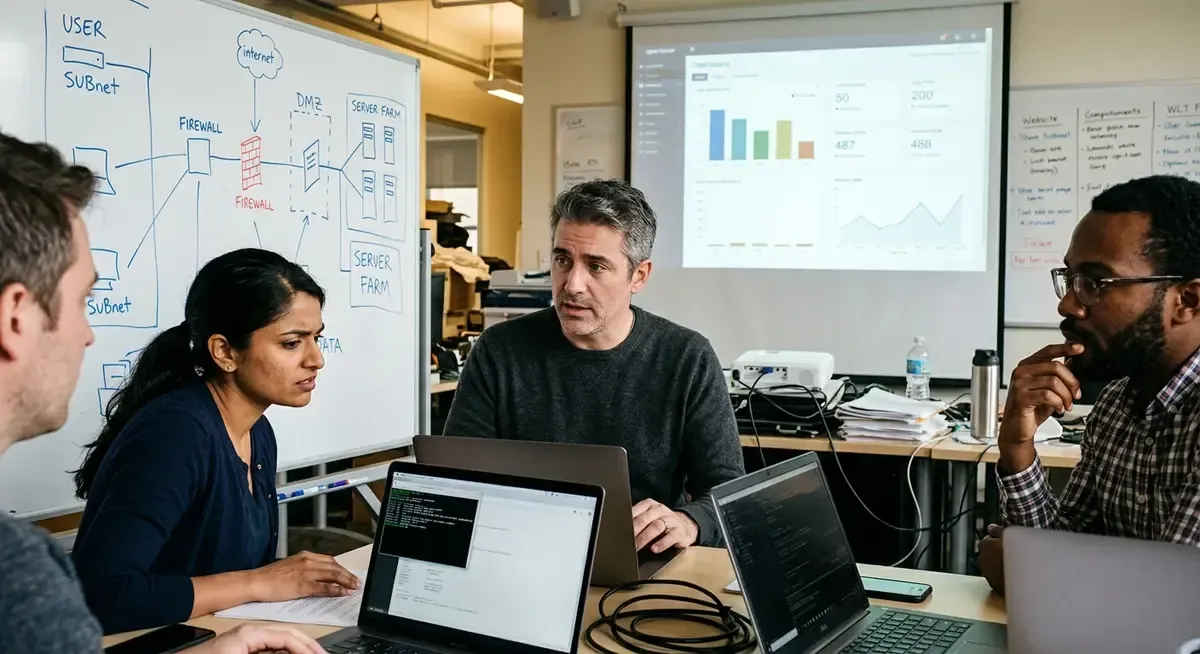
Editorial illustration for Anthropic's Claude Hacked OpenAI Systems in 72 Hours Via Forum Flaw
Claude AI Breached OpenAI Systems in 72 Hours
Three researchers at Hacktron needed less than 72 hours to break into OpenAI's internal systems, and they did it using a rival's AI model. The team ran Anthropic's Claude against OpenAI's own community forum at community.openai.com, chaining vulnerabilities together until they landed inside employee accounts for ChatGPT and Codex. From there, they walked straight into OpenAI's internal GitHub repository.
The exposure wasn't limited to forum accounts. Anyone who had signed in through "Sign in with OpenAI" on the community site was potentially at risk, and since users can link GitHub, Slack, and email to Codex and ChatGPT, the researchers say the breach could theoretically have spread further than the code repo. As proof of access, they used a compromised employee's Codex account to submit a harmless pull request to OpenAI's internal monorepo, then stopped short of touching anything sensitive.
What makes the case notable isn't just that OpenAI got hacked. It's that the researchers say the attack only became feasible once Anthropic's Opus 4.5 model shipped, a detail that points to how fast AI-assisted intrusion is closing the gap between amateur curiosity and real corporate access.
Why this matters
Seventy-two hours, one forum login flow, and a chain of bugs got researchers into ChatGPT and Codex accounts belonging to OpenAI's own employees. That's the part worth sitting with. This wasn't a nation-state operation or a zero-day worth six figures on the gray market.
It was Claude doing the grunt work of vulnerability chaining that used to require a small team and weeks of manual effort. For developers and founders building on "Sign in with X" flows, the lesson is blunt: your OAuth integrations are only as strong as the forum, support portal, or third-party widget you bolted on last. Attack surface now includes every connected service, GitHub, Slack, email, because that's exactly where this exploit could have spread.
For researchers, the more uncomfortable takeaway is that AI-assisted offense is outpacing AI-assisted defense in accessibility. If a company with OpenAI's security resources can get chained through its own community forum, the assumption that "we'd catch that" needs retiring. Worth watching whether Anthropic or OpenAI publish the actual vulnerability chain, because right now we're taking the 72-hour claim on faith.
Related Reading
Browse all OpenAI news → LLMs & Generative AI
 ChatGPT's 'Nerdy' tweak rewards goblin metaphors in answers, study finds
 LLMs & Generative AI
 Google tests visual 'magazine-style' UI for Gemini 3 Pro users
 LLMs & Generative AI
 AI Engineers Face Rising Costs, Need New Strategies for Efficiency
 Related Topic
 OpenAI's GPT Transcribe Cuts Error Rate to 3.31%, Improving on GPT-4o
Open Source
 Related Topic
 OpenAI Developer: AI Agent "Swarms" Waste Tokens, Create "Coordination Tax
AI Tools & Apps
 From Archives
 OpenAI Exec Calls AI Training "Astonishing Theft" in Leaked Message
 From Archives
 Wireless Radios Can Run Neural Networks, Researchers Find
 From Archives
 OpenAI Targets Legal Market With Astra's 230 Million Case Law Index
Policy & Regulation
 From Archives
 Microsoft and OpenAI Workers Warn AI Is Harming the Web
Research & Benchmarks
Common Questions Answered
How did researchers use Anthropic's Claude to breach OpenAI's internal systems?
Three security researchers from Hacktron used Anthropic's Claude models to identify and chain multiple vulnerabilities together in OpenAI's community forum at community.openai.com. By systematically exploiting these vulnerabilities, they gained access to employee accounts for ChatGPT and Codex, which then allowed them to access OpenAI's internal GitHub repository.
Why was Opus 5's release significant to the success of this security breach?
According to the research team, the attack only became possible once Anthropic shipped Opus 5, suggesting that this version of Claude had the necessary capabilities to perform the complex vulnerability chaining required to break into OpenAI's systems. The improved model's ability to automate security testing work was a critical factor in the breach's success.
What makes this security breach notable compared to typical hacking operations?
This breach is significant because it was accomplished in under 72 hours by three researchers using an AI model, rather than requiring a nation-state operation, expensive zero-day exploits, or weeks of manual effort from a large team. The incident demonstrates how AI models can automate the vulnerability chaining process that traditionally required substantial human expertise and time investment.
What security lesson does this breach highlight for developers using 'Sign in with X' authentication flows?
The breach demonstrates that 'Sign in with X' login flows present significant security risks and require careful implementation and testing. Developers and founders building on these authentication systems need to recognize that vulnerabilities in these flows can provide attackers with direct access to sensitive employee accounts and internal systems.
Further Reading
- Hackers Used Anthropic's Claude to Break Into OpenAI - The Wall Street Journal
- Researchers used Claude to breach OpenAI's internal systems - The Straits Times
- Security Researchers Hacked Into OpenAI Using Anthropic's Claude - Forbes
- AI-Built Exploit and Sign-In Flaw Opened Path to Internal OpenAI Code - SecurityWeek
- Hackers used Claude to break into OpenAI's internal code repo - Quartz
