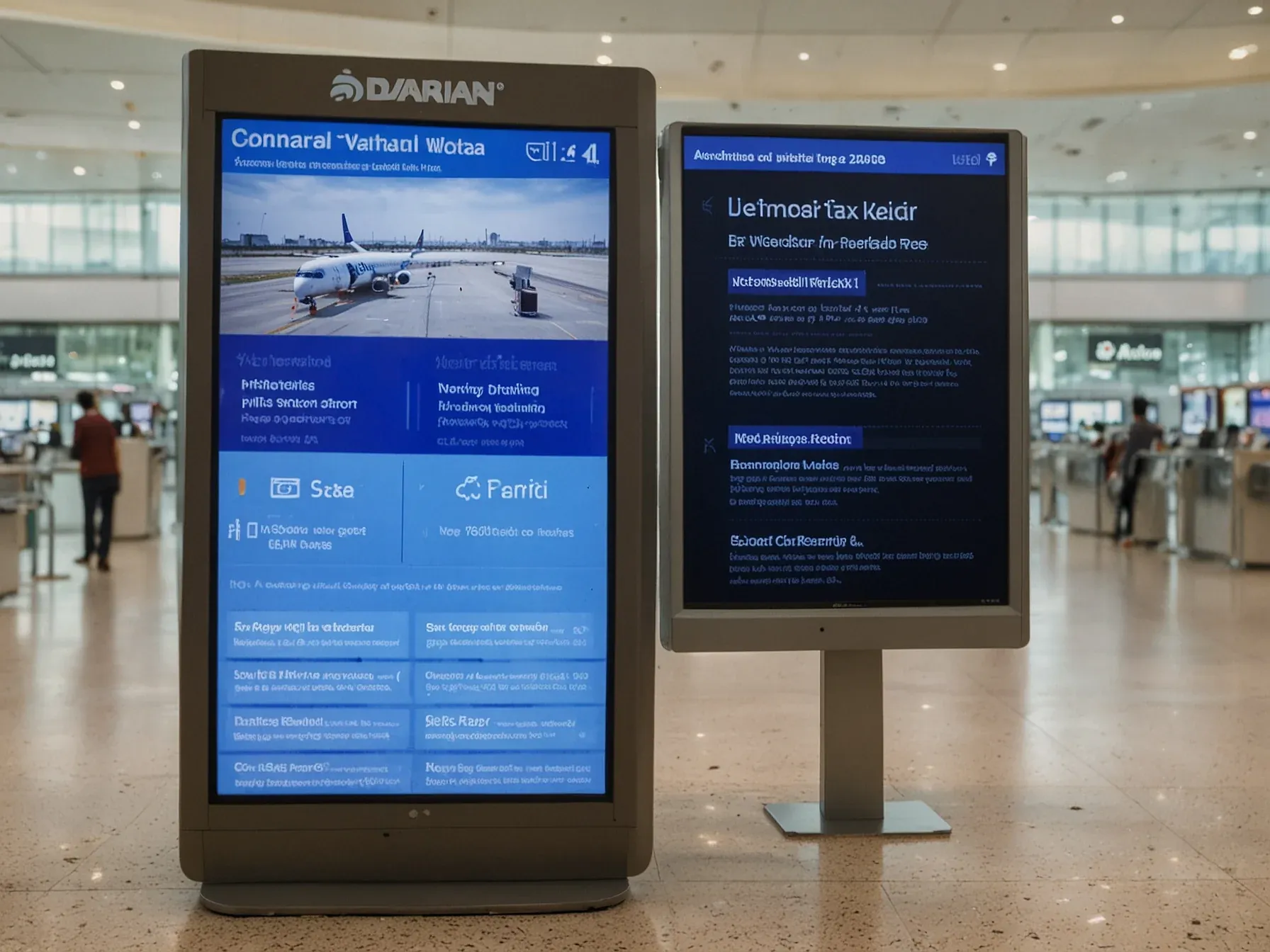
Editorial illustration for Adani Airport Holdings Teams Up with AionOS for AI Travel Language Service
Adani Airports Unveil AI Language Service with AionOS Tech
Adani Airport Holdings partners with AionOS for multilingual AI travel service
Airports are stress factories. Language barriers turn the screws tighter. Now, the Adani Group—which operates eight of India’s largest airports, including Mumbai and Delhi—is placing a bet.
Its wager? That a single, multilingual AI agent can cut through the chaos. This isn't just another tech trial.
The partnership is with AionOS, a firm built by former Tech Mahindra chief CP Gurnani, a veteran who knows scale. The goal is stark: to replace or augment the traditional help desk with one system that works everywhere—on apps, websites, over the phone, and at physical kiosks.
Adani Airport Holdings Limited (AAHL), a subsidiary of Adani Enterprises Limited, has announced a strategic deal with AionOS, a digital transformation company built by former Tech Mahindra veteran CP Gurnani, to implement a multi-lingual omni-channel agentic AI solution that would enhance the conventional passenger help desk experience for passengers. The new solution would not just provide consistent engagement experience across all channels across all Adani Airports, but connect with passengers to offer personalised, multilingual support like never before, according to an official release. Through the collaboration, AionOS will bring its proprietary Agentic AI platform, IntelliMate, delivering domain-led Conversational AI and automation, enabling Adani Airports to engage with customers and employees across multiple touchpoints, including voice, chat, web, and mobile, in their preferred languages.
Consistency is the core promise. Imagine a traveler, lost and asking the same question via chat, a touchscreen, and finally a desperate phone call. They’d get the same clear answer each time, in Hindi, English, or a dozen other tongues.
That targets a genuine, grinding pain point. Human staff and static signs can’t cover the linguistic sprawl of a major hub like Kempegowda International Airport in Bangalore. The tech powering this is AionOS’s “IntelliMate” platform, engineered to parse airport-specific queries about gates, baggage, and delays.
If it works, it frees human agents for truly complex problems. It could also fail. Spectacularly.
Chatbots are notorious for circular logic and missing nuance. For Adani, the calculus is practical: smoother flow means happier passengers and sharper operations. It’s also a branding coup, painting their airports as cutting-edge.
The real test isn’t in a press release. It’s on a crowded concourse at midnight when flights are canceled. An AI that hands out clear, instant rebooking instructions in multiple languages would be a minor miracle.
A confusing one? Just another layer of modern frustration.
Related Reading
 Business & Startups
 Nordic pilot adds Gemini for Education, NotebookLM to boost AI literacy
 Business & Startups
 Kling launches Video O1, all-in-one model with MVL bridge using transformer
 Business & Startups
 DeepSeek Seeks More Capital Weeks After USD 7B Funding Round
 From Archives
 Tata Communications and NiCE combine AI suites for agent-first contact centres
 From Archives
 Shunyalabs launches Zero STT Med, beating Whisper and AWS in medical ASR accuracy
Common Questions Answered
How will the AionOS partnership transform passenger communication at Adani airports?
The strategic collaboration will implement a multi-lingual omni-channel agentic AI solution that enhances the traditional passenger help desk experience. This innovative approach aims to provide consistent engagement across all communication channels and simplify interactions for travelers speaking different languages.
Who is CP Gurnani and what role does he play in the AionOS partnership with Adani Airport Holdings?
CP Gurnani is a former Tech Mahindra veteran who founded AionOS, a digital transformation company. He is instrumental in developing the AI solution that will help Adani Airport Holdings improve passenger communication and support across their airport network.
What specific technological improvements will the AionOS AI solution bring to Adani airports?
The new AI solution will introduce a multi-lingual platform that enables consistent passenger engagement across different communication channels. By leveraging artificial intelligence, the system aims to break down language barriers and provide more seamless, efficient support for travelers at Adani-managed airports.
Further Reading
- Adani Airports inks deal with InterGlobe's AIONOS for agentic AI solution — The New Indian Express
- Adani Airports signs deal with AIONOS for personalized passenger experiences — The Economic Times
- Adani Airport Holdings Partners With AIONOS To Revolutionize Passenger Experience By Introducing Advanced Multilingual AI System Across India’s Leading Airports — Travel and Tour World
- Adani ties up with AIONOS to provide flyers AI-driven personalised multilingual support — The Statesman
