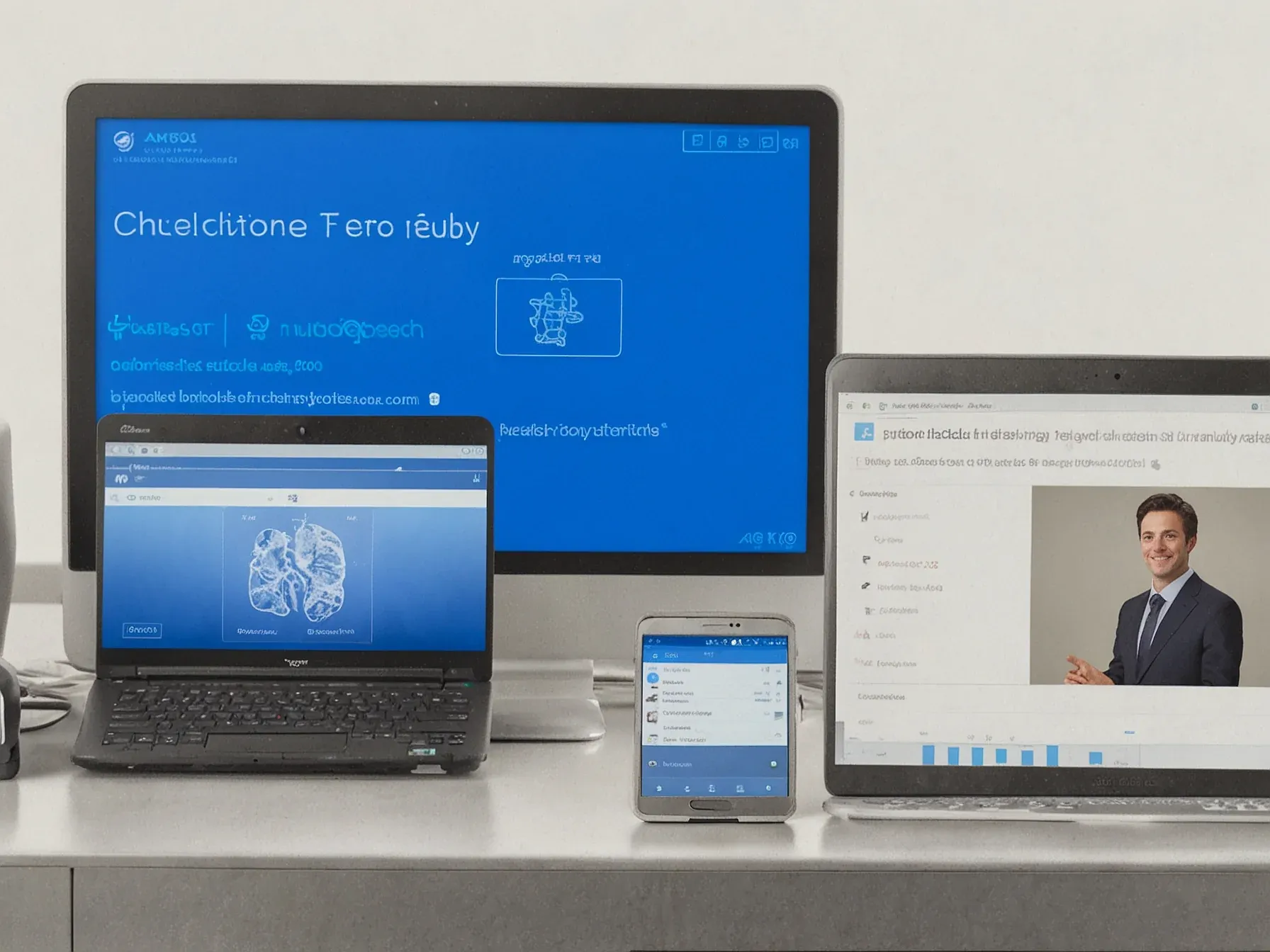
Editorial illustration for Shunyalabs Unveils Zero STT Med: New Medical Speech AI Tops Whisper, AWS
Shunyalabs Beats Whisper in Medical Speech Recognition
Shunyalabs launches Zero STT Med, beating Whisper and AWS in medical ASR accuracy
Doctors are drowning in paperwork. The speech recognition tools thrown to them as a lifeline? They often sink, overwhelmed by the specialized vocabulary of medicine—the drug names, the anatomical terms, the procedural codes.
From Bengaluru, startup Shunyalabs says it has engineered a solution. Its new system, Zero STT Med, is built from the ground up for clinical walls. The pitch is direct: it hears "furosemide" or "hemicolectomy" with markedly better accuracy than offerings from giants like OpenAI or Amazon.
This goes beyond efficiency. A misheard dosage in a patient record is a genuine safety event. The model targets that risk, aiming to reclaim hours lost to transcription errors.
Shunyalabs.ai, a Bengaluru-based voice AI infrastructure company, has announced the launch of Zero STT Med, a domain-optimised automatic speech recognition (ASR) system designed specifically for medical and clinical workflows. The new system promises high accuracy, rapid training, and flexible deployment options, targeting hospitals, telemedicine platforms, and ambient scribe systems. According to the company, Zero STT Med achieves a word error rate (WER) of 11.1% and a character error rate (CER) of 5.1%, outperforming major ASR competitors such as OpenAI's Whisper, ElevenLabs Scribe, and AWS Transcribe. The system can be trained in just three days on 2×A100 GPUs, significantly reducing the data and compute requirements for healthcare speech models.
That 11.1% word error rate is the headline number, a concrete stake in the ground against Whisper and AWS. But the three-day training cycle on just two GPUs may be the real game-changer for a hospital's IT department. It suggests customization without a massive project.
Shunyalabs is betting the market is moving past general-purpose AI. The next phase, they contend, belongs to vertical tools that master one field’s impossible language. Ultimate validation will happen in the wild—a noisy ward, a frantic triage area.
The principle, however, is unimpeachable. To transcribe medicine, you must first understand it.
Related Reading
 Business & Startups
 Nordic pilot adds Gemini for Education, NotebookLM to boost AI literacy
 Business & Startups
 Kling launches Video O1, all-in-one model with MVL bridge using transformer
 Business & Startups
 DeepSeek Seeks More Capital Weeks After USD 7B Funding Round
 Related Topic
 OpenAI Calls Apple's Lawsuit 'Rotten to Its Core' in Rebuttal
Policy & Regulation
 Related Topic
 Meta Faces Lawsuit Over AI Training Data, Facial Recognition
Policy & Regulation
 From Archives
 Confluent launches Real-Time Context Engine to unify stale data for AI
 From Archives
 ServiceNow lifts 2025 subscription revenue outlook to USD 12.8 B, 20% growth
 From Archives
 Google Cloud offers managed Slurm to rival CoreWeave and AWS in AI training
 From Archives
 Wolf King’s pseudo-stop-motion animation draws Avatar and Dragon Prince fans
Common Questions Answered
How does Zero STT Med's word error rate compare to other speech recognition systems?
Zero STT Med achieves an impressive word error rate (WER) of 11.1%, which is significantly lower than existing solutions like Whisper and AWS. This low error rate indicates superior accuracy in transcribing medical and clinical conversations, potentially reducing documentation errors and saving healthcare professionals valuable time.
What makes Zero STT Med unique in medical speech recognition technology?
Zero STT Med is a domain-optimized automatic speech recognition (ASR) system specifically designed for medical and clinical workflows, unlike generic speech-to-text tools. The system offers high accuracy, rapid training capabilities, and flexible deployment options tailored to the complex language and terminology of healthcare environments.
Which healthcare platforms can benefit from Shunyalabs' Zero STT Med technology?
Zero STT Med is targeted at hospitals, telemedicine platforms, and ambient scribe systems that require precise medical documentation. By addressing the persistent challenge of accurate speech transcription in clinical settings, the technology can help medical professionals reduce the hours spent manually transcribing patient interactions.
Further Reading
- Papers with Code - Latest NLP Research — Papers with Code
- Hugging Face Daily Papers — Hugging Face
- ArXiv CS.CL (Computation and Language) — ArXiv
