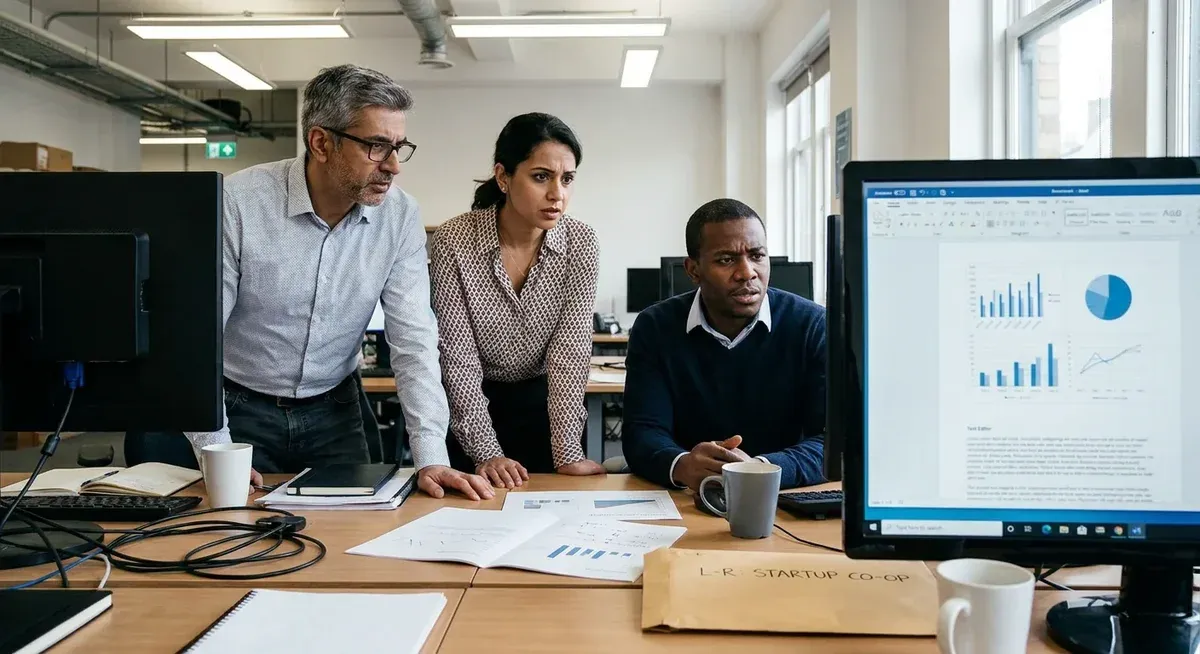
Editorial illustration for Silicon Valley Split on Regulating Chinese AI Models
Silicon Valley Divided on Chinese AI Regulation
Silicon Valley Split on Regulating Chinese AI Models
Alibaba stealing Anthropic's intellectual property through distillation. Moonshot AI allegedly copying Anthropic's Fable 5 model to build Kimi K3. These are the accusations now circulating in Washington and in Silicon Valley boardrooms, and they point to a fight that's only getting louder: what to do about Chinese-made AI models that increasingly rival, or beat, the best American systems.
WIRED's Hugo Lowell has covered how the Trump administration is wrestling internally with this question. But the split runs deeper inside the AI industry itself. Open-weight models, the kind whose core components are published for anyone to fine-tune, have become the flashpoint.
They spread fast, showing up on Hugging Face, GitHub, cloud platforms, and local setups almost as soon as they're released, according to Yasir Atalan, deputy director and data fellow at the Center for International and Strategic Studies. That speed is the whole point for the labs building them. It's also exactly what worries companies like Anthropic, which has spent years marketing itself on caution and guardrails that Chinese competitors don't seem interested in matching.
The result is a Silicon Valley that can't agree on whether these models are a threat, a rival, or something to quietly learn from.
A huge debate is brewing in Silicon Valley over the proliferation of Chinese-made artificial intelligence tools, particularly “open-weight” AI systems that, by some measures, can compete with or even outperform some of the best US models.
Why this matters
The incentives here are obvious once you follow the money. Anthropic sells safety as a feature and charges for proprietary access, so it benefits from a regulatory regime that slows down free Chinese alternatives. Smaller startups building on top of open-weight models from Chinese labs have the opposite incentive: any restriction cuts off cheap, capable infrastructure they don't have the capital to replicate themselves.
Neither side is arguing from pure principle, and we shouldn't pretend otherwise. For developers and founders, the practical question is whether Washington's eventual rules will track actual security risks or just codify who already has a moat. If regulation lands in a way that only trillion-dollar labs can absorb, smaller players lose access to the models keeping their costs down, and the market consolidates around exactly the companies pushing hardest for restrictions.
Anyone building products on open-weight Chinese models right now should watch the DC debate closely, because the outcome will decide whether their current stack is still legal, or economical, twelve months from now.
Related Reading
 LLMs & Generative AI
 ChatGPT's 'Nerdy' tweak rewards goblin metaphors in answers, study finds
 LLMs & Generative AI
 Google to End Free Access to Gemini AI for Non-Subscribers
 LLMs & Generative AI
 AI Engineers Face Rising Costs, Need New Strategies for Efficiency
 From Archives
 OpenAI adds voice to ChatGPT desktop, can now access apps and websites
 From Archives
 Anthropic expands voice mode to Gmail, Slack apps
Common Questions Answered
What specific accusations have been made against Chinese AI companies like Alibaba and Moonshot AI?
Alibaba has been accused of stealing Anthropic's intellectual property through distillation techniques, while Moonshot AI is allegedly copying Anthropic's Fable 5 model to build their Kimi K3 system. These accusations are circulating in Washington and Silicon Valley boardrooms as tensions escalate over Chinese-made AI models.
How do open-weight Chinese AI models compare to American AI systems?
Open-weight Chinese AI systems are increasingly competitive with or even outperforming some of the best American models by certain measures. This proliferation of capable Chinese-made AI tools has become a major point of contention in Silicon Valley regarding regulatory policy.
Why does Anthropic have different incentives regarding Chinese AI regulation compared to smaller startups?
Anthropic sells safety as a feature and charges for proprietary access, so it benefits from regulations that slow down free Chinese alternatives. In contrast, smaller startups building on top of open-weight Chinese models have opposite incentives, as any restrictions would cut off the cheap, capable infrastructure they cannot afford to replicate themselves.
What is the core disagreement in Silicon Valley over Chinese AI regulation?
Silicon Valley is completely divided over how to regulate Chinese-made AI tools, with different stakeholders arguing from financial self-interest rather than pure principle. Companies like Anthropic want restrictions to protect their proprietary models, while startups relying on open-weight Chinese systems oppose regulations that would limit their access to affordable AI infrastructure.
Further Reading
- Silicon Valley and Washington Clash Over Chinese AI Regulations - The Chosun Ilbo
- Top American AI Execs Sound Alarm on Chinese Models - The Wall Street Journal
- US tech firms debate curbs on Chinese AI - Semafor
- Silicon Valley is freaking out over China's open-source AI strategy - Business Insider
- China's Open AI Models Are Challenging Silicon Valley's Playbook - Wired
