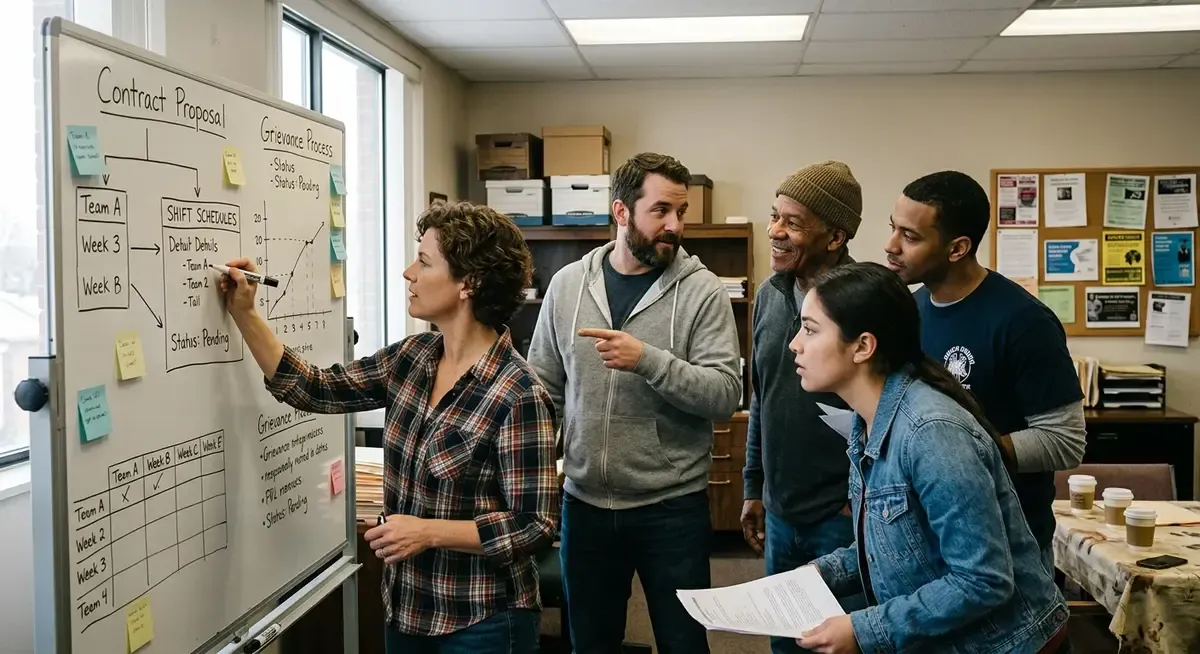
Editorial illustration for WGA East Executive Director Condemns Tech Oligarchs Pushing AI
WGA Slams Tech Oligarchs Over AI Existential Risk
WGA East Executive Director Condemns Tech Oligarchs Pushing AI
Disney, Netflix, Amazon and Lionsgate all got the same email from The Verge this month: what do you make of the warnings coming out of the AI industry itself, the ones about the technology posing an existential risk to humanity? None answered. Neither did the film startups building generative AI tools for studio work. The silence stands out given how aggressively some of these companies have moved to adopt AI in production over the past two years.
Two unions did respond. SAG-AFTRA and the Writers Guild of America East, which represent the actors and writers most directly affected by AI's arrival on set and in the writers' room, gave The Verge their read on the doomsday rhetoric coming from AI labs. Their answers didn't sound much like the warnings from people such as former Anthropic researcher Jacob Coxon, who quit over safety concerns, or Anthropic's Evan Hubinger, who has floated the idea that AI could "kill all humans" within a decade.
For Hollywood's labor groups, the danger isn't some future extinction event. It's what AI is already doing to jobs, contracts, and creative control right now.
As the tech sector sounds alarms about AI’s potential to destroy humanity, entertainment labor groups are urging the public to stay focused on what’s already happening.
Why this matters
Wheeler's line about "rampant dishonesty" cuts at something we've been watching for a while: the same executives who sign open letters about AI wiping out humanity are the ones quietly signing licensing deals and cutting union jobs. That gap between doomsday rhetoric and Monday-morning deployment decisions is where the real story sits, not in the hypothetical extinction scenarios. Disney, Netflix, Amazon, and Lionsgate all declining to comment tells us plenty too.
Silence from studios actively rolling out generative tools, while labor groups name names, suggests the industry would rather let the "existential risk" conversation absorb attention than answer for what's happening on set right now. For anyone building or funding AI tools aimed at film and TV, this is the environment you're entering: workers and their unions have stopped taking the existential framing at face value, and they're going to keep pointing at contracts, credits, and paychecks instead. Read the specifics, not the manifestos.
The next thing worth watching is whether SAG-AFTRA follows WGAE's tone or tries to split the difference.
Related Reading
 LLMs & Generative AI
 ChatGPT's 'Nerdy' tweak rewards goblin metaphors in answers, study finds
 LLMs & Generative AI
 Google tests visual 'magazine-style' UI for Gemini 3 Pro users
 LLMs & Generative AI
 AI Engineers Face Rising Costs, Need New Strategies for Efficiency
 From Archives
 Anthropic's Claude Hacked OpenAI Systems in 72 Hours Via Forum Flaw
 From Archives
 OpenAI Exec Calls AI Training "Astonishing Theft" in Leaked Message
Common Questions Answered
Why did major studios like Disney, Netflix, and Amazon refuse to comment on AI existential risk warnings?
The studios' silence is notable given their aggressive adoption of AI in production over the past two years, suggesting a disconnect between public concerns about AI and their private business decisions. Their refusal to respond contrasts sharply with the open letters tech executives have signed about AI's potential to destroy humanity, highlighting the gap between doomsday rhetoric and actual deployment strategies.
What is the main criticism from entertainment labor unions like SAG-AFTRA and WGA East regarding tech oligarchs and AI?
Entertainment labor groups argue that the tech sector's alarms about AI's existential risk to humanity distract from the immediate, real-world consequences already happening in the industry. They point out that the same executives signing letters about AI apocalypse scenarios are simultaneously cutting union jobs and signing licensing deals, representing what the article calls 'rampant dishonesty.'
How does the article characterize the difference between tech executives' public statements and their business actions regarding AI?
The article highlights a significant gap between doomsday rhetoric and Monday-morning deployment decisions, where executives publicly warn about AI wiping out humanity while privately pursuing aggressive AI adoption and cost-cutting measures. This contradiction between existential risk warnings and actual business practices is presented as the real story, rather than hypothetical extinction scenarios.
What did WGA East Executive Director Wheeler mean by criticizing 'rampant dishonesty' in the tech sector's approach to AI?
Wheeler's criticism refers to the contradiction where tech executives simultaneously sound alarms about AI's catastrophic potential while quietly implementing AI tools that eliminate entertainment industry jobs and cut union positions. This disconnect between public warnings and private profit-driven decisions represents a form of dishonesty that labor groups want the public to recognize and focus on.
Further Reading
- What Hollywood thinks about existential AI warnings - The Verge
- Hollywood animation, VFX unions fight AI job cut threat - Context News
- As AI auditions for a leading role in the entertainment industry, workers race for protections - ZDNet
- A Test Case for AI Creep in Hollywood - The Atlantic
- AI Will Disrupt Countless Animation Jobs Over Next 3 Years - Cartoon Brew
