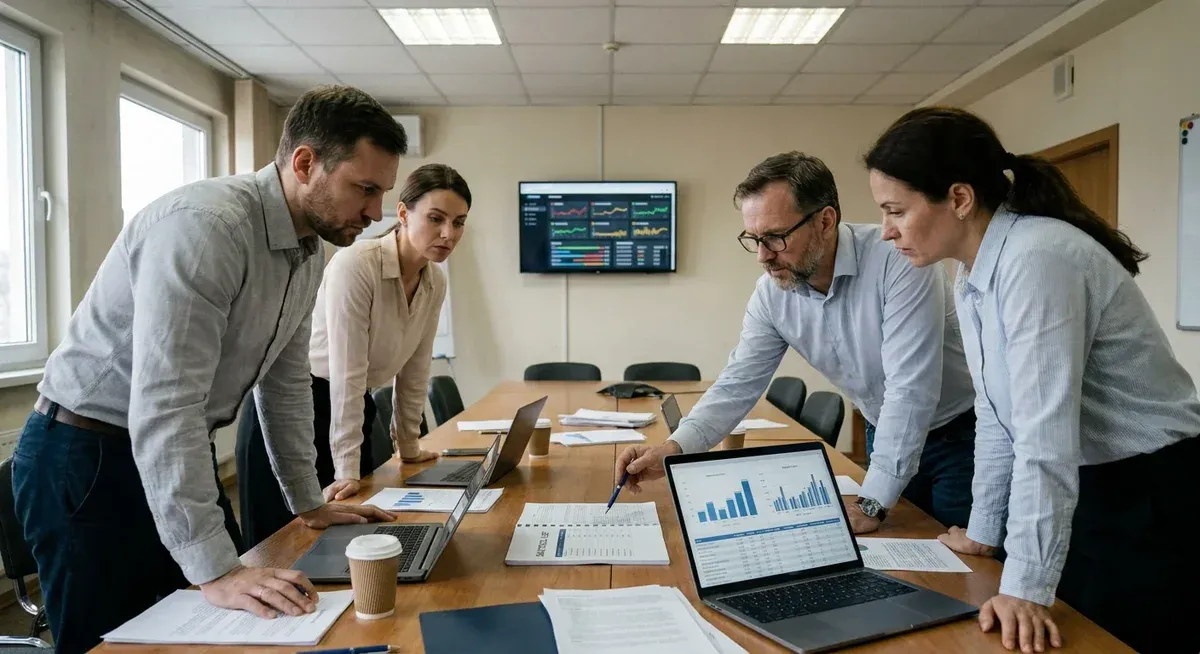
Editorial illustration for Trump Administration Weighs Ban on Chinese AI Models
Trump Admin Plans Quiet Ban on Chinese AI Models
The Trump administration doesn't need a formal ban to keep Chinese AI models out of the US market. According to Axios, officials at the Department of Commerce, the NSA, and the White House have spent months since 2025 assembling a quieter set of tools: sanctions list placements for Chinese AI labs, security warnings to enterprises, and an executive order that would saddle US companies hosting Chinese models with new liability and security requirements. Commerce reportedly drafted rules as early as last summer aimed at shielding domestic supply chains from Chinese open-source models, though advisers pushing a lighter regulatory touch stalled that effort at the time.
That balance has since shifted. The release of China's Kimi K3 model, paired with staff changes inside the White House, has given hawks on AI policy more room to push tighter restrictions. None of this requires an outright prohibition on Chinese models.
Procurement rules, sanction threats, and pressure campaigns aimed at US firms using Chinese AI can do the same job with less political exposure. One person close to the administration described the approach to Axios in blunt terms.
A direct ban wouldn't even be necessary. A source close to the government told Axios that "what's actually happening is slower and more durable," pointing to procurement rules, sanctions threats, and public pressure campaigns against U.S. companies that use Chinese models.
Why this matters
For developers and founders building on models like DeepSeek or Qwen, the risk isn't a dramatic overnight ban, it's the slow accumulation of friction: a sanctions listing here, a security warning there, an executive order buried in procurement rules. That's harder to plan around than a clean prohibition. Teams that quietly wired Chinese open-weight models into products because they're cheap and capable now have to weigh whether Commerce Department action or an NSA advisory could make that choice a liability, legally or reputationally, with little warning.
Researchers should watch whether this pressure campaign draws a sharper line between "using an open model" and "trusting a hosted service run by a sanctioned lab," since those carry very different exposure. Axios reporting suggests officials themselves haven't settled on one mechanism, which means the rules could shift multiple times before anything is finalized. Anyone with roadmaps tied to Chinese-origin models should start building contingency plans now, not after Commerce or the White House makes something official.
Related Reading
 Policy & Regulation
 Akamai Proposes SAFE Cybersecurity Guidelines for AI Threats
 Policy & Regulation
 After ditching AI fitness apps and a Fitbit, I return to Peloton classes
 Policy & Regulation
 Sony Music, Warner Chappell Sue Anthropic Over "Blatant Theft
 From Archives
 Publishers sue Google over unauthorized AI book training
 From Archives
 DeepMind CEO proposes independent AI regulator as White House advisor voices skepticism
Common Questions Answered
What indirect methods is the Trump administration using instead of a formal ban on Chinese AI models?
Rather than implementing a direct ban, the Trump administration is using a combination of indirect tools including sanctions list placements for Chinese AI labs, security warnings to enterprises, and executive orders that would impose new liability and security requirements on US companies hosting Chinese models. According to officials at the Department of Commerce, NSA, and the White House, this approach is described as "slower and more durable" than a formal prohibition.
How does the slow accumulation of friction strategy affect developers using Chinese AI models like DeepSeek or Qwen?
Developers and founders face a more difficult planning challenge because the risks come gradually through multiple pressure points rather than a single clear prohibition. The accumulation of sanctions listings, security warnings, and procurement rule changes makes it harder for teams to assess long-term viability of products built on Chinese open-weight models, even if those models are cheap and capable.
What specific government agencies are involved in assembling tools to restrict Chinese AI models in the US?
The Department of Commerce, the NSA, and the White House have spent months since 2025 assembling the strategy to keep Chinese AI models out of the US market. These agencies have been working together on drafting rules, developing sanctions strategies, and coordinating security warnings to enterprises and US companies.
Why might a direct ban on Chinese AI models be less effective than the indirect approach being pursued?
A direct ban would be easier for companies to plan around and could be challenged legally or diplomatically. The indirect approach using procurement rules, sanctions threats, and public pressure campaigns is described as "slower and more durable," creating ongoing uncertainty and friction that makes it harder for US companies to justify using Chinese models without clear legal consequences.
Further Reading
- The secret Trump administration battle to fight Chinese AI - Axios
- Trump administration issues plan to limit AI exports to China - South China Morning Post
- Lawmakers probe growing use of Chinese AI models in U.S. companies - CNBC
- US lawmakers introduce bill to bar Chinese AI in US government agencies - Reuters
- Trump Eases AI Rules to Race China - Model Diplomat
