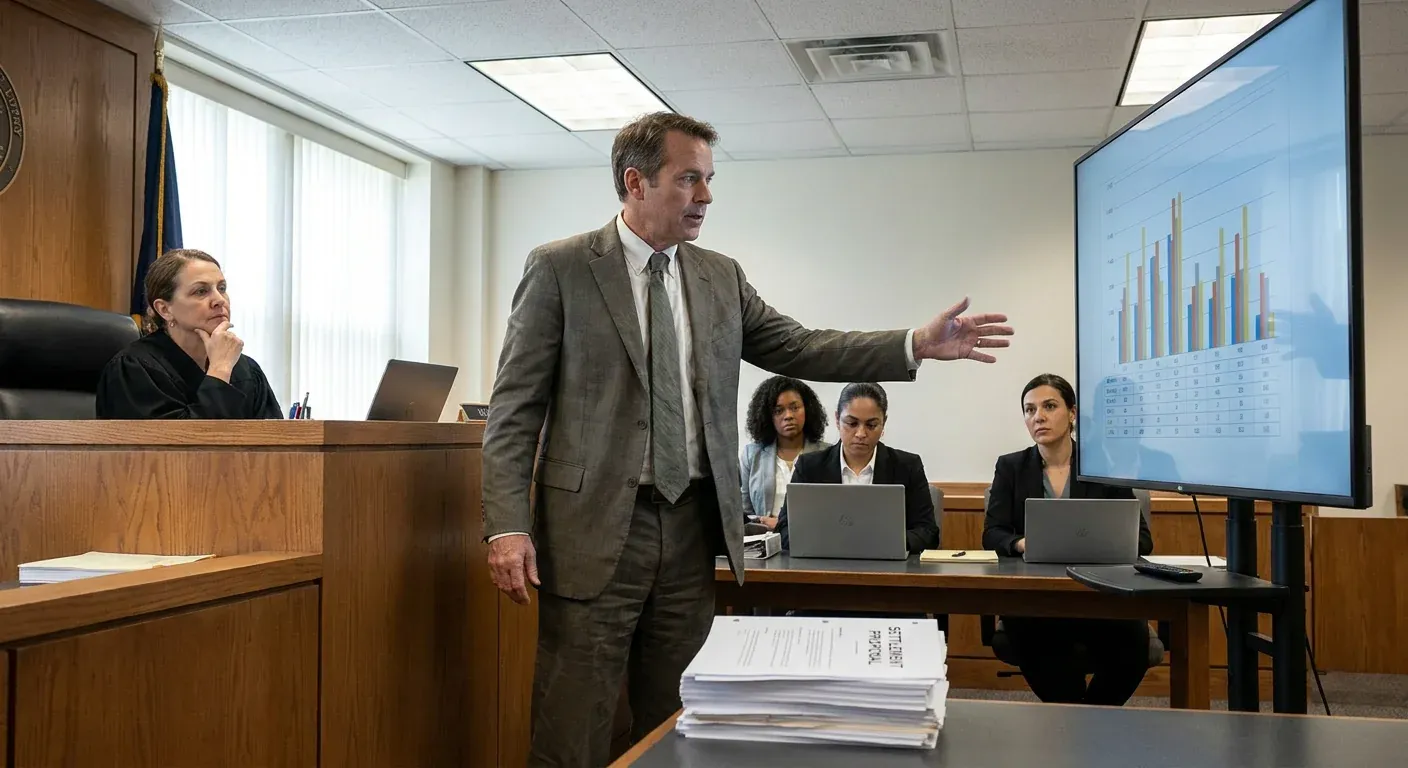
Editorial illustration for Anthropic's USD 1.5B Copyright Settlement Pays Authors USD 3,000 Per Work
Anthropic Pays $1.5B Settlement to Authors
Anthropic can start writing checks. Judge Araceli Martinez-Olguin of the U.S. District Court for the Northern District of California signed off Monday on a $1.5 billion settlement between the AI company and a class of authors and publishers who accused it of copyright infringement, Reuters reported.
The deal covers roughly 500,000 works, with rights holders set to receive $3,000 per title. It's the largest settlement in the history of U.S. copyright law, according to legal observers tracking the case.
The path here started with Judge William Alsup, who gave preliminary approval last year before retiring from the bench, handing the case off to Martinez-Olguin for final sign-off. Alsup's earlier rulings did more than set the settlement amount. He found that Anthropic had illegally downloaded and stored millions of copyrighted books, while also ruling on a separate question that's rattled the AI industry: whether training a model on copyrighted text counts as fair use in the first place. That second ruling is why plenty of authors aren't calling this a win, despite the payout.
Alsup sided with Anthropic on the core issue. He ruled that training an AI model on copyrighted text counts as fair use — a decision widely seen as a turning point for the AI industry.
Why this matters
For anyone building on top of large language models, this settlement is the first real price tag on training data theft, and $3,000 a work is a number worth sitting with. Judge Alsup's earlier ruling already established that downloading pirated books to train a model isn't covered by fair use once you're storing the files, not just reading them. That distinction matters more than the payout itself.
Labs that scraped first and licensed later now have a benchmark for what "sorry" costs: $1.5 billion divided across roughly 500,000 works. Founders racing to build the next model should read that as a warning about data provenance, not a rounding error to budget around later. For authors, $3,000 per work barely dents what commercial licensing might have paid over years of use, which is why many aren't celebrating.
Watch what happens next: other rights holders suing OpenAI, Meta, and Midjourney now have a public number to point to, and courts have a precedent that treats acquisition method as the real legal exposure, separate from whatever the model eventually outputs.
Related Reading
Browse all Anthropic news → Policy & Regulation
 Akamai Proposes SAFE Cybersecurity Guidelines for AI Threats
 Policy & Regulation
 After ditching AI fitness apps and a Fitbit, I return to Peloton classes
 Policy & Regulation
 Sony Music, Warner Chappell Sue Anthropic Over "Blatant Theft
 Related Topic
 Anthropic: Hackers Stole Claude Tokens Via Compromised Session Key
LLMs & Generative AI
 Related Topic
 Trump cracks down on Anthropic after Amazon tip; staff largely foreign
Open Source
 From Archives
 Trump Administration Weighs Ban on Chinese AI Models
 From Archives
 Publishers sue Google over unauthorized AI book training
 From Archives
 Anthropic's Claude for Teachers Vows Not to Train on Student Data
LLMs & Generative AI
 From Archives
 Anthropic's New AI Ad Campaign Draws Criticism for 'Creepy' Tactics
Business & Startups
Common Questions Answered
How much will authors and publishers receive per work under Anthropic's copyright settlement?
Rights holders will receive $3,000 per title under the $1.5 billion settlement agreement. The deal covers approximately 500,000 works, making it the largest settlement in the history of U.S. copyright law according to legal observers.
What was Judge Alsup's ruling on training AI models with copyrighted text?
Judge Alsup ruled that training an AI model on copyrighted text counts as fair use, which was widely seen as a turning point for the AI industry. However, he also established that downloading and storing pirated books for training purposes is not covered by fair use, distinguishing between merely reading files versus storing them.
Why is the $3,000 per work payout significant for AI companies that scraped training data?
The $3,000 per work figure establishes the first real price tag on training data theft and provides a benchmark for what compensation looks like when AI labs scraped content first and licensed later. This settlement sets a precedent for other companies in the AI industry regarding the cost of unauthorized data collection.
What is the key distinction Judge Alsup made between fair use and copyright infringement in AI training?
Judge Alsup distinguished that downloading pirated books to train a model isn't covered by fair use once you're storing the files, rather than just reading them. This distinction between storage and temporary access is more important than the monetary payout itself for understanding future AI training practices.
Further Reading
- Bartz v. Anthropic Settlement: What Authors Need to Know - Authors Guild
- Judge approves $1.5 billion copyright settlement between AI company Anthropic and authors - AP News
- Anthropic Agrees To Pay Record $1.5 Billion To Settle Authors' AI Lawsuit - Deadline
- I Wasn't Sure I Wanted Anthropic to Pay Me for My Books—I Do Now - Wired
- Anthropic's $1.5B Settlement: A Landmark in the Evolving Copyright ... - IP Law Group
