
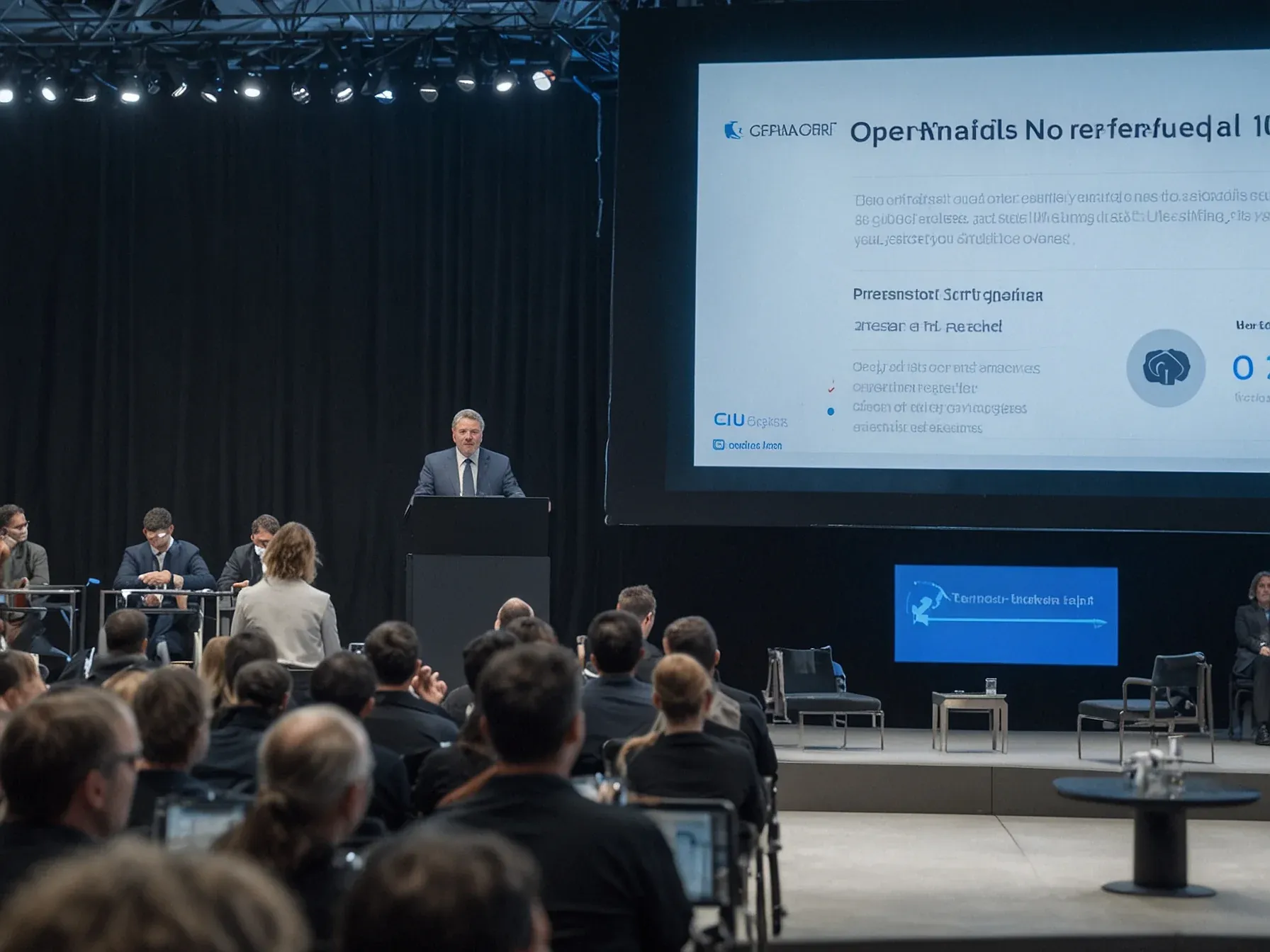
Editorial illustration for Confluent Unveils Real-Time Context Engine to Solve Enterprise Data Fragmentation
Confluent Solves Data Chaos for Enterprise AI Projects
Confluent launches Real-Time Context Engine to unify stale data for AI
Most corporate AI projects are stuck. They're not failing on the whiteboard or in the lab. They're dying in the basement, choked by data that's old, siloed, and useless.
Confluent, a data streaming company, just launched something called a Real-Time Context Engine. Its pitch is simple: to fix the messy plumbing that starves AI systems of good information.
Everyone has data. Mountains of it. The trick is making it flow, clean and current, to the models that need it now, not next week. This engine is an attempt to build that pipe.
It unifies the process. Raw streams go in, live context comes out, formatted for AI consumption. The goal is to replace static data dumps with a continuous feed.
The whole bet is that AI without fresh, connected data is just a very expensive guess.
"Enterprises have the data, but it's often stale, fragmented, or locked in formats that AI can't use effectively." He added, "Real-Time Context Engine solves this by unifying data processing, reprocessing, and serving, turning continuous data streams into live context for smarter, faster, and more reliable AI decisions." Jay Kreps, co-founder and CEO of Confluent, said the company's data streaming foundation is uniquely positioned to bridge this gap. "Off-the-shelf models are powerful, but without continuous data flow, they can't deliver timely, business-specific decisions. That's where data streaming becomes essential," he said.
Confluent Intelligence integrates Apache Kafka and Apache Flink into a fully managed stack for event-driven AI systems. It includes the Real-Time Context Engine, which streams structured, trustworthy data directly to AI applications via the Model Context Protocol, and Streaming Agents that can observe, decide, and act in real time without manual input. The platform also introduces built-in machine learning functions in Flink SQL for anomaly detection, forecasting, and model inference, enabling teams to move from proof of concept to production faster.
"Confluent fuels our models with real-time streaming data and eliminates the fear of data loss," said Nithin Prasad, senior engineering manager at GEP. Confluent is also deepening its partnership with Anthropic by integrating Claude as the default large language model into Streaming Agents. The collaboration will allow enterprises to build adaptive, context-rich AI systems for real-time decision-making, anomaly detection, and personalised customer experiences.
With Confluent Intelligence, the company aims to provide the missing foundation for enterprise AI, a continuous, real-time flow of data that helps models move beyond experimentation and into reliable production use.
This is a plumbing announcement. It's about the unglamorous work of making data move. Kreps argues that's the real bottleneck.
The partnership with Anthropic to bake Claude into its agents is a logical step. It provides a brain for the nervous system they're building.
Success here won't be measured by launch press. It will be measured by whether a logistics company can reroute a thousand trucks based on live traffic and weather, or a bank can spot fraud before the transaction clears.
Confluent is selling a promise of coherence. The market is full of companies drowning in their own data. They'll pay for a lifeline that actually works.
Related Reading
 Business & Startups
 Nordic pilot adds Gemini for Education, NotebookLM to boost AI literacy
 Business & Startups
 Kling launches Video O1, all-in-one model with MVL bridge using transformer
 Business & Startups
 DeepSeek Seeks More Capital Weeks After USD 7B Funding Round
 From Archives
 ServiceNow lifts 2025 subscription revenue outlook to USD 12.8 B, 20% growth
 From Archives
 OpenAI's new moderation model swaps static classifiers for Safety Reasoner
Common Questions Answered
How does Confluent's Real-Time Context Engine address enterprise data fragmentation?
The Real-Time Context Engine unifies data processing, reprocessing, and serving by transforming continuous data streams into live context for AI applications. It helps organizations overcome the challenge of stale, disconnected, and complex data that typically hinders intelligent decision-making.
What specific problem is Confluent trying to solve with its new data streaming technology?
Confluent is targeting the enterprise challenge of turning fragmented and disconnected data into actionable insights for AI projects. The Real-Time Context Engine aims to bridge the gap between raw data and usable information, enabling businesses to leverage their data more effectively for intelligent decision-making.
Why are current enterprise data approaches considered ineffective for AI projects?
Current enterprise data approaches often result in information that is stale, fragmented, or locked in formats incompatible with AI systems. This data chaos prevents organizations from effectively using their information streams, creating significant barriers to implementing intelligent, data-driven solutions.
