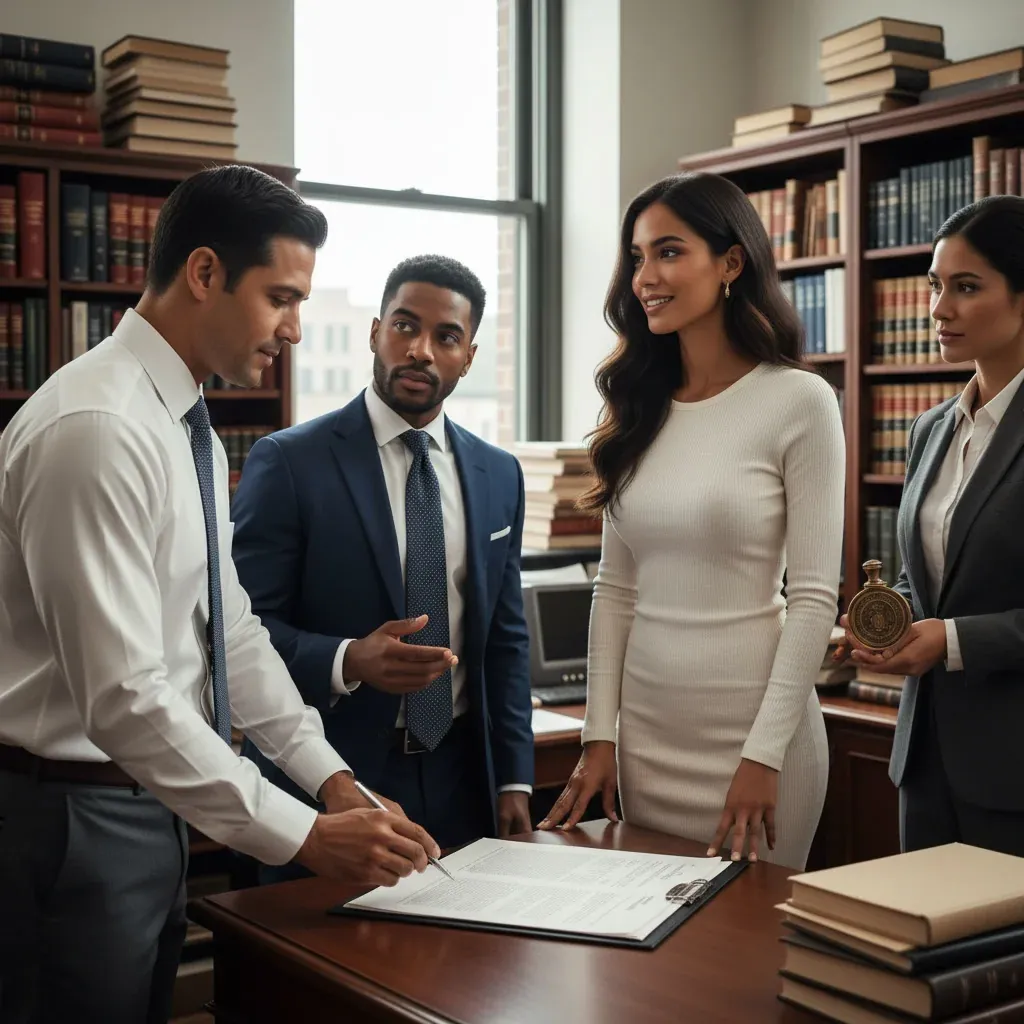
Editorial illustration for NY Passes Laws Mandating AI Avatar Disclosure in Commercial Content
NY Mandates AI Avatar Disclosure in Commercial Content
NY signs two bills requiring ads to disclose AI-generated avatars
New York just drew a line in the sand. Two bills signed Thursday force advertisers to come clean when an AI-generated person, whether a digital doppelgänger of a real human or a completely synthetic creation, appears in commercial content. It’s a direct response to the industry’s most pressing fight: actors watching their likenesses get mined, manipulated, and monetized without consent.
SAG-AFTRA’s Duncan Crabtree-Ireland called the protections “the direct result of artists, lawmakers and advocates coming together.” The law demands a conspicuous notice when a synthetic avatar doesn’t correspond to any real person, and it extends the state’s right of publicity to cover the dead, a patchwork of uneven state laws now forced to reckon with generative AI. Exceptions exist for movies, TV shows, and video games where the AI avatar matches the work itself. Even some state agencies have used AI in ads, though they may claim a public service exemption.
The price for skirting the rule? A $1,000 fine for the first offense, then $5,000 for each repeat. The message is clear: if you’re going to manufacture a digital face, you’d better own up to it.
Two bills signed Thursday deal with how AI-generated people -- real or entirely synthetic -- can appear in commercial content. The bills are especially relevant to the film industry and actors, for whom AI usage (and compensation) is one of the most pressing issues the profession is facing. In a joint press release with Hochul, SAG-AFTRA executive director Duncan Crabtree-Ireland celebrated the signings.
"These protections are the direct result of artists, lawmakers and advocates coming together to confront the very real and immediate risks posed by unchecked AI use," Crabtree-Ireland said. The disclosure bill says that the notice must be "conspicuous" when the ad includes a synthetic avatar that doesn't correspond to a real human. The bill dealing with the likenesses of deceased people is part of the state right of publicity -- there's no federal right of publicity, but instead a patchwork of uneven state laws, many of which are not updated for the generative AI era.
There are some specific cases where a disclosure isn't needed: if the advertisement or promotional material is for an "expressive work" like a movie, TV show, or video game, where the AI avatar in the ad is consistent with its use in the work. State politics outlet New York Focus reported that at least a few state agencies have used AI to produce ads, though in some cases they may be exempt because they're considered public service announcements. Violations of the disclosure requirement incur a $1,000 fine for the first time and jump to $5,000 for subsequent instances.
This law is a scalpel, not a sledgehammer. It carves out exceptions for art while demanding accountability from commerce. The $1,000 fine is a slap, but the real penalty is reputational: audiences will learn to look for the label.
New York just made transparency a competitive advantage. That’s a shift worth watching. Because when the mask slips, and it will, the public will remember who was honest from the start.
Related Reading
 Policy & Regulation
 Akamai Proposes SAFE Cybersecurity Guidelines for AI Threats
 Policy & Regulation
 After ditching AI fitness apps and a Fitbit, I return to Peloton classes
 Policy & Regulation
 Sony Music, Warner Chappell Sue Anthropic Over "Blatant Theft
 From Archives
 AI satellites need 300-500 GW, requiring millions of units, new cooling tech
 From Archives
 Deepseek uses thousands of smuggled Nvidia chips for AI training in China
Common Questions Answered
What specific requirements do the new NY laws impose on AI-generated avatars in commercial content?
The new laws mandate strict disclosure when an image or character is not actually real, particularly targeting synthetic human representations in commercial media. Businesses will now be required to clearly indicate when an avatar or representation is AI-generated, ensuring transparency for consumers.
How are film industry professionals like SAG-AFTRA responding to these new AI avatar regulations?
SAG-AFTRA executive director Duncan Crabtree-Ireland celebrated the new bills as a direct result of collaboration between artists, lawmakers, and advocates. The legislation addresses critical concerns about AI usage and compensation for performers, providing important protections in an industry increasingly impacted by artificial intelligence technologies.
Why is New York taking such a proactive stance on AI-generated avatars in commercial content?
New York is seeking to protect consumers and creative professionals from potential misuse of synthetic human representations in media. By mandating clear disclosure of AI-generated avatars, the state aims to create transparency and prevent deceptive practices in commercial content across various industries.
Further Reading
- Governor Hochul Signs Legislation to Protect Consumers and Boost AI Transparency in Film Industry — Office of Governor Kathy Hochul
- New York Poised to Be at the Forefront of AI Regulation; Five Bills Await Gov. Hochul’s Action — Greenberg Traurig
- Digital Avatars Deep Dive Series: Navigating the Legal and Regulatory Landscape — Morrison Foerster
- Summary of Artificial Intelligence 2025 Legislation — National Conference of State Legislatures
- New York Passes Novel Law Requiring Safeguards for AI Companions — Wilson Sonsini Data Advisor
