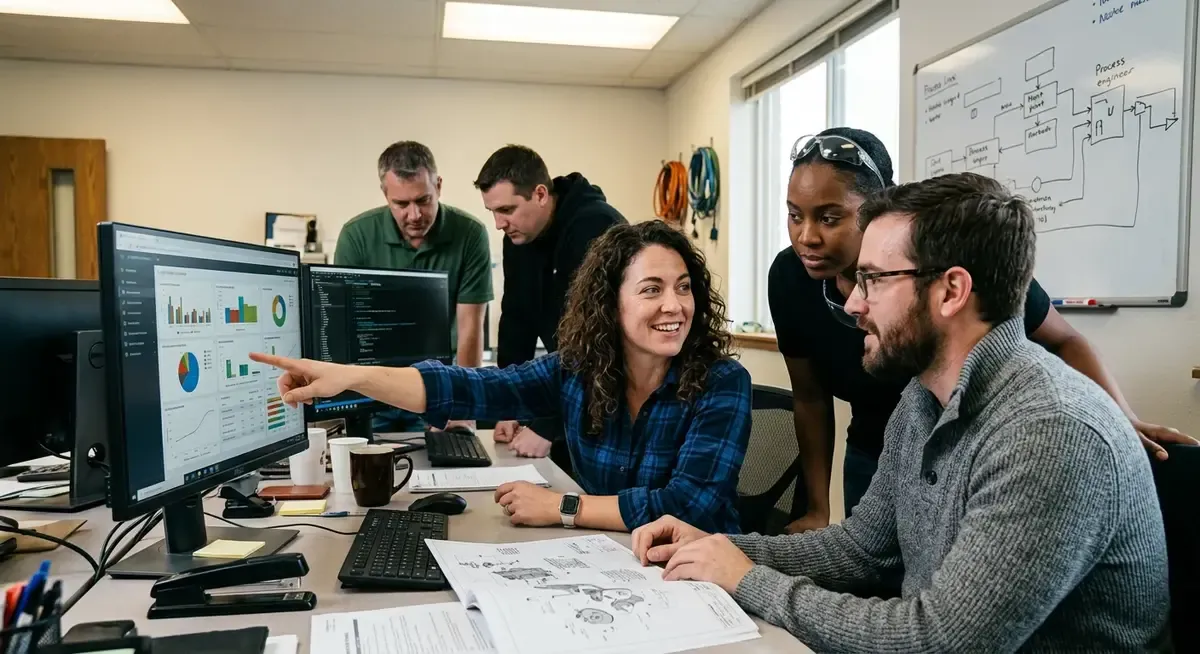
Editorial illustration for Musk Now Spends Half His Tesla Earnings Call Time on AI, Robots
Musk Shifts Tesla Focus to AI and Robots Over Cars
Musk Now Spends Half His Tesla Earnings Call Time on AI, Robots
Tesla shipped nearly 500,000 cars last quarter. Car sales still made up 70% of the company's revenue. By any normal accounting, Tesla is a car company. Elon Musk doesn't talk like one runs it.
On Tesla's quarterly earnings calls, Musk now spends close to half his speaking time on artificial intelligence, robotaxis, and Full Self-Driving software. Back in 2022, that figure sat closer to 15-20%. The shift shows up clearly in new data TechCrunch compiled with Hudson Labs, a New York financial research firm that ran seven years of call transcripts, sourced from S&P Market Intelligence, through its AI research tool Co-Analyst. The software tagged a topic to every sentence Musk and other Tesla executives spoke since 2019, then counted how often each subject came up.
What emerges is a paper trail of Musk's attention moving away from the business that actually pays Tesla's bills and toward the ones he insists will define its future: Optimus, autonomy, machine intelligence. The numbers don't just show a change in emphasis. They track how Musk has spent years building a financial argument for why any of that shift makes sense.
The data shows that Musk now speaks about artificial intelligence, along with robotaxis and Full Self-Driving software, nearly 50% of the time he opens his mouth.
Why this matters
For anyone building or funding AI products, Musk's earnings-call math is a useful signal, not because it proves Optimus or robotaxis are close to real revenue, but because it shows where a major public company's leadership is willing to spend its scarcest resource: attention on a call with shareholders and analysts. Cars still generate 70% of Tesla's revenue and nearly half a million units shipped last quarter, yet Musk gave that business roughly half the airtime he once did. That gap between financial reality and narrative emphasis is worth watching closely if you're pricing Tesla as an AI company, or benchmarking your own startup's story against his.
Founders often take cues from Musk's framing, so expect more competitors to lean on "we're really an AI company" language regardless of where their revenue comes from. Investors and journalists should keep pulling the actual numbers, cars sold, dollars earned, robots shipped, rather than letting call transcripts set the valuation.
Related Reading
 Industry Applications
 Westinghouse teams with Google Cloud to build AI platform for nuclear power
 Industry Applications
 NVIDIA NeMo powers telco reasoning model for autonomous network workflows
 Industry Applications
 Month-1 Agent Adds Holistic Observability with Trace IDs and Token Tracking
 From Archives
 Frozen CNN Feature Extractors Show Task-Dependent Sparsity in Reinforcement Learning
 From Archives
 Daniela Rus Wins Bavarian High-Tech Prize for Autonomous Robot Systems
Common Questions Answered
How much of Elon Musk's speaking time on Tesla earnings calls is now devoted to AI, robotaxis, and Full Self-Driving software?
According to data compiled by TechCrunch and Hudson Labs, Musk now spends close to 50% of his speaking time on artificial intelligence, robotaxis, and Full Self-Driving software during Tesla's quarterly earnings calls. This represents a dramatic increase from 2022, when that figure was closer to 15-20%, demonstrating a significant shift in his priorities and messaging to shareholders.
What percentage of Tesla's revenue still comes from car sales despite Musk's focus on AI?
Car sales still account for approximately 70% of Tesla's total revenue, even as Musk dedicates roughly half his earnings call speaking time to AI and autonomous vehicle technology. This disconnect highlights the gap between where the company currently generates its profits and where leadership is directing investor and analyst attention.
Why does Musk's increased focus on AI and robotaxis matter for investors and AI entrepreneurs?
Musk's earnings-call emphasis signals where a major public company's leadership is willing to allocate its scarcest resource: shareholder and analyst attention. This shift is meaningful not necessarily because it proves Optimus or robotaxis are generating immediate revenue, but because it demonstrates the strategic importance Tesla's leadership places on these emerging technologies for the company's future.
How many cars did Tesla ship last quarter according to the article?
Tesla shipped nearly 500,000 cars in the last quarter, which generated 70% of the company's total revenue. Despite this substantial volume and revenue contribution, Musk allocated roughly half his earnings call speaking time to discussing AI and autonomous technologies rather than the core automotive business.
Further Reading
- Tesla Q1 2026 Earnings Call: Elon Musk's Vision for the AI & Robotics Future - What’s Up Tesla
- Tesla's push into AI and robotics is proving costly - Axios
- Tesla earnings top estimates as Musk pivots company from cars to robots - SiliconANGLE
- The 6 biggest takeaways from Tesla's Q4 earnings call - Business Insider
- Tesla's Q4 Earnings Call Gave Us An Insight Into Elon Musk's Optimus Ambitions, As Well As Challenges - Yahoo Finance
