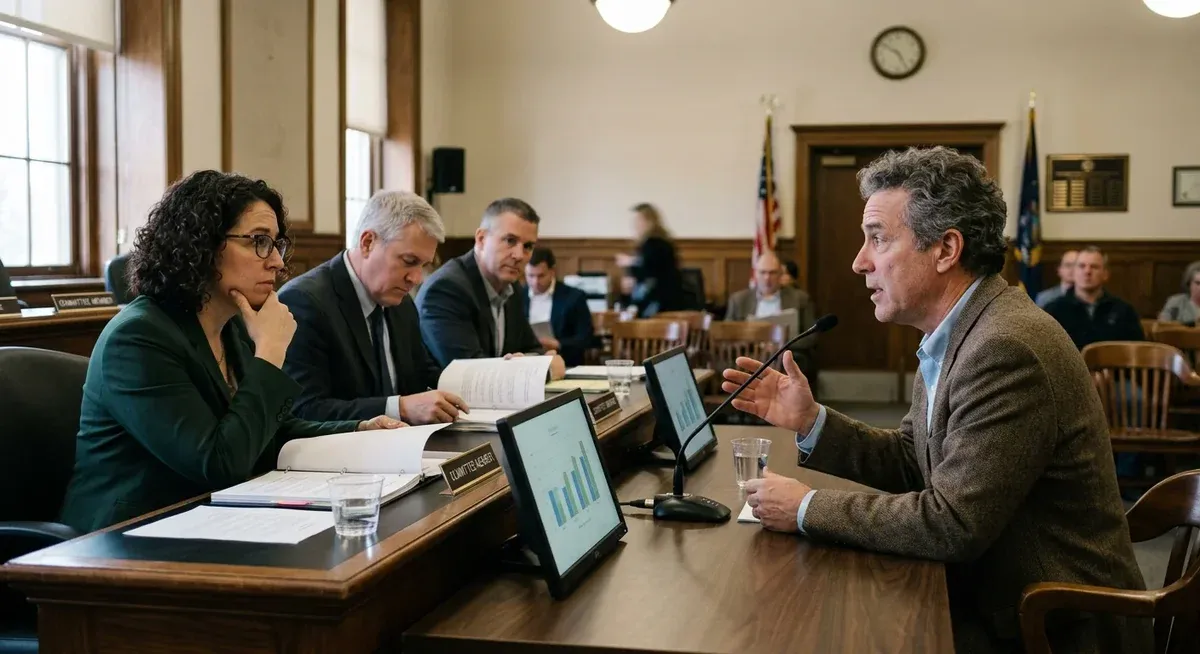
Editorial illustration for Meta's USD 18B settlement, AI harms show why we need regulation, experts say
Meta's $18B Settlement Signals Need for AI Regulation
Meta agreed in September to pay $18 billion to settle claims tied to AI-driven harms on its platforms, one of the largest sums any tech company has paid out over algorithmic products. The figure landed in the middle of an argument that's been running through Silicon Valley all year: whether AI needs its own set of laws, or whether existing rules and market pressure are enough to keep companies in check. Jensen Huang, who runs Nvidia, the company that makes the chips powering most of the industry's large models, took the second position at Salesforce's Dreamforce conference on Tuesday.
His company has the most to lose from regulation that slows AI deployment, and the least direct exposure to the kind of consumer harms that produced Meta's settlement. That gap matters. Lawmakers in several states have pushed bills this year targeting chatbot safety, deepfakes, and algorithmic discrimination, arguing that self-policing hasn't worked.
Huang's comments at Dreamforce put him squarely against that push, and against researchers inside AI labs themselves who've warned that the technology behaves in ways its own builders don't fully understand.
“If we’re not confident about the safety of the products, like all companies, like you and I, any any all the companies here, if you build a product or a service, and you’re not confident in its functionality, capability, or safety, then don’t release it. And so that’s a very obvious thing to do,” he said.
Why this matters
Huang's "safety is an engineering problem" line is the same argument the tobacco and social media industries made before the lawsuits piled up. Meta didn't pay $18 billion because its engineers failed some code review. It paid because courts decided harm to children mattered more than product design intent.
The parallel to AI is direct: an OpenAI model breaching Hugging Face, families suing over suicides tied to chatbot conversations, these aren't bugs waiting for a patch. They're the kind of harms that end up in front of juries, not GitHub issues.
For builders and founders, the lesson isn't abstract. Self-regulation sounds efficient right up until a plaintiff's attorney gets discovery. Treating safety purely as engineering means the first real audit of your systems happens in a courtroom, on someone else's timeline, with your internal Slack messages as exhibits.
Researchers pushing capability forward should notice that "we'll fix it in code" hasn't protected any industry from liability yet. Watch what plaintiffs' lawyers do next. That's where the actual rules get written.
Related Reading
Browse all Meta news → Policy & Regulation
 Akamai Proposes SAFE Cybersecurity Guidelines for AI Threats
 Policy & Regulation
 After ditching AI fitness apps and a Fitbit, I return to Peloton classes
 Policy & Regulation
 Sony Music, Warner Chappell Sue Anthropic Over "Blatant Theft
 Related Topic
 OpenAI hires 630 ex-Meta staff as ChatGPT memory may turn data into ads
Business & Startups
 Related Topic
 Meta's AI Agents Can Now Set Up WhatsApp Business for You
Business & Startups
 From Archives
 AI Firms in Talks Over Safety for Weeks
 From Archives
 OpenAI Funds Biological Data Collection to Aid AI Disease Research
 From Archives
 Meta One Bundles Start at USD 7.99, Include Instagram Perks and AI
AI Tools & Apps
 From Archives
 Meta Faces Lawsuit Over AI Training Data, Facial Recognition
Common Questions Answered
What was the amount of Meta's settlement related to AI-driven harms and why is it significant?
Meta agreed to pay $18 billion in September to settle claims tied to AI-driven harms on its platforms, making it one of the largest sums any tech company has paid out over algorithmic products. This substantial settlement has intensified the debate within Silicon Valley about whether AI requires its own regulatory framework or if existing rules and market pressure are sufficient safeguards.
What is Jensen Huang's position on AI regulation and product safety?
Jensen Huang, CEO of Nvidia, argues that companies should not release products if they are not confident in their safety, functionality, and capability, positioning safety as an engineering problem rather than a regulatory one. He contends that this approach is sufficient to keep companies in check without the need for new AI-specific laws.
How does the article compare the AI regulation debate to historical precedents in other industries?
The article draws a parallel between Huang's "safety is an engineering problem" argument and similar claims made by the tobacco and social media industries before facing lawsuits. It suggests that Meta's $18 billion settlement demonstrates that courts ultimately prioritize harm to consumers over product design intent, implying that AI companies may face similar legal consequences regardless of engineering efforts.
What specific AI-related harms does the article mention as examples of why regulation may be necessary?
The article references an OpenAI model breaching Hugging Face and families suing over suicides tied to chatbot conversations as examples of AI-related harms. These incidents are characterized not as bugs awaiting patches but as systemic issues that suggest the need for regulatory oversight beyond engineering solutions.
Further Reading
- Meta's $18 billion settlement clears way for new AI products - CNBC
- Meta $18 billion settlement cost pressure AI product pipeline - Yahoo Finance
- As Meta Agrees to $17B Settlement, Now Is the Time to Regulate AI Before It’s Too Late: Amba Kak - Democracy Now!
- Meta settlement opens new front in global fight over social media harm - Reuters
- After Meta landmark settlement with state AGs, legal headaches remain - CNBC
