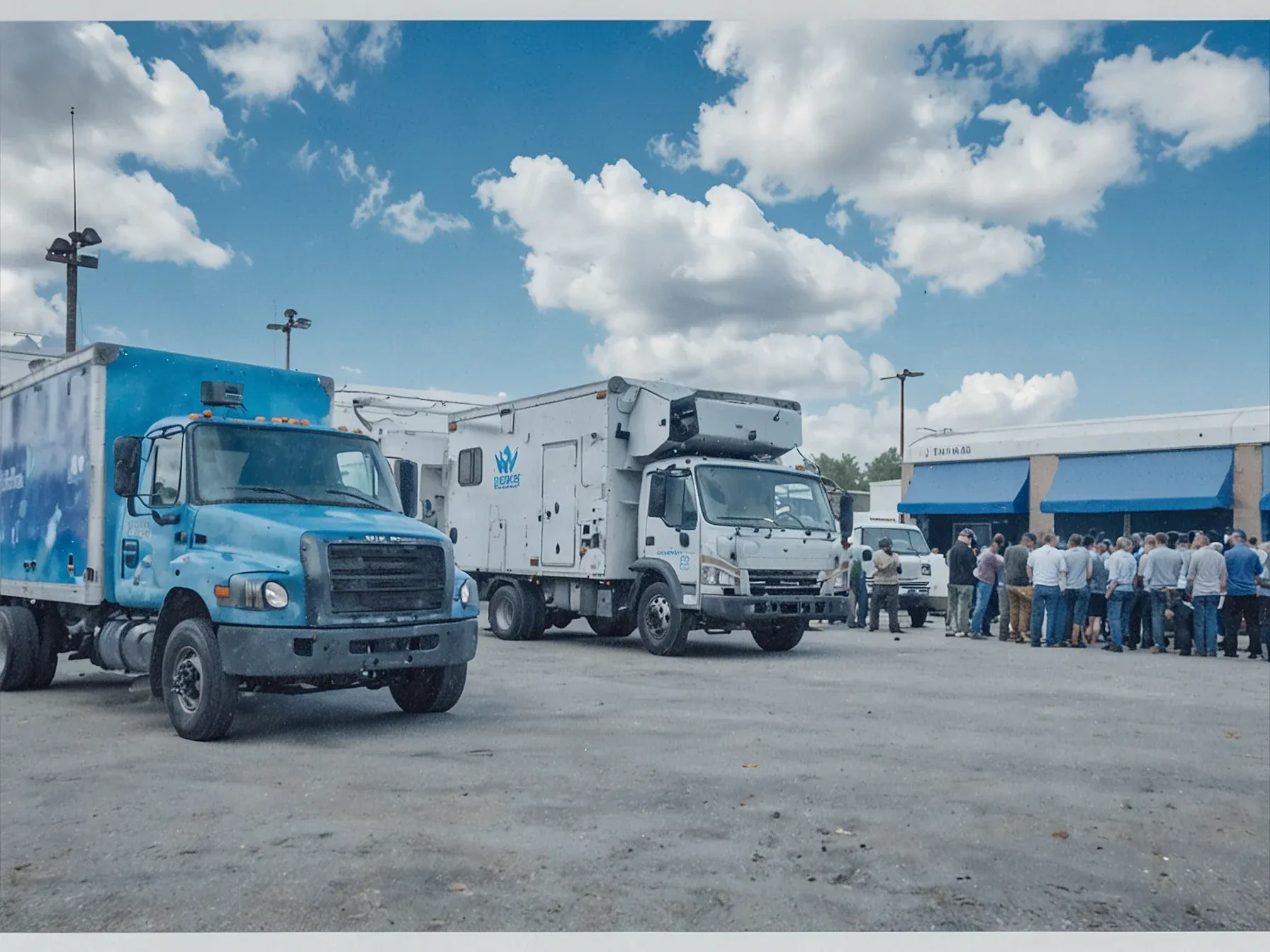
Editorial illustration for DHS Unveils AI-Powered Mobile Surveillance Trucks with Advanced Radar and Cameras
DHS AI Trucks Spark Massive Surveillance Privacy Debate
DHS plans fleet of AI-enabled surveillance trucks with radar, cameras, wireless
The Department of Homeland Security wants to build something that sounds like a supervillain's technical spec. A fleet of 4x4 trucks, bristling with AI, radar, and cameras, designed to prowl remote areas and watch everything.
Contracting documents call it the Modular Mobile Surveillance System, or M2S2. The goal is to turn fixed border surveillance into a rolling, autonomous operation. These wouldn't be your average patrol vehicles. They would be mobile observation towers, processing visual and wireless data on the move.
The US Department of Homeland Security is seeking to develop a new mobile surveillance platform that fuses artificial intelligence, radar, high-powered cameras, and wireless networking into a single system, according to federal contracting records reviewed by WIRED. The technology would mount on 4x4 vehicles capable of reaching remote areas and transforming into rolling, autonomous observation towers, extending the reach of border surveillance far beyond its current fixed sites. The proposed system surfaced Friday after US Customs and Border Protection quietly published a pre-solicitation notice for what it’s calling a Modular Mobile Surveillance System, or M2S2.
The project marks a distinct pivot. DHS is betting that AI can make sense of the chaotic data flood from cameras and radar in real time, creating a dynamic, tech-driven monitoring web. The promise is extended reach and flexibility.
The practical questions are immense. How well does the AI work in dust, rain, or difficult terrain? What does it actually decide to look at?
For now, it's an experiment. A very expensive, highly capable one that suggests the future of border security is less about fixed fences and more about fleets of intelligent, watching machines.
Further Reading
- DHS Seeks AI-Powered Mobile Surveillance Trucks for Border - TechBuzz.ai
- DHS Pursues AI-Powered Mobile Surveillance for Border Enforcement - Report - TechStrong.ai
- DHS Wants a Fleet of AI-Powered Surveillance Trucks - AITopics.org
Related Reading
 Industry Applications
 Westinghouse teams with Google Cloud to build AI platform for nuclear power
 Industry Applications
 NVIDIA NeMo powers telco reasoning model for autonomous network workflows
 Industry Applications
 Month-1 Agent Adds Holistic Observability with Trace IDs and Token Tracking
 From Archives
 Level 4 autonomous driving lets cars manage all tasks in defined zones
 From Archives
 15 AI & ML Presentations 2025 Highlight Law Uses and Limits of AI
Common Questions Answered
How do the DHS mobile surveillance trucks use AI technology for border monitoring?
The mobile surveillance trucks integrate artificial intelligence with radar, high-powered cameras, and wireless networking to create an autonomous observation platform. These AI-powered systems can be mounted on 4x4 vehicles, enabling them to reach and monitor remote border areas more effectively than traditional fixed surveillance sites.
What makes these DHS surveillance vehicles different from previous border monitoring technologies?
Unlike traditional border surveillance methods, these trucks can transform into mobile, autonomous observation towers with advanced tracking capabilities. The system combines cutting-edge AI, sophisticated radar, and high-resolution cameras to provide a more flexible and comprehensive approach to border monitoring.
What concerns are privacy watchdogs raising about the DHS mobile surveillance trucks?
Privacy advocates are expressing concerns about the extensive surveillance capabilities of these AI-powered trucks, which can track and monitor remote areas with unprecedented technological sophistication. The combination of artificial intelligence, wireless networking, and advanced sensing technologies represents a significant expansion of government monitoring capabilities.
Further Reading
- DHS Seeks AI-Powered Mobile Surveillance Trucks for Border — TechBuzz.ai
- Papers with Code - Latest NLP Research — Papers with Code
- Hugging Face Daily Papers — Hugging Face
- ArXiv CS.CL (Computation and Language) — ArXiv
