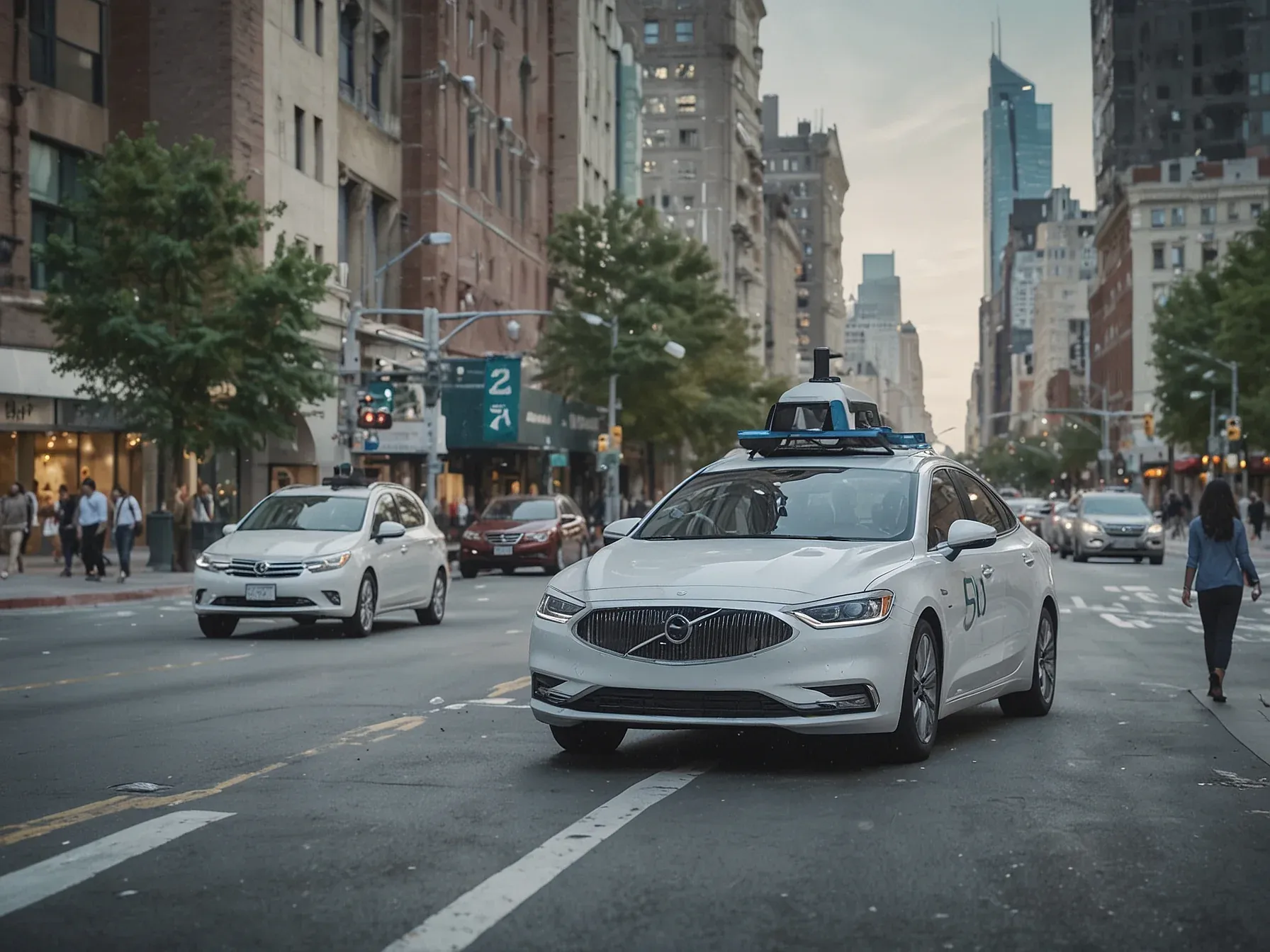
Editorial illustration for Self-Driving Cars Reach New Milestone: Level 4 Tech Manages Full Navigation in Defined Zones
Level 4 Autonomous Driving: Cars Navigate Solo
Level 4 autonomous driving lets cars manage all tasks in defined zones
Two cars are driving themselves right now. One is navigating the afternoon traffic in Phoenix. Another is crawling up a San Francisco hill.
The key word in those sentences isn't "driving." It's "in." The race isn't to build a smarter car. It's to shrink the world.
What Is Level 4 Autonomous Driving? Level 4 autonomous driving enables vehicles to handle all driving tasks within specific operating zones — such as certain cities or routes — without the need for human intervention. This high automation level uses AI breakthroughs including foundation models, end-to-end architectures and reasoning models to navigate complex scenarios.
Today, level 4 “high automation” is bringing the vision of autonomous driving closer to a scalable, commercially viable reality. Six AI Breakthroughs Advancing Autonomous Vehicles Six major AI breakthroughs are converging to accelerate level 4 autonomy: 1.
The first profitable robotaxi won't cross the Golden Gate Bridge at sunset. It will run a fixed loop between Terminal 2 and the rental car center at Dallas-Fort Worth International Airport. A delivery van will roam a fully-mapped industrial park in Sparks, Nevada, at 3 a.m.
That's the business: boring, predictable routes. Define a box tightly enough, and the machine wins.
The engineering pivot is absolute. Earlier systems saw an object and froze, waiting for a remote operator's verdict. New architectures, built on foundation models, just decide.
They identify debris, calculate the threat, and drive over it if the math checks out. This isn't gut feeling. It's brute-force computation.
So the battleground is geography now. It’s about total control over ten square miles of Phoenix or that airport loop. A vehicle fluent in downtown Austin might be useless in Houston.
We were promised a car that could go anywhere. What’s arriving is one that goes somewhere—reliably.
Related Reading
 Industry Applications
 Westinghouse teams with Google Cloud to build AI platform for nuclear power
 Industry Applications
 NVIDIA NeMo powers telco reasoning model for autonomous network workflows
 Industry Applications
 Month-1 Agent Adds Holistic Observability with Trace IDs and Token Tracking
 From Archives
 15 AI & ML Presentations 2025 Highlight Law Uses and Limits of AI
 From Archives
 Verizon Acquires TracFone as More Brands Shift to MVNO Model
Common Questions Answered
What distinguishes Level 4 autonomous driving from previous autonomous driving technologies?
Level 4 autonomous driving enables vehicles to handle all driving tasks independently within specific operating zones without human intervention. This high automation level uses advanced AI technologies like foundation models and reasoning models to navigate complex scenarios, representing a significant leap in self-driving capabilities.
How do AI breakthroughs contribute to Level 4 autonomous driving systems?
AI breakthroughs such as foundation models, end-to-end architectures, and advanced reasoning models allow autonomous vehicles to process and respond to intricate driving scenarios with unprecedented sophistication. These technological innovations enable self-driving cars to make complex navigation decisions within predefined environments without requiring human oversight.
What are the current limitations of Level 4 autonomous driving technology?
Level 4 autonomous systems are currently designed for specific routes and cities with predictable environments, meaning they are not yet universally applicable across all driving conditions. The technology represents a strategic advancement in self-driving capabilities, but remains constrained to carefully mapped and controlled operational zones.
Further Reading
- How AI Is Unlocking Level 4 Autonomous Driving - NVIDIA Blog
- The 6 Levels of Vehicle Autonomy Explained - Synopsys Automotive
- Level 4 Autonomous Vehicles Market Size & Share, Sales - 2034 - Transparency Market Research
- Where to next? Insights from autonomous-vehicle experts - McKinsey Center for Future Mobility
- Automated driving regulations – where are we now? - ScienceDirect
