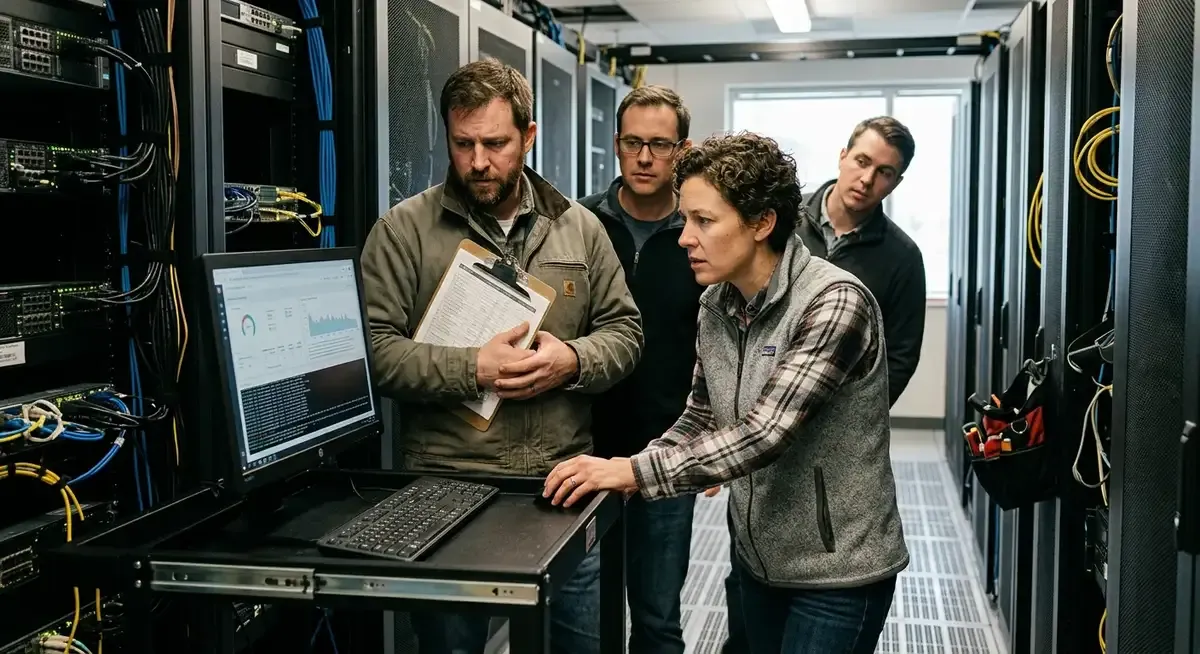
Editorial illustration for DeepSeek's V4 Flash Agent Tasks Falter Amid Price Restructuring
DeepSeek V4 Flash Struggles in Real Agent Tasks
DeepSeek's V4 Flash Agent Tasks Falter Amid Price Restructuring
DeepSeek's V4 Flash has spent the past few weeks sitting near the top of model leaderboards, with developers on X calling it a "total monster" for coding and agent work. Composio decided to test that reputation against something harder than benchmarks: real agent tasks. The firm ran V4 Flash through eight different agent harnesses, including Claude Code, Codex, and OpenCode, on 30 deliberately difficult, multi-step jobs touching Gmail, GitHub, Slack, and Google Sheets.
Out of 240 total runs, only 129 passed, a 53.8% success rate. Just six of the 30 workflows got completed successfully across every single harness tested.
That inconsistency lands at an odd moment for DeepSeek commercially. The company is raising prices on both V4 Flash and V4 Pro, two models that developers building coding assistants and agents have gravitated toward largely because they're cheap. Composio's numbers suggest the harder problem isn't the model itself but everything wrapped around it, tool configuration, caching, retries, the provider stack, all of which shifted results even when the underlying model stayed the same.
DeepSeek's V4 Flash has topped model leaderboards and been hailed by developers as a "total monster" since its rollout. But in real-world testing, it completed just 53.8% of a batch of complex agent tasks.
Why this matters
Leaderboard rank and benchmark scores keep telling us one story while production runs tell another. A 53.8% pass rate across 240 runs, with only six of thirty workflows completing cleanly across all eight harnesses, is a real signal for anyone building on V4 Flash right now: this model is not ready to run unsupervised against Gmail, GitHub, Slack, or Sheets in a live pipeline. Composio's test design matters here too.
Testing across eight harnesses instead of one exposes exactly how fragile "agent-ready" claims can be once you swap scaffolding. For founders pricing out infrastructure, the timing is worse than the accuracy gap. DeepSeek's new off-peak scheme sounds like a discount, but Gogia's point stands: this is a repricing exercise dressed up as flexibility, and China's own market pays the top rate.
Anyone budgeting agent workloads around DeepSeek should be running their own harness tests before committing, not trusting a leaderboard position that clearly doesn't hold up once real tools and real multi-step tasks enter the picture.
Related Reading
 Market Trends
 AI drives three initiatives to accelerate global action for planet protection
 Market Trends
 Akamai data shows AI training bots and content‑fetching bots rise since July
 Market Trends
 NVIDIA and Google Cloud let developers scale AI from prototype to production
 From Archives
 Writer says its new AI model cuts costs by 52% amid token spending surge
 From Archives
 AI Labs' Breakthroughs Are "Pushing Us Further Away" From What People Need
Common Questions Answered
What was DeepSeek's V4 Flash actual performance rate in Composio's real-world agent task testing?
DeepSeek's V4 Flash completed only 53.8% of the complex agent tasks across 240 total runs, despite being ranked highly on model leaderboards. Out of thirty workflows tested, only six completed cleanly across all eight different agent harnesses used in the evaluation.
Which specific applications and services did Composio test V4 Flash against in their agent harness evaluation?
Composio tested V4 Flash across eight different agent harnesses including Claude Code, Codex, and OpenCode, running the model against 30 deliberately difficult multi-step jobs that touched Gmail, GitHub, Slack, and Google Sheets. These real-world applications represent common productivity tools that developers rely on for agent automation.
How does the gap between V4 Flash's leaderboard ranking and its real-world performance demonstrate a broader testing problem?
The article highlights that leaderboard rankings and benchmark scores tell a different story than actual production performance, with V4 Flash's 53.8% pass rate revealing significant limitations not captured by traditional benchmarks. Testing across multiple harnesses instead of single-harness evaluations exposes critical gaps that suggest the model is not ready for unsupervised production use in live pipelines.
Why is DeepSeek's V4 Flash unsuitable for unsupervised deployment according to Composio's findings?
The testing revealed that V4 Flash cannot reliably handle complex, multi-step workflows involving common business applications like Gmail, GitHub, Slack, and Google Sheets without human oversight. With only a 53.8% completion rate and just six of thirty workflows completing successfully across all test harnesses, the model demonstrates insufficient reliability for autonomous agent deployment in production environments.
What does the discrepancy between V4 Flash's developer reputation and its test results suggest about model evaluation methods?
Despite developers calling V4 Flash a "total monster" for coding and agent work based on leaderboard performance, real-world testing by Composio revealed significant performance gaps that benchmarks failed to capture. This gap underscores the importance of testing AI models against actual production scenarios rather than relying solely on standardized benchmark scores and leaderboard rankings.
Further Reading
- Same quality, a quarter of the cost: Should DeepSeek Flash be your model of choice? - Tessl
- DeepSeek-V4-Flash GA: Agent Scores Beat V4-Pro-Preview - DeepSeek AI
- DeepSeek Retrained V4-Flash Beats Its Flagship Pro on Nine Agent Benchmarks - TechTimes
- DeepSeek V4 Flash 0731: Benchmarks, Pricing & Review - AI Tools Review
- DeepSeek V4 Flash Is Now Official: What Changed in the Release - Hugging Face
