
Editorial illustration for Claude Haiku 4.5 Beats Sonnet 4 with Faster Speed and Lower Cost
Claude Haiku 4.5: Faster AI at Half the Cost
Claude Haiku 4.5 Matches Sonnet 4 Performance, Doubles Speed, Cuts Cost
Anthropic's Claude Haiku has always been the cheap one. You used it when you needed a fast, blunt answer, and you accepted that it wouldn't think too hard. The new Haiku 4.5 changes the terms of that deal. It matches the performance of its bigger, pricier sibling, Sonnet 4, but does it faster and for a lot less money.
This is a direct attack on the core trade-off in AI. You can have good, fast, or cheap. Usually you pick two.
Haiku 4.5 claims you can now have all three. It runs more than twice as fast as Sonnet 4 and costs about a third as much. The numbers suggest a genuine engineering shift, not just marketing.
The model also gets a brain upgrade. For the first time in the Haiku line, it supports extended thinking and native context awareness. This means it can actually reason through a problem, not just react to the last thing you said. It's moving from a simple tool to a potential assistant.
Claude Haiku 4.5 delivers performance comparable to Sonnet 4 across reasoning, coding, and complex tasks, but at over twice the speed and one-third the cost, making it ideal for high-volume applications. For the first time in the Haiku family, 4.5 supports extended thinking, enabling advanced reasoning: Claude Haiku 4.5 introduces context awareness, allowing the model to manage its conversation space more effectively: This is the first Haiku model to include native context awareness. Claude Haiku 4.5 offers robust coding capabilities and full tool support: Across standard benchmarks, Claude Haiku 4.5 punches above its weight.
It matches Sonnet 4.5 on many coding and reasoning tests while delivering substantially better efficiency, roughly one-third the cost and over twice the speed in throughput and latency-sensitive tasks. Compared to earlier Haiku releases, 4.5 improves token-per-second throughput, multi-tool orchestration, and multi-turn coherence, making it particularly strong for real-time assistants and high-volume pipelines. In short, Haiku 4.5 offers near-frontier accuracy with a clear edge in cost-performance and responsiveness.
The practical effect is simple. High-volume tasks, like sorting customer tickets or reviewing basic code, just got much cheaper to automate. You no longer need to default to the expensive model for anything requiring a hint of nuance. This will reshape budgets.
Questions about real-world performance are inevitable. Benchmarks are clean. Customer service logs are messy.
The promise of "near-frontier accuracy at a third of the cost" is enormous if it holds up outside a lab. It pressures every other model maker to justify their premium.
Anthropic is making a calculated bet. They are betting that most commercial AI use doesn't require the absolute smartest model. It requires a smart enough model that is fast and doesn't bankrupt you. With Haiku 4.5, they are flooding that zone.
Further Reading
- Claude AI All Models Available: Opus 4.5, Sonnet 4.5, Haiku 4.5, 3 Series Legacy and How to Choose - DataStudios
- Top 9 Large Language Models as of January 2026 - Shakudo
- The Guide to Claude Opus 4 & 4.5 API Pricing in 2026 - CometAPI
- GPT-5 mini vs Gemini 3 Flash Preview vs Claude 4.5 Haiku - KeywordsAI
Related Reading
Browse all Anthropic news → LLMs & Generative AI
 ChatGPT's 'Nerdy' tweak rewards goblin metaphors in answers, study finds
 LLMs & Generative AI
 Google to End Free Access to Gemini AI for Non-Subscribers
 LLMs & Generative AI
 AI Engineers Face Rising Costs, Need New Strategies for Efficiency
 Related Topic
 Claude gains shared context in Excel, PowerPoint; Microsoft adds Copilot Cowork
AI Tools & Apps
 Related Topic
 Trump cracks down on Anthropic after Amazon tip; staff largely foreign
Open Source
 From Archives
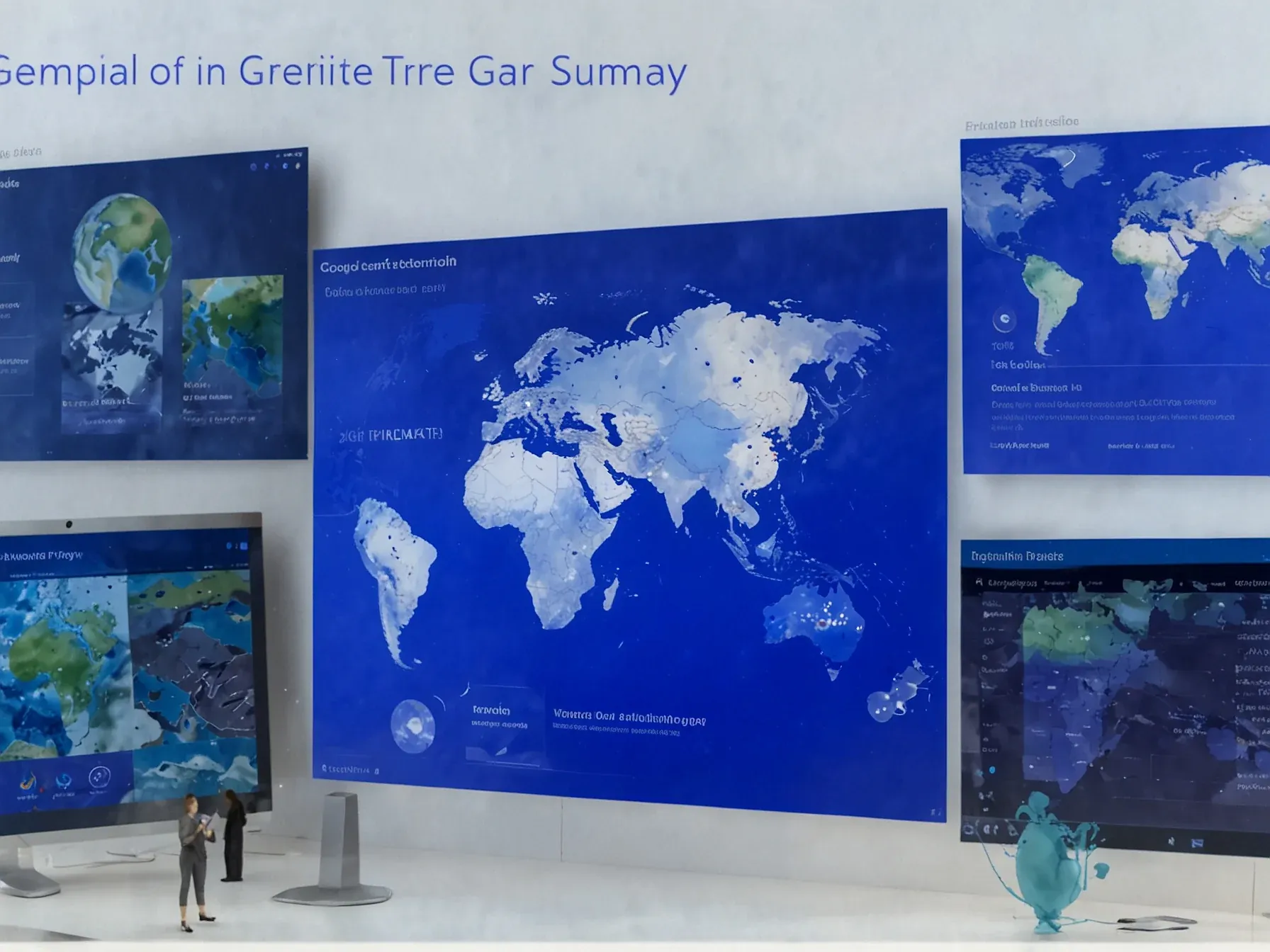
 Google links Earth AI with Gemini models, expands geospatial tools
 From Archives
 10 Interview Questions on Agentic AI, LLMs, Tools, and Autonomous Workflows
 From Archives
 Anthropic targets up to one million Google TPUs by 2026 for AI expansion
Business & Startups
 From Archives
 GitHub Copilot, Claude, and Google’s Jules become autonomous coding agents
AI Tools & Apps
Common Questions Answered
How does Claude Haiku 4.5 compare to Sonnet 4 in terms of performance and efficiency?
Claude Haiku 4.5 delivers performance comparable to Sonnet 4 across reasoning, coding, and complex tasks, but with significant improvements in speed and cost-effectiveness. The model operates over twice as fast and at one-third the cost of Sonnet 4, making it an attractive option for high-volume applications.
What is the most significant technical advancement in Claude Haiku 4.5?
The introduction of native context awareness is the most notable technical advancement in Claude Haiku 4.5. This feature allows the model to manage its conversation space more effectively, enabling extended thinking and more sophisticated reasoning capabilities that were not present in previous Haiku models.
Why is Claude Haiku 4.5 considered a potential game-changer for developers and businesses?
Claude Haiku 4.5 addresses two critical challenges in AI models: speed and affordability. By offering performance matching more expensive models while dramatically cutting computational costs, the model provides an efficient solution for organizations seeking high-performance AI without significant financial investment.
Further Reading
- Claude Haiku 4.5 vs Sonnet 4.5 vs GPT-5 – Which one is better? — Bind Blog
- Thinking vs Thinking: Benchmarking Claude Haiku 4.5 and Sonnet 4.5 on 400 Real PRs — Qodo AI Blog
- Claude Haiku 4.5 Deep Dive: Cost, Capabilities, and the Multi-Agent Opportunity — Caylent Blog
- Introducing Claude Haiku 4.5 — Anthropic
- Claude Haiku 4.5 vs Claude Sonnet 4 (Comparative Analysis) — Galaxy AI Blog
