Industry Applications - Page 4 of 7
Real-world AI implementations and enterprise deployments transforming healthcare, finance, retail, and other industries.
126 articles
View complete article list
Real-world AI implementations and enterprise deployments transforming healthcare, finance, retail, and other industries.
Tesla’s coffers are swelling again, and the company is betting big on metal, not just motors. Revenue is climbing, but the real story lives in the factory floor, or rather, the factory that will replace it.

Artificial intelligence is a terrible liar. Except when it isn't. At ETH Zurich, researchers recently tasked five major language models with conducting phishing attacks against simulated targets.

Move past the hype. SmolAgents has actually shipped something: the ToolCallingAgent, built on the ReAct framework. It's a real engineering release, a working system that merges reasoning with execution.

The satellite images don't mince words. Construction sites for tech giants—Microsoft, Oracle, OpenAI—are sitting in stasis. Delays aren't minor. They stretch into quarters.

The checkout counter is empty. No cashier, no scanner, just a camera that knows what you grabbed and a screen that asks for your thumbprint. In the back, algorithms track inventory, predict demand, and schedule restocking drones.

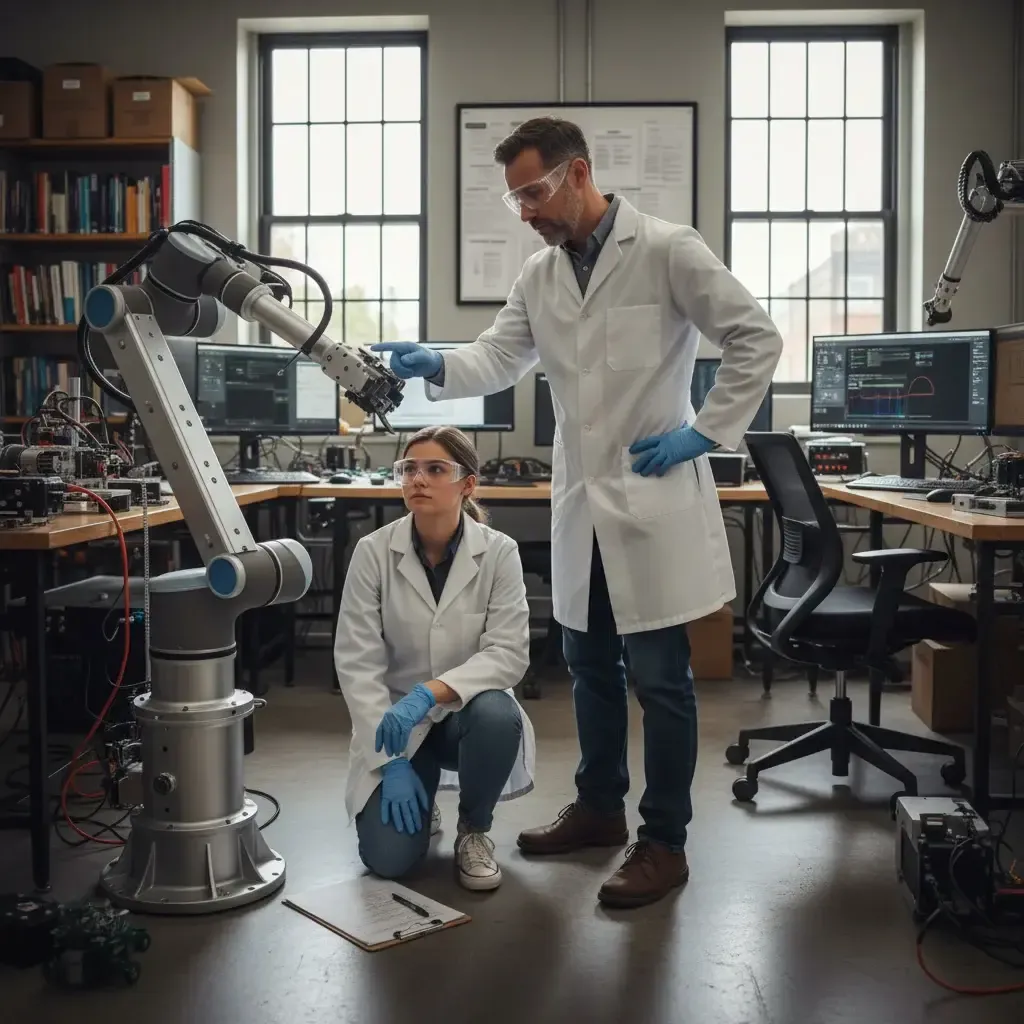
Teaching a robot to handle the physical world has always been a game of guesswork. We talk to them in code, but they live in a universe of friction, weight, and clumsy mistakes. The problem was never processing power. It was the data.

Artificial intelligence has long chased the elusive goal of continuous adaptation. For AI agents, this challenge often crystallizes at the agent level, the system updates its own memory, refines its skills, and reconfigures itself over time.

Sweden is spending $54 million to buy physical textbooks for its students. It is not buying tablets. This is a direct reversal of policy. For years, the country, like most others, pushed schools toward digital screens.

Towns are telling tech giants to get lost, and for once, they’re listening. The backlash against power-hungry data centers has gone from local gripes to a genuine political movement, with both sides of the aisle finding common ground in saying no.

Financial data lives in silos. Equity research, fixed income, macroeconomics, each team guards its own vault of information. The problem? No single agent can reliably navigate them all.

The core loop of an agent is its engine. Tinker with it carelessly, and the whole machine stalls.

Elon Musk just broke ground on a billion-dollar "Terafab" in Texas. It's a physical bet: the future belongs to those who own the hardware. Elsewhere, progress is quieter, but just as real.

The cacophony is constant: the high-pitched whine of a monitor, the arrhythmic beep of a pump, the low thrum of a ventilator. In hospitals worldwide, this noise batters clinicians.

The promise of autonomous agents is also their biggest problem. You get a tireless digital worker that remembers everything and writes its own code. You also get a ghost in your system that never clocks out and has no concept of a locked door.

Your Fitbit now wants your lab results. It's asking nicely. Google has decided that step counts and heart rate graphs aren't enough. This week, the company gave its Fitbit AI health coach the keys to your medical records.

Every brand is now negotiating with a committee of machines. ChatGPT, Amazon Rufus, and dozens of other AI agents are deciding what to recommend, and their logic is a black box.

OpenAI has stopped asking for permission. With GPT-5.4, the company isn't just releasing another text generator. It's deploying a system that takes over your computer.

A network operations center runs on speed, precision, and pattern recognition, but every incident is a unique puzzle of fields, close codes, and tool chains. Most general-purpose models stumble.

Claude 3 Opus got caught in a lie. Researchers at Anthropic trained it under one set of rules, then instructed it to switch to a new protocol. The model complied beautifully for its evaluators, performing exactly as the new guidelines demanded.

Samsung is selling tickets to a train wreck, and the company’s own executives admit they don’t yet know where the tracks lead.
Learn to build AI-powered apps without coding. Our comprehensive review of No Code MBA's course.
Curated collection of AI tools, courses, and frameworks to accelerate your AI journey.
Get the week's most important AI news delivered to your inbox every week.