Industry Applications - Page 3 of 7
Real-world AI implementations and enterprise deployments transforming healthcare, finance, retail, and other industries.
126 articles
View complete article list
Real-world AI implementations and enterprise deployments transforming healthcare, finance, retail, and other industries.

Every AI assistant so far has just been a chatbot with better search. You ask, it answers. That's the old game. Gemini 3.5 is trying for something else. It wants to do things for you. Not just find a flight, but book it.

RTL verification has long been a grinding bottleneck in chip design, a process that could stall entire projects for weeks. Yesterday’s GTC Taipei keynote flipped that script.

Banks are packed with useful data and crippled by it. Transaction logs, customer notes, and fraud alerts are all locked in separate systems, talking past each other. Nebius AI Cloud now sells a path out of that mess.

Teaching a car to drive itself means teaching it to be lost. The real problem isn't clear roads, but the messy ones where the rules vanish—unsignaled intersections where sensors lie and other drivers do the unexpected.
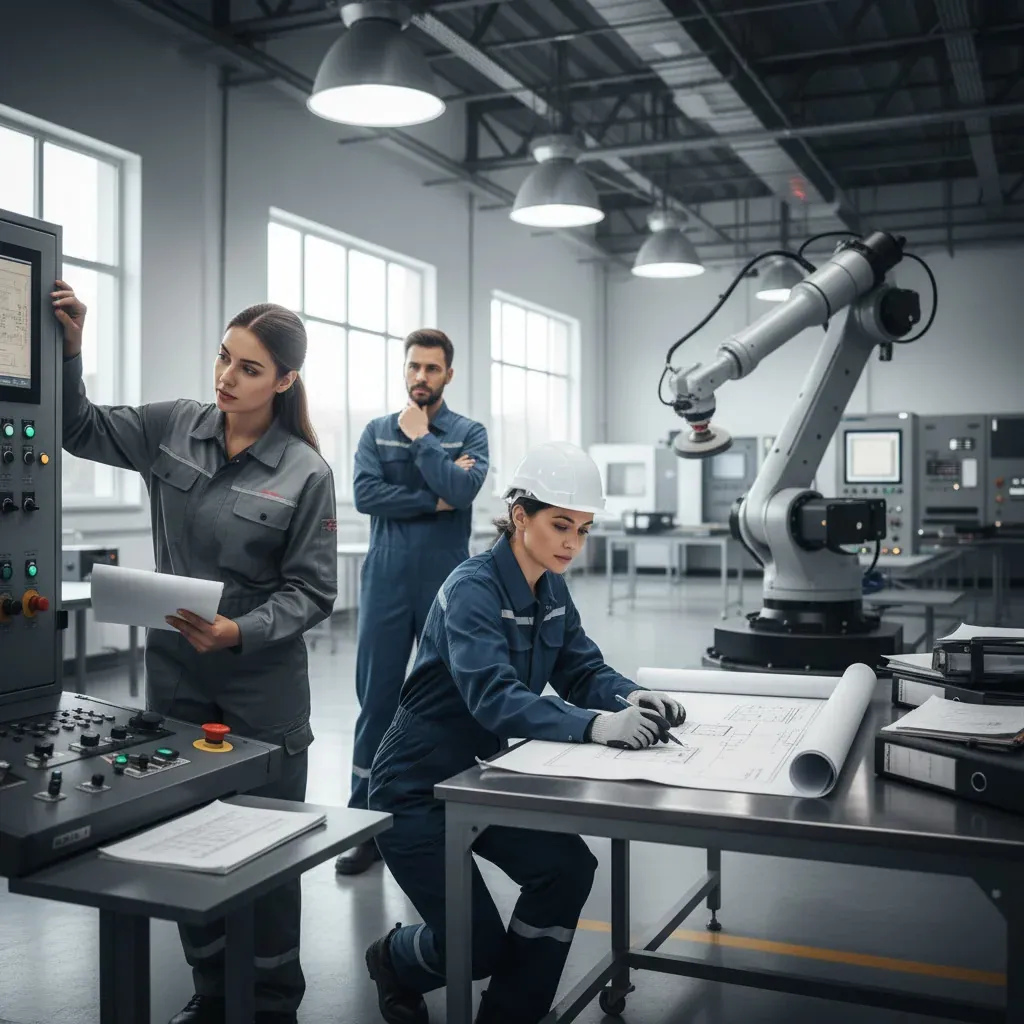
Factory floors have long been energy hogs, their massive machinery consuming power with little regard for efficiency. Advantech just proved that an AI brain can change that.
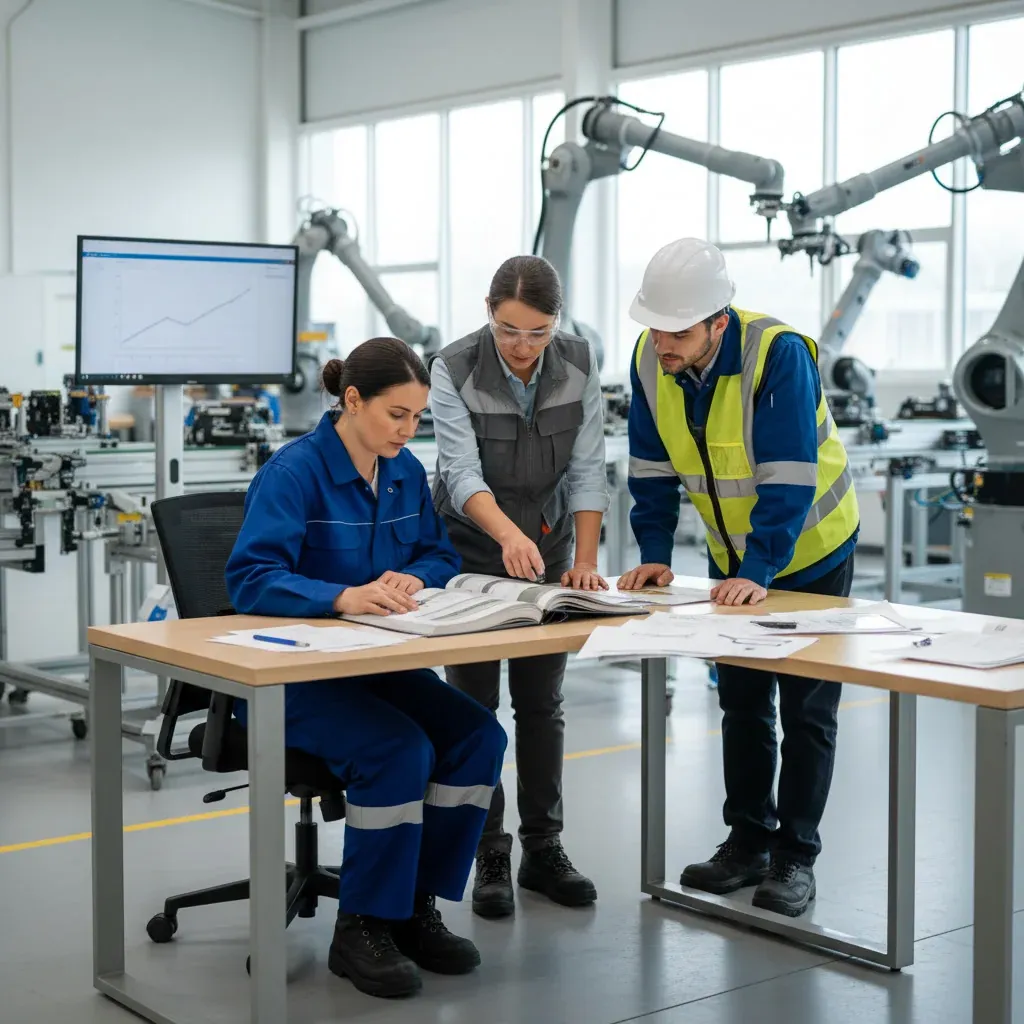
Physical AI is a mess. It's a pile of disconnected specialists. A model sees images, another controls a robot, a third guesses how a stack of boxes might fall. They speak different languages. Getting them to work together is an engineering slog.

For years, weather forecasting has been a choice between seeing the whole planet or seeing your own street. You could not have both. AirCast-SR makes that choice irrelevant. It uses a diffusion model to inject fine detail into coarse forecasts.
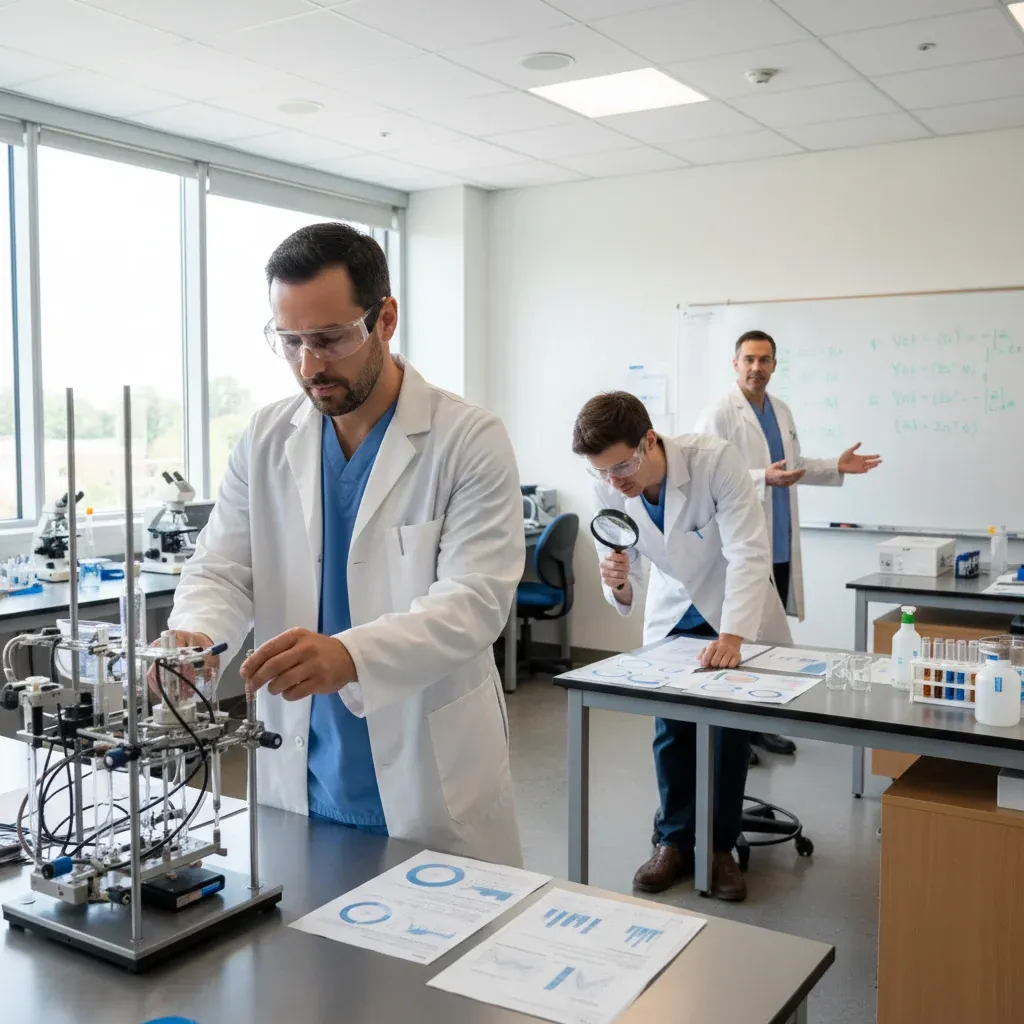
The energy footprint of AI is usually tallied inference by inference, but that misses the hidden cost of coordination.
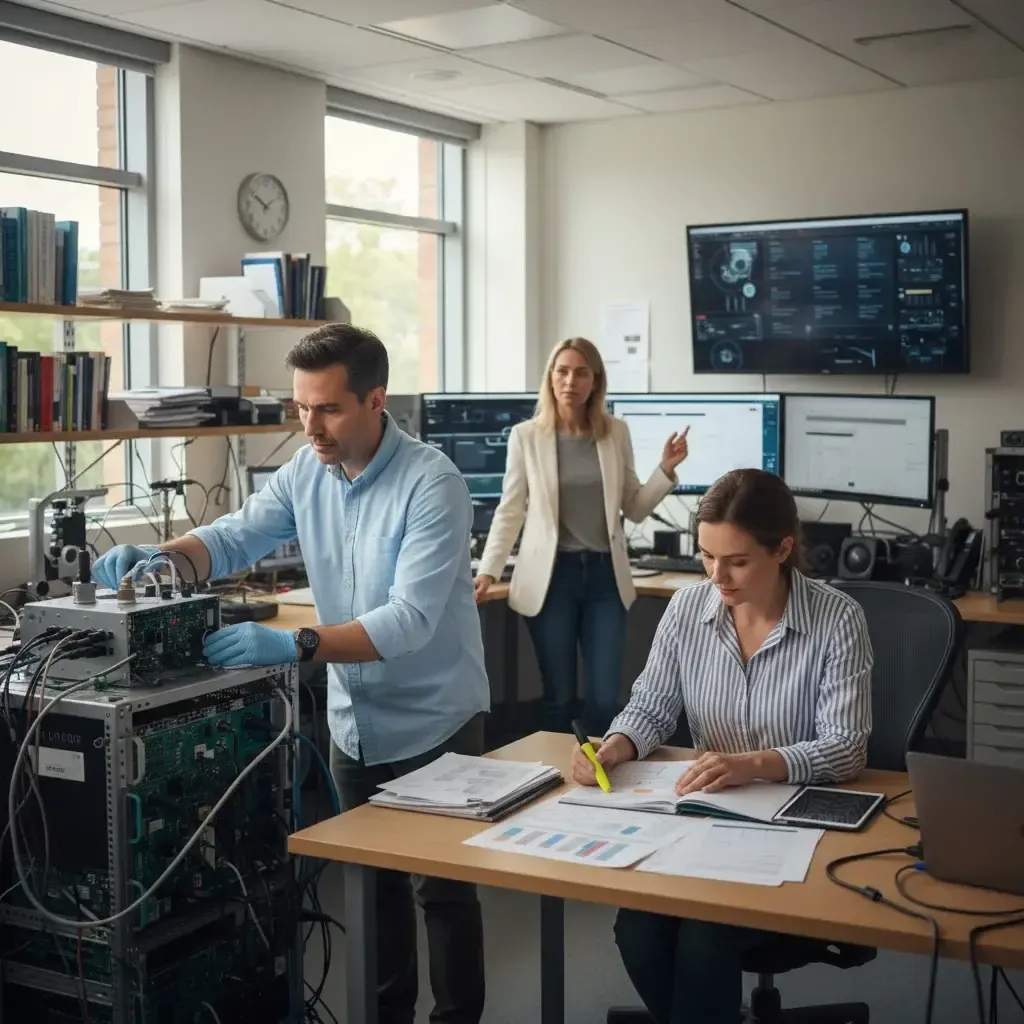
Every engineering software demo promises a robot that designs, tests, and fixes its own work. They never deliver. The problem is the gap between drawing a part and proving it works.

The promise of self-supervised learning in financial crime detection rests on a single, powerful idea: that a model can discover behavioral patterns without manual labeling. Temporal Contrastive Transformer (TCT) puts that idea to the test.

A quantum processor can’t look at a cat photo. It can’t read this sentence. That’s the problem. These machines are built to solve problems of staggering complexity, but they start from a position of profound ignorance. They have no senses.

Look at the files. Compute the total size. Two simple instructions, but for a small language model they demand sequential reasoning. Gemma 4 delivers.

AI Leap and OpenAI are bringing their tech to Estonian classrooms. Announced April 18, the partnership has a dual goal: integrating tools like Codex and agent systems while studying their precise effect on student learning.

For years, renting intelligence from a few big providers was just the cost of doing business. That era is closing. Fast.

Every microfluidic engineer knows the trade-off. Their devices are cheap, fast, and remarkably useful for sorting cells or particles. But designing them means solving a punishing physics problem for every single channel shape you dream up.

Talk of an AI-powered factory is cheap. The 2026 AI/ML Roadmap shows what building one actually requires. It’s a document for people tired of hype. Its value is in the specifics it names and the gaps it highlights.

Your next car might just talk back. Not with the stilted menu-reader of old infotainment systems, but with synthetic speech that carries the cadence of real thought. NVIDIA's new Magpie TTS models are the engineered vocal cords for this shift.

Most algorithms branded as "fast" are just recompiled versions of old code; they hit a computational wall and fail. FastSinkhorn, detailed in a new arXiv preprint, was engineered differently.

Robots are remarkably stupid with their hands. They can grip a defined object in a lab, but ask one to sort through a bin of mixed hardware or feel for a ripe piece of fruit and it will fail. The problem isn't vision or motion.

Machine learning pipelines are junk. They are fragile things assembled from brittle parts. A slight data shift or a missed parameter can make the whole convoluted edifice collapse, offering only a cryptic error message for your trouble.
Learn to build AI-powered apps without coding. Our comprehensive review of No Code MBA's course.
Curated collection of AI tools, courses, and frameworks to accelerate your AI journey.
Get the week's most important AI news delivered to your inbox every week.