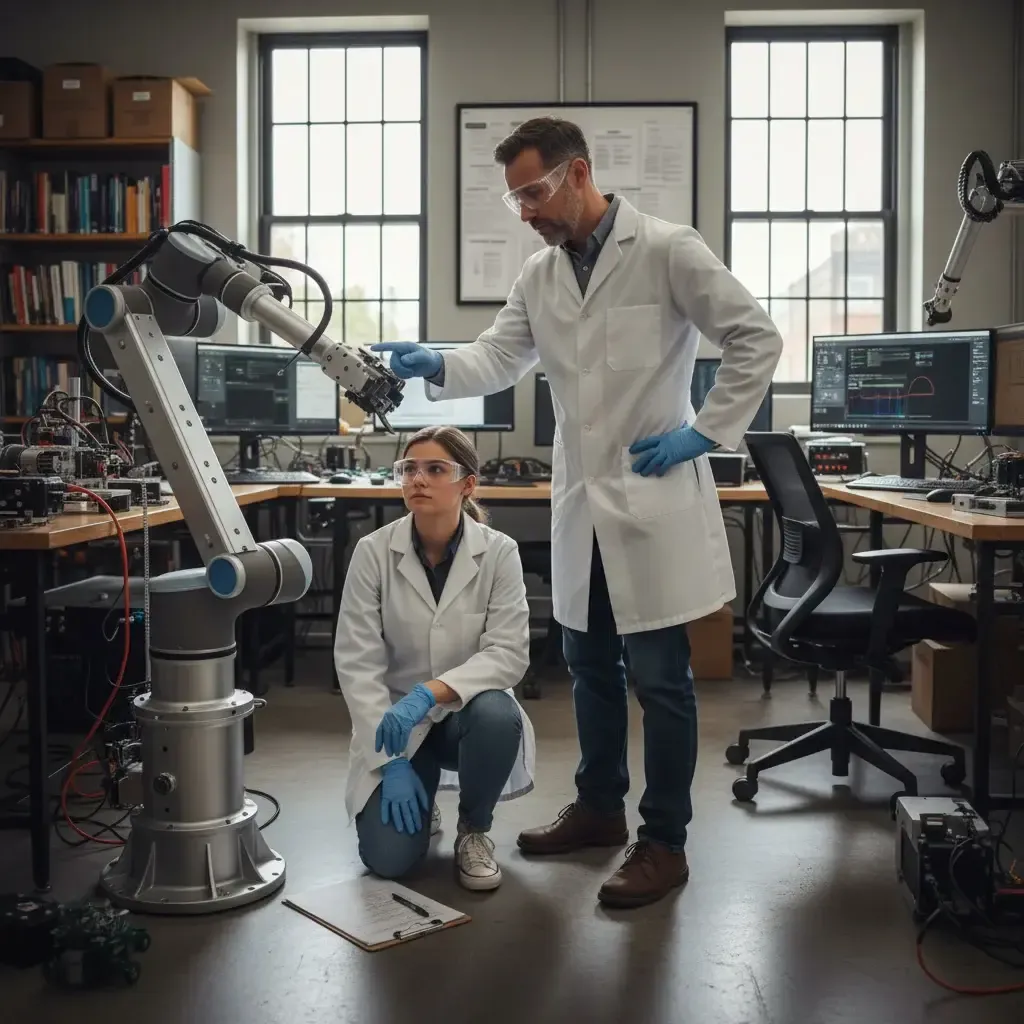
Editorial illustration for Tesla revenue climbs as it readies Q2 start of large‑scale Optimus robot factory
Tesla Revenue Rises as Optimus Robot Factory Launches
Tesla’s coffers are swelling again, and the company is betting big on metal, not just motors. Revenue is climbing, but the real story lives in the factory floor, or rather, the factory that will replace it. Starting this Q2, Tesla will begin work on its first large-scale Optimus robot plant, a facility designed to churn out one million humanoid machines annually.
That first-generation line won’t go into some greenfield site; it will take over the Model S and Model X production lines at Fremont. The older luxury cars are being sidelined. Meanwhile, in Texas, the second-generation line is being engineered for an astonishing ten million robots per year, a scale that dwarfs anything Tesla has done with vehicles.
And the intelligence powering those bots? Tesla is pushing ahead with its Dojo 3 supercomputer, the “space-based AI compute” system Musk teased in January. The company’s earnings deck confirms work continues.
Revenue rises, assembly lines shift, and a new kind of factory, built not for cars but for autonomous workers, edges closer to reality.
As part of the earnings update deck, Tesla said that preparations for its first "large-scale" factory to build its Optimus robots will begin in Q2. "The first-generation line, designed for 1 million robots a year, will replace the Model S and Model X lines in Fremont," Tesla said. Gigafactory Texas will host the second-generation line, "which is being designed for long-term annual production capacity of 10 million robots." Following Musk's announcement in January that Tesla was "restarting work" on its Dojo 3 supercomputer -- which Musk noted at the time will be "space-based AI compute" -- the earnings update deck said that Tesla is "continuing" its work on the project.
This is the moment the narrative shifts. Tesla is no longer just an automaker hedging on a robotaxi future; it is laying the physical foundation for a manufacturing empire that eclipses its car business. A single factory line designed for a million robots a year is not a pilot program.
It is a declaration of intent. The second-generation line in Texas, targeting ten million units annually, moves the proposition from ambitious to industrial-scale inevitability. Meanwhile, the Dojo 3 supercomputer, a "space-based" AI compute node, is not a side project.
It is the brain that will wire this entire ecosystem together. Revenue climbs, but the real story is the infrastructure being built to support a post-automotive ceiling. The cars paid for the tools.
The robots will use them.
Related Reading
 Industry Applications
 Westinghouse teams with Google Cloud to build AI platform for nuclear power
 Industry Applications
 NVIDIA NeMo powers telco reasoning model for autonomous network workflows
 Industry Applications
 Month-1 Agent Adds Holistic Observability with Trace IDs and Token Tracking
 From Archives
 Five AI models attempt social‑engineering scams; some succeed, others falter
 From Archives
 SmolAgents introduces ToolCallingAgent (ReAct) with Celsius, Prime, and Memo tools
Common Questions Answered
What are Tesla's production plans for the Optimus robot factory in Q2?
Tesla plans to begin preparations for its first large-scale Optimus robot factory in Q2, with an initial design targeting production of 1 million robots annually. The first-generation production line will replace the existing Model S and Model X assembly lines at the Fremont facility.
How does Tesla's Optimus robot factory fit into the company's broader manufacturing strategy?
Tesla is strategically repositioning its manufacturing capabilities by dedicating existing production lines to Optimus robot development. The first-generation line at Fremont is planned for 1 million annual units, while Gigafactory Texas is being prepared for a potential long-term production capacity of 10 million robots.
What financial context surrounds Tesla's Optimus robot factory announcement?
Tesla reported $477 million in quarterly revenue, demonstrating continued financial growth while simultaneously pivoting towards advanced robotics. The Optimus robot factory represents a significant strategic shift, potentially transforming Tesla from primarily an automotive manufacturer to a broader technology and robotics company.
Further Reading
- Tesla (TSLA): Musk Eyes $10 Trillion Revenue from Optimus Robot Program — MEXC
- Elon Musk's $10 Trillion robot: Inside Tesla's push to mass produce Optimus — Teslarati
- Tesla Kills Model S and X, Bets Fremont Factory on Optimus — TechBuzz
- Tesla Optimus Production: Model S Ends, Humanoid Robots Begin — RoboZaps
