
Editorial illustration for NVIDIA NemoClaw demo cuts RTL verification from weeks to hours at GTC Taipei
NVIDIA NemoClaw demo cuts RTL verification from weeks to...
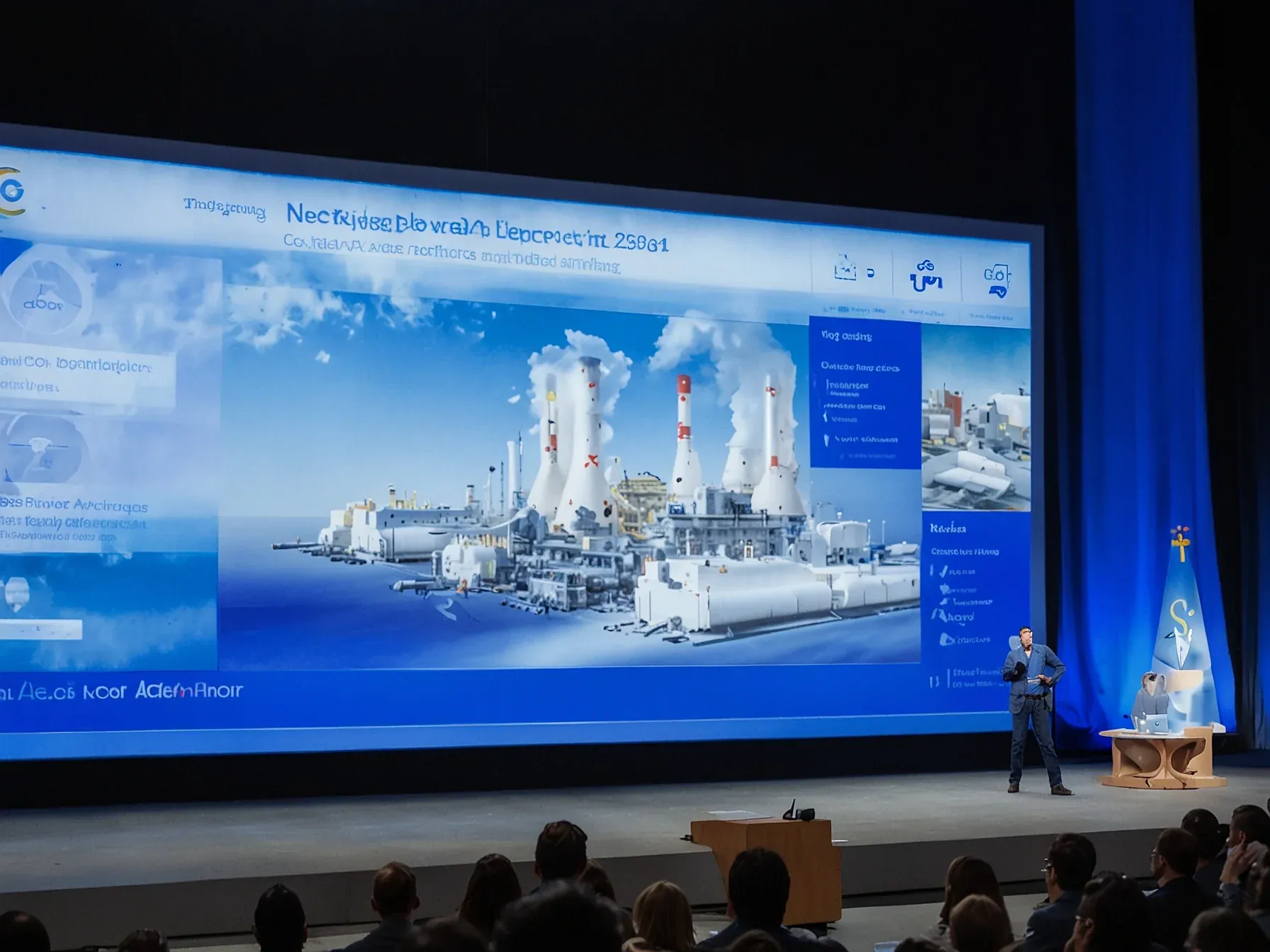
RTL verification has long been a grinding bottleneck in chip design, a process that could stall entire projects for weeks. Yesterday’s GTC Taipei keynote flipped that script. A live demo of NVIDIA NemoClaw slashed the verification timeline from weeks to mere hours.
That’s not just an incremental gain; it’s a fundamental shift in what’s possible. Dassault Systèmes, Siemens, and Synopsys are already charging ahead, embedding NemoClaw and OpenShell into their own autonomous engineering agents. The result?
Secure, long-running workflows that plan, orchestrate, and execute across semiconductor, 3D IC, and PCB design. This isn’t a future promise, it’s happening now, on the COMPUTEX show floor, where an AI engineer powered by NemoClaw is meshing, simulating, and optimizing GPU cooling designs in real time. The era of weeks-long verification cycles is ending.
Hours are the new benchmark.
Cadence is building an autonomous register-transfer level (RTL) engineer with NemoClaw that orchestrates Cadence Design Systems ChipStack for design and verification. The workflow was featured yesterday in a GTC Taipei keynote demo and is cutting time for RTL verification — a key step in digital circuit design — from weeks to hours.
The numbers are stark: weeks compressed into hours. That is not an incremental improvement. It is a fundamental shift in the physics of engineering time.
NemoClaw, as demonstrated at GTC Taipei, does not merely speed up a step; it rewires the entire logic of how RTL verification gets done. Dassault, Siemens, and Synopsys are not just adopting a tool. They are betting their platforms on a new operating model, one where autonomous agents plan, execute, and iterate across domains without a human in the loop for every decision.
The security layer is not an afterthought; it is the enabler. Without it, these long-running, multi-tool workflows would be untenable. With it, the bottleneck shifts from verification cycles to engineering imagination.
The demo on the COMPUTEX floor, where an AI engineer meshes and optimizes GPU cooling in real time, is not a novelty. It is a preview of the standard. The question is no longer whether weeks can become hours.
It is what engineers will do with all that reclaimed time.
Related Reading
 Industry Applications
 Westinghouse teams with Google Cloud to build AI platform for nuclear power
 Industry Applications
 NVIDIA NeMo powers telco reasoning model for autonomous network workflows
 Industry Applications
 Month-1 Agent Adds Holistic Observability with Trace IDs and Token Tracking
 Related Topic
 NVIDIA and Google Cloud let developers scale AI from prototype to production
Market Trends
 Related Topic
 China offers cheaper electricity to AI firms abandoning NVIDIA chips
Business & Startups
 From Archives
 Nebius AI Cloud Enables Full Transaction Foundation Model Lifecycle for Banks
 From Archives
 Uncertainty‑Driven Expert Advice Triggers in RL for Autonomous Driving
 From Archives
 NVIDIA releases Cosmos 3 with Super‑Text2Image and Nano‑Policy‑DROID
LLMs & Generative AI
 From Archives
 Microsoft unveils MXC OS-level sandbox for AI agents, OpenAI, Nvidia join
Business & Startups
Common Questions Answered
How much time does NVIDIA NemoClaw save in RTL verification according to the GTC Taipei demo?
NVIDIA NemoClaw demonstrated at GTC Taipei reduced RTL verification timelines from weeks down to mere hours. This represents a fundamental shift in chip design efficiency rather than just an incremental improvement in the verification process.
What is the significance of NemoClaw's approach to RTL verification compared to traditional methods?
NemoClaw does not simply speed up existing RTL verification steps; it fundamentally rewires how the entire verification process is conducted. The tool enables autonomous agents to plan, execute, and iterate across domains, representing a new operating model for chip design workflows.
Which major EDA companies are adopting NVIDIA NemoClaw as demonstrated at GTC Taipei?
Dassault, Siemens, and Synopsys are betting their platforms on NemoClaw's new operating model for RTL verification. These companies are not simply adopting a tool but are fundamentally restructuring their design platforms around autonomous agent-based verification.
Why has RTL verification been considered a bottleneck in chip design?
RTL verification has historically been a grinding bottleneck that could stall entire chip design projects for weeks. NemoClaw's breakthrough at GTC Taipei demonstrates how autonomous agents can compress this critical phase from weeks to hours, eliminating a major constraint in the design timeline.
