
Editorial illustration for Robotaxi Leaders Build With NVIDIA’s Physical AI Tools
Robotaxi Leaders Adopt NVIDIA's Physical AI Tools
Waymo's vans work Phoenix and San Francisco streets without a driver. Baidu's Apollo Go fleet moves through Wuhan. Pony.ai runs in Guangzhou. Each program picked its own path to get there, but they're converging on the same infrastructure question: what does it actually take to run thousands of driverless cars at once, not just one demo vehicle in a controlled zone.
The numbers explain the urgency. Analysts peg the robotaxi market at $400 billion by 2035, with more than 6 million commercial vehicles expected on the road. Getting one car to drive itself is a hard problem.
Getting six million of them to do it with consistent, verifiable safety is a different kind of problem entirely, one measured in compute cycles, not engineering cleverness alone. Every stage of the pipeline, from feeding raw fleet data into training models to simulating rare edge cases to running inference in real time inside the car, has to scale together.
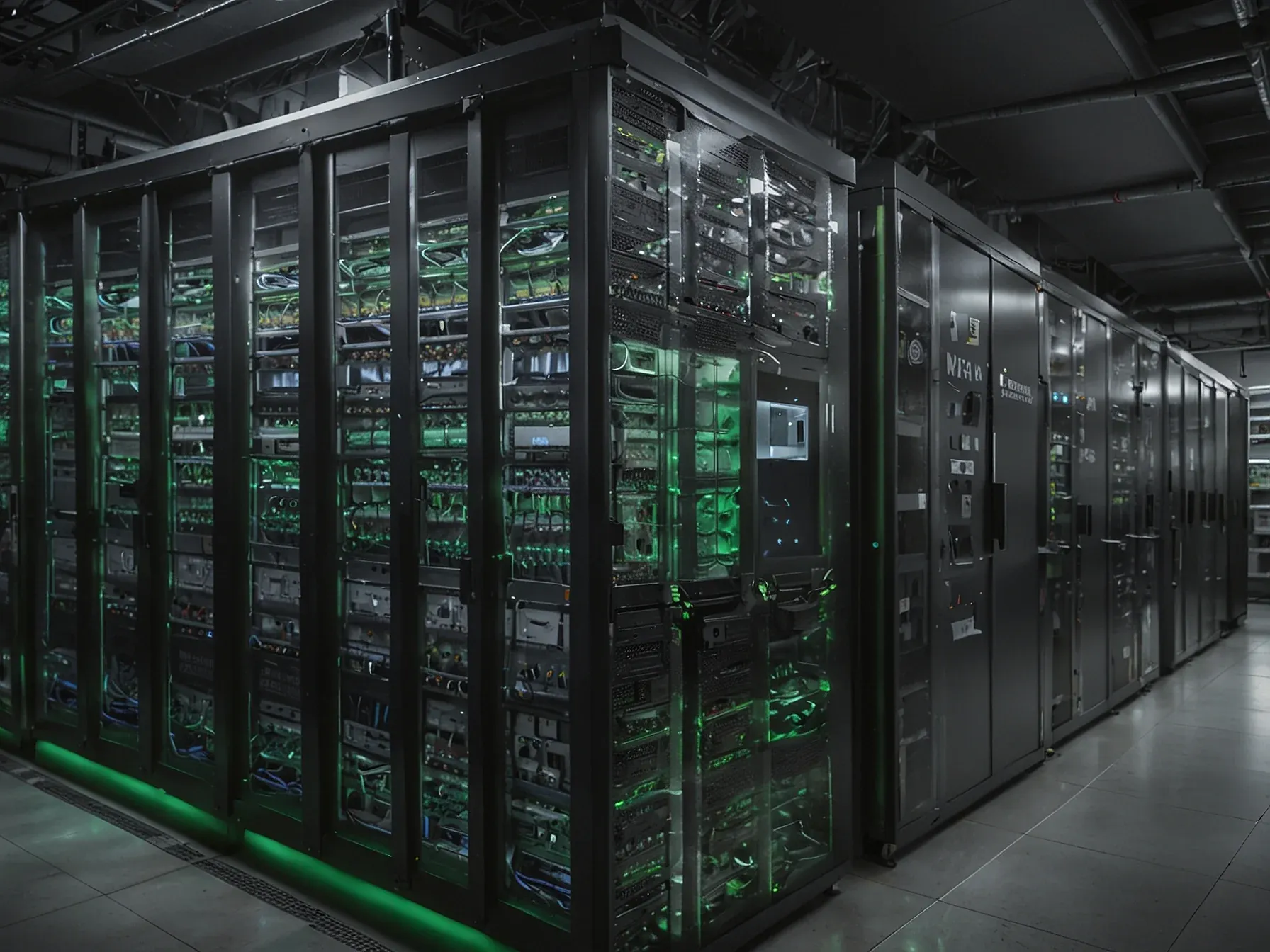
NVIDIA has built its business around supplying that scaffolding rather than the robotaxi itself, offering an open platform of libraries, SDKs, workflows and models that developers slot into their own stacks. The company frames it as a three-computer system, starting with the machine that turns fleet data into trained intelligence.
Every major robotaxi program operating at commercial scale today is running on NVIDIA’s modular stack, spanning AI training, simulation, in-vehicle computing — or a combination of the three — to develop and deploy fleets at scale.
Why this matters
Nvidia's pitch here is really about infrastructure lock-in disguised as convenience. If you're building autonomy software, the appeal of Omniverse for simulation and Cosmos for synthetic data is obvious: testing edge cases on real streets is slow and dangerous, and simulated miles are cheap. But the $400 billion market projection and 6 million vehicle figure by 2035 should make founders ask who actually owns the validation pipeline their safety claims rest on.
Reinforcement learning blueprints and distillation recipes lower the barrier to training models for specific vehicle platforms, which is good news for smaller robotaxi players who can't build that tooling from scratch. Still, scaling a fleet across thousands of vehicles with consistent performance is a distinct problem from getting one car to drive itself, and that's precisely where Nvidia wants to be the default computing layer. For researchers, the open question is whether simulation-heavy validation actually holds up against the messiness of dense urban streets, or whether it just moves the hard problem downstream.
Related Reading
 Research & Benchmarks
 Microsoft AI Chief: "If It Isn't Safe We Shouldn't Build It
 Research & Benchmarks
 Google's FACTS benchmark shows 70% factuality ceiling across four tests
 Research & Benchmarks
 Nvidia's DLSS 4.5 beta adds 6x Multi Frame Generation for RTX 50 GPUs
 Related Topic
 NVIDIA NeMo powers telco reasoning model for autonomous network workflows
Industry Applications
 Related Topic
 China offers cheaper electricity to AI firms abandoning NVIDIA chips
Business & Startups
 From Archives
 Deepmind Eased Ban on Staff Discussing AI Risks After Internal Pushback
 From Archives
 OpenAI's Math Breakthrough Relied on Our Work, Experts Say
 From Archives
 NVIDIA's CUDA Rust Enforces Compile-Time Safety for GPU Kernels
Business & Startups
 From Archives
 NVIDIA Jetson Gains Nemotron 3.5 Lightning, Qwen3.8-27B for Edge AI
Open Source
Common Questions Answered
Which robotaxi companies are currently operating at commercial scale using NVIDIA's infrastructure?
Waymo, Baidu's Apollo Go, and Pony.ai are the major robotaxi programs operating at commercial scale today, each running on NVIDIA's modular stack. Waymo operates in Phoenix and San Francisco, Apollo Go moves through Wuhan, and Pony.ai runs in Guangzhou. All three companies have converged on NVIDIA's infrastructure for AI training, simulation, and in-vehicle computing to manage their fleets at scale.
What is the projected market size for robotaxis by 2035?
Analysts project the robotaxi market will reach $400 billion by 2035, with more than 6 million commercial vehicles expected to be operating. This significant market projection underscores the urgency for robotaxi companies to solve the infrastructure challenges of running thousands of driverless cars simultaneously rather than just single demo vehicles.
How does NVIDIA's Omniverse and Cosmos help robotaxi developers?
NVIDIA's Omniverse platform provides simulation capabilities while Cosmos generates synthetic data, allowing robotaxi developers to test edge cases in virtual environments rather than on real streets. This approach is both safer and more cost-effective, as simulated miles are significantly cheaper than testing on actual roads where real-world testing is slow and dangerous.
What infrastructure challenge are robotaxi leaders trying to solve?
Robotaxi leaders are addressing the critical question of what it actually takes to run thousands of driverless cars at once at commercial scale, rather than just operating a single demo vehicle in a controlled zone. Each company like Waymo, Apollo Go, and Pony.ai has taken its own path but is converging on NVIDIA's modular infrastructure stack as the solution.
What concerns does the article raise about NVIDIA's role in robotaxi validation?
The article suggests that NVIDIA's infrastructure creates potential lock-in for autonomous vehicle developers, as their validation pipeline and safety claims increasingly rest on NVIDIA's Omniverse simulation and Cosmos synthetic data tools. Founders are encouraged to consider who actually owns this critical validation pipeline that underpins their safety claims in the $400 billion robotaxi market.
Further Reading
- NVIDIA Launches Alpamayo 2 Super Open Reasoning Model for Robotaxis - NVIDIA News
- Robotaxis, Autonomous Vehicles & Self-Driving Cars - NVIDIA
- Model Development for Robotaxis and Autonomous Vehicles - NVIDIA
- NVIDIA DRIVE Hyperion Becomes the Global Platform for a Robotaxi-Ready World - NVIDIA News
- Robotaxi has reached a tipping point: Baidu, Nvidia leaders see momentum as competition rises - CNBC
