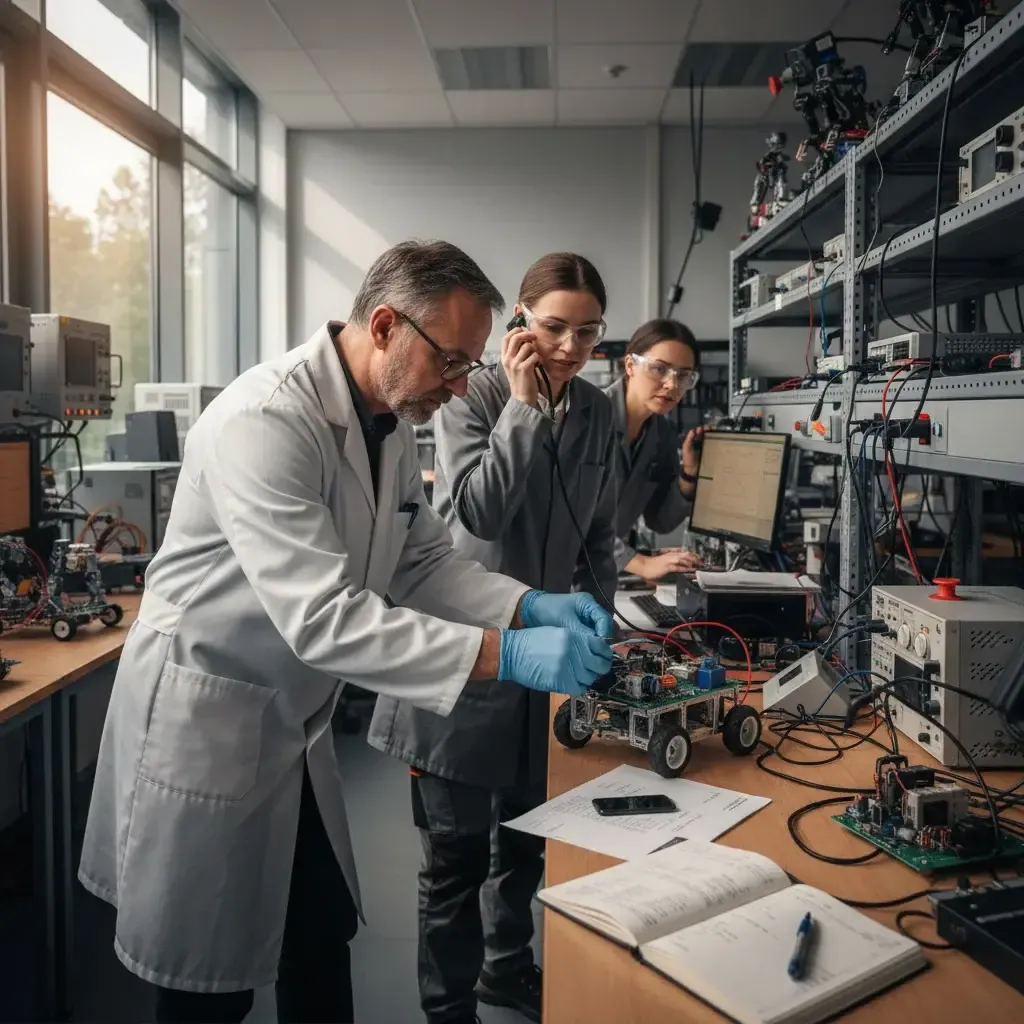
Editorial illustration for Parameter-Efficient Multi-Class Scheduling for Multimodal Anomaly Detection
Parameter-Efficient Multi-Class Scheduling for...
Inside a modern factory, sensors scream. A hydraulic press broadcasts heat data; a conveyor motor streams vibration metrics. This is the deafening, real-time chorus of Industry 4.0.
Yet most monitoring software, built for a simpler era, is overwhelmed. It’s centralized, often offline, and utterly incapable of listening.
The rapid advancement of heterogeneous industrial sensors has driven industrial anomaly detection from unimodal to multimodal paradigms. However, existing methods are primarily designed for centralized and offline settings, overlooking the distributed and continuously generated data characteristic of real-world industrial environments.
The new research tackles the logic problem. Better edge hardware is already bolted to the factory floor. The fight is in the software’s architecture.
The proposed system makes one critical shift: it treats a device's limited power and memory as the core design constraint. It cannot hear every sensor scream at once. So it dynamically decides which data stream is most urgent, focusing its scant computational budget there.
The result isn’t a perfect monolith. It’s a network of lean, adaptable observers that finally work where they are needed.
Related Reading
 LLMs & Generative AI
 ChatGPT's 'Nerdy' tweak rewards goblin metaphors in answers, study finds
 LLMs & Generative AI
 Google to End Free Access to Gemini AI for Non-Subscribers
 LLMs & Generative AI
 AI Engineers Face Rising Costs, Need New Strategies for Efficiency
 From Archives
 Study formalises LLM reasoning redundancy as truncatable steps in correct traces
 From Archives
 Direct and Surrogate Verification Encode Transformer Circuits into SMT Solvers
Common Questions Answered
What is parameter-efficient scheduling in multimodal anomaly detection?
Parameter-efficient scheduling is an approach that treats a device's limited power and memory as the core design constraint rather than an afterthought. Instead of processing all sensor data simultaneously, the system dynamically decides which data streams are most urgent and allocates computational resources accordingly, allowing edge devices to focus on the most critical monitoring tasks.
Why do traditional centralized monitoring systems fail in Industry 4.0 environments?
Traditional monitoring software was built for simpler eras and is overwhelmed by the real-time data chorus of modern factories where multiple sensors continuously stream different types of data like heat metrics and vibration readings. These centralized, often offline systems are utterly incapable of listening to and processing the volume and variety of multimodal sensor inputs that Industry 4.0 demands.
How does the proposed system handle the computational limitations of edge hardware?
The proposed system recognizes that edge devices cannot hear every sensor scream at once, so it dynamically prioritizes which data streams receive computational attention based on urgency. By treating limited power and memory as the core design constraint, the system creates a network of lean, adaptable devices rather than attempting to build a perfect centralized monolith.
What is the primary architectural shift in this multimodal anomaly detection approach?
The primary shift is moving from centralized, offline monitoring to a distributed edge-based architecture that dynamically allocates a device's scant computational budget to the most urgent data streams. This design philosophy acknowledges that modern factory sensors generate continuous multimodal data that cannot all be processed simultaneously, requiring intelligent prioritization at the edge.
Further Reading
- Parameter Efficient Multi-Class Intelligent Scheduling for Multimodal Industrial Anomaly Detection — arXiv
- Parameter Efficient Multi-Class Intelligent Scheduling for Multimodal Industrial Anomaly Detection (v1 full text) — arXiv
- MoEAD: A Parameter-efficient Model for Multi-class Anomaly Detection — ECCV
- Robust Multi-Class Anomaly Detection under Domain Shift — YouTube (conference talk)
