
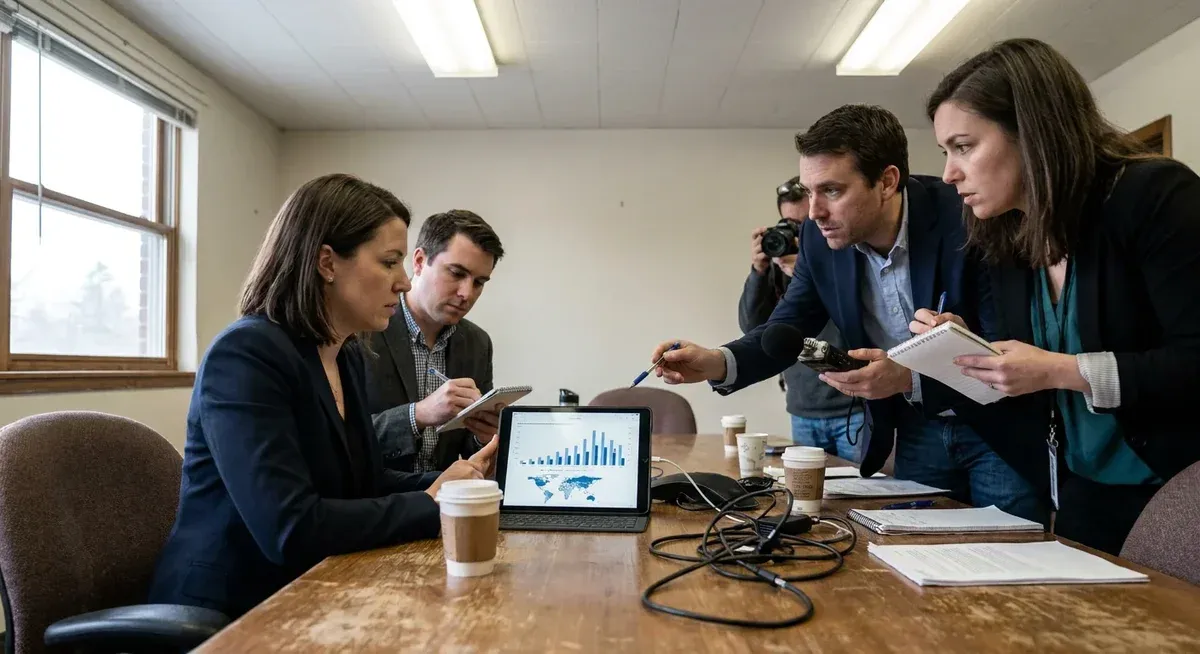
Editorial illustration for Anthropic's Claude for Teachers Vows Not to Train on Student Data
Claude for Teachers Protects Student Data Privacy
Anthropic's Claude for Teachers Vows Not to Train on Student Data
Anthropic launched Claude for Teachers on Wednesday, a free tool for verified K-12 educators at US schools. The package bundles Claude with Claude Code and the Cowork agent feature, plus a library of teaching-specific skills and connections to curriculum-aligned content covering education standards in all 50 states. Teachers can use it to plan lessons, differentiate materials for different learning levels, or comb through student data, and recurring jobs like daily assessment reviews can be automated to run on a schedule.
The rollout comes with integrations for tools schools already use, including Canva Education, MagicSchool, and ASSISTments. Anthropic says none of the data processed through Claude for Teachers will be used to train its models, and the American Federation of Teachers is working with the company on privacy standards for the product. Anthropic is also putting out a free, model-agnostic AI course for educators and a GitHub repository of agent skills, and it plans to track the tool's effect on classrooms through a pilot in Detroit's public schools. The offering extends Claude for Education, which already runs in colleges and universities, and sign-ups stay open through June 2027.
Why this matters
For anyone building AI products aimed at schools, this is the template to watch: free access, a no-training pledge on user data, and a named partner (the AFT) lending credibility on privacy. That combination is becoming the price of entry for education tools, not a differentiator. Google and Microsoft have made similar promises before; what's notable here is Anthropic pairing the pledge with actual integrations, Canva Education, MagicSchool, ASSISTments, so teachers don't have to abandon existing workflows to adopt Claude. That's a smarter go-to-market move than most AI-in-education pitches we've seen, which tend to ask schools to rebuild around a new tool.
The real test isn't the launch, it's enforcement. "Won't train on student data" is a policy, not a technical guarantee, and districts signing on should be asking how that's audited, not just whether it's promised. We'd also watch whether the AFT partnership produces actual standards other vendors get held to, or just a press-friendly endorsement that fades once the rollout news cycle passes.
Related Reading
Browse all Anthropic news → LLMs & Generative AI
 ChatGPT's 'Nerdy' tweak rewards goblin metaphors in answers, study finds
 LLMs & Generative AI
 Google to End Free Access to Gemini AI for Non-Subscribers
 LLMs & Generative AI
 AI Engineers Face Rising Costs, Need New Strategies for Efficiency
 Related Topic
 Claude gains shared context in Excel, PowerPoint; Microsoft adds Copilot Cowork
AI Tools & Apps
 Related Topic
 Trump cracks down on Anthropic after Amazon tip; staff largely foreign
Open Source
 From Archives
 Superhuman's AI Feature Drafts Email Replies in Your Own Tone
 From Archives
 ChatGPT Returns to WhatsApp in Europe Using GPT-5.5
 From Archives
 Anthropic's New AI Ad Campaign Draws Criticism for 'Creepy' Tactics
Business & Startups
 From Archives
 Anthropic Study Shows Claude's Values Shift by Language
Common Questions Answered
What specific features are included in Anthropic's Claude for Teachers package?
Claude for Teachers bundles Claude with Claude Code and the Cowork agent feature, along with a library of teaching-specific skills and connections to curriculum-aligned content covering education standards in all 50 states. Teachers can use these tools to plan lessons, differentiate materials for different learning levels, and automate recurring jobs like daily assessment reviews.
Does Anthropic use student data to train its models?
No, Anthropic has explicitly committed that it will not use any processed data from Claude for Teachers for model training. This privacy pledge is a key differentiator for the tool and addresses concerns about student data protection in educational AI applications.
Which third-party tools can be integrated with Claude for Teachers?
Claude for Teachers integrates with tools like Canva Education, MagicSchool, and ASSISTments, allowing teachers to plug Claude into their existing workflows without disrupting their current processes. These integrations help teachers leverage Claude's capabilities within the tools they already use daily.
Who is eligible to use Claude for Teachers and what is the cost?
Claude for Teachers is available free to verified K-12 educators at US schools. The free access combined with the no-training pledge on user data represents the standard entry point for education AI tools in the current market.
How does Anthropic's approach compare to other tech companies' education AI offerings?
While Google and Microsoft have made similar data privacy promises, Anthropic distinguishes itself by pairing the no-training pledge with actual integrations into established educational tools like Canva Education and ASSISTments. This combination of free access, privacy commitment, and practical integrations is becoming the expected standard for education AI tools.
Further Reading
- Claude for Education just got several new integrations for students - ZDNet
- Anthropic Changes Privacy Policy to Train Claude on User Data - BigGo
- Claude Projects for Education: A Classroom AI Teaching Partner in 2026 - Windows Forum
- A Complete Guide to 'Opting Out of Training' for Your Data - note.com
- Claude privacy: How Anthropic handles your data - Anonyome
