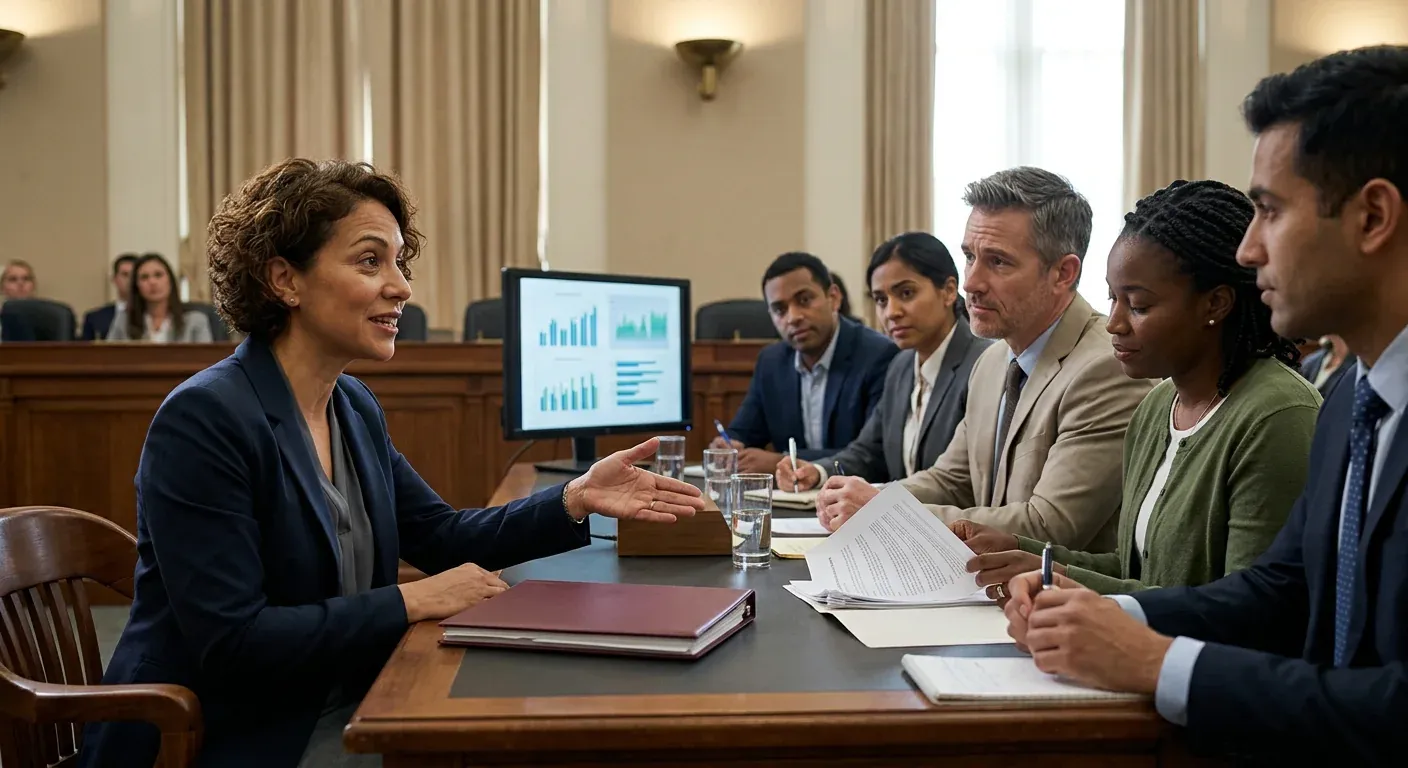
Editorial illustration for OpenAI, Anthropic Tell British Lawmakers: Regulate Us, Focus on Standards
OpenAI, Anthropic Push UK to Regulate AI Standards
OpenAI, Anthropic Tell British Lawmakers: Regulate Us, Focus on Standards
Four frontier AI companies sat before British MPs on Tuesday and gave four different answers to the same question. The Business, Innovation, Science, and Trade Committee called representatives from OpenAI, Anthropic, Google DeepMind and Meta, alongside four former employees turned whistleblowers and senior civil servants, to find out whether the industry still believes it can police itself.
The split that emerged was not subtle. OpenAI and Anthropic broke with their rivals and told the committee that voluntary safety pledges, the kind AI labs signed onto at summits in Bletchley and Seoul, no longer go far enough. Both companies said Parliament should move toward binding law rather than relying on firms to hold themselves to standards they wrote. Google DeepMind and Meta pushed back, arguing that Britain's regulators already have the tools they need and that the better path is sharpening technical standards rather than drafting new statutes.
That disagreement, aired in front of a cross-party panel, now sits at the center of Britain's debate over how, or whether, to legislate frontier AI.
Why this matters
For founders and developers building on these platforms, the split in Tuesday's hearing is worth watching closely. OpenAI and Anthropic calling for statutory rules while Google DeepMind and Meta hold out for voluntary standards isn't just a PR disagreement, it signals different bets on where the regulatory floor will land in Britain. If OpenAI and Anthropic get their way, compliance costs and audit requirements could become mandatory baselines that smaller labs and startups building on their APIs will inherit by extension.
Larter's line about "focus on standards" and Sherman's point that regulators aren't "writing on a blank page" suggest Google and Meta want to lean on existing bodies rather than new legislation, which would favor companies with the legal teams to navigate ambiguity. Anyone shipping products on top of these models should track which version of this argument the Business, Innovation, Science, and Trade Committee ends up endorsing. A statutory framework from the UK often becomes a template others reference, and the companies pushing hardest for rules now may be trying to shape them before someone else does.
Related Reading
Browse all OpenAI news → Policy & Regulation
 Akamai Proposes SAFE Cybersecurity Guidelines for AI Threats
 Policy & Regulation
 After ditching AI fitness apps and a Fitbit, I return to Peloton classes
 Policy & Regulation
 Sony Music, Warner Chappell Sue Anthropic Over "Blatant Theft
 Related Topic
 OpenAI researcher quits, citing distrust over ad‑driven engagement metrics
LLMs & Generative AI
 Related Topic
 OpenAI launches GPT-Image 1.5 with precise editing for enterprise visuals
LLMs & Generative AI
 From Archives
 Character.ai Faces Shutdown Without Buyer, Disney Buys Assets
 From Archives
 Microsoft President Says UK Leads on AI Regulation
 From Archives
 OpenAI Launches Decisions API, Lets Models Plan Their Own Steps
Research & Benchmarks
 From Archives
 Microsoft's Andreou: OpenAI Models Excel in Specific Tasks
Business & Startups
Common Questions Answered
What was the main disagreement between OpenAI/Anthropic and Google DeepMind/Meta at the British parliamentary hearing?
OpenAI and Anthropic called for new legislation and mandatory statutory rules to ensure AI safety, arguing that voluntary pledges are no longer sufficient. In contrast, Google DeepMind and Meta declined to back new legislation, instead advocating for voluntary industry standards to govern AI development.
Why should developers building on AI platforms pay close attention to the regulatory split between these companies?
The disagreement signals different predictions about where Britain's regulatory floor will ultimately land, which will directly impact compliance costs and audit requirements for smaller labs and startups. If OpenAI and Anthropic's position prevails, mandatory baseline compliance standards could become industry requirements that affect development practices across the board.
Which AI companies testified before the British Business, Innovation, Science, and Trade Committee?
Four frontier AI companies testified: OpenAI, Anthropic, Google DeepMind, and Meta. The hearing also included testimony from four former employees turned whistleblowers and senior civil servants to assess whether the AI industry can effectively self-regulate.
What was the central question the British parliamentary committee posed to the AI company representatives?
The committee asked whether the frontier AI industry still believes it can police itself without external regulation. The four companies provided notably different answers, revealing a significant split in their positions on self-regulation versus government oversight.
Further Reading
- Papers with Code - Latest NLP Research - Papers with Code
- Hugging Face Daily Papers - Hugging Face
- ArXiv CS.CL (Computation and Language) - ArXiv
