
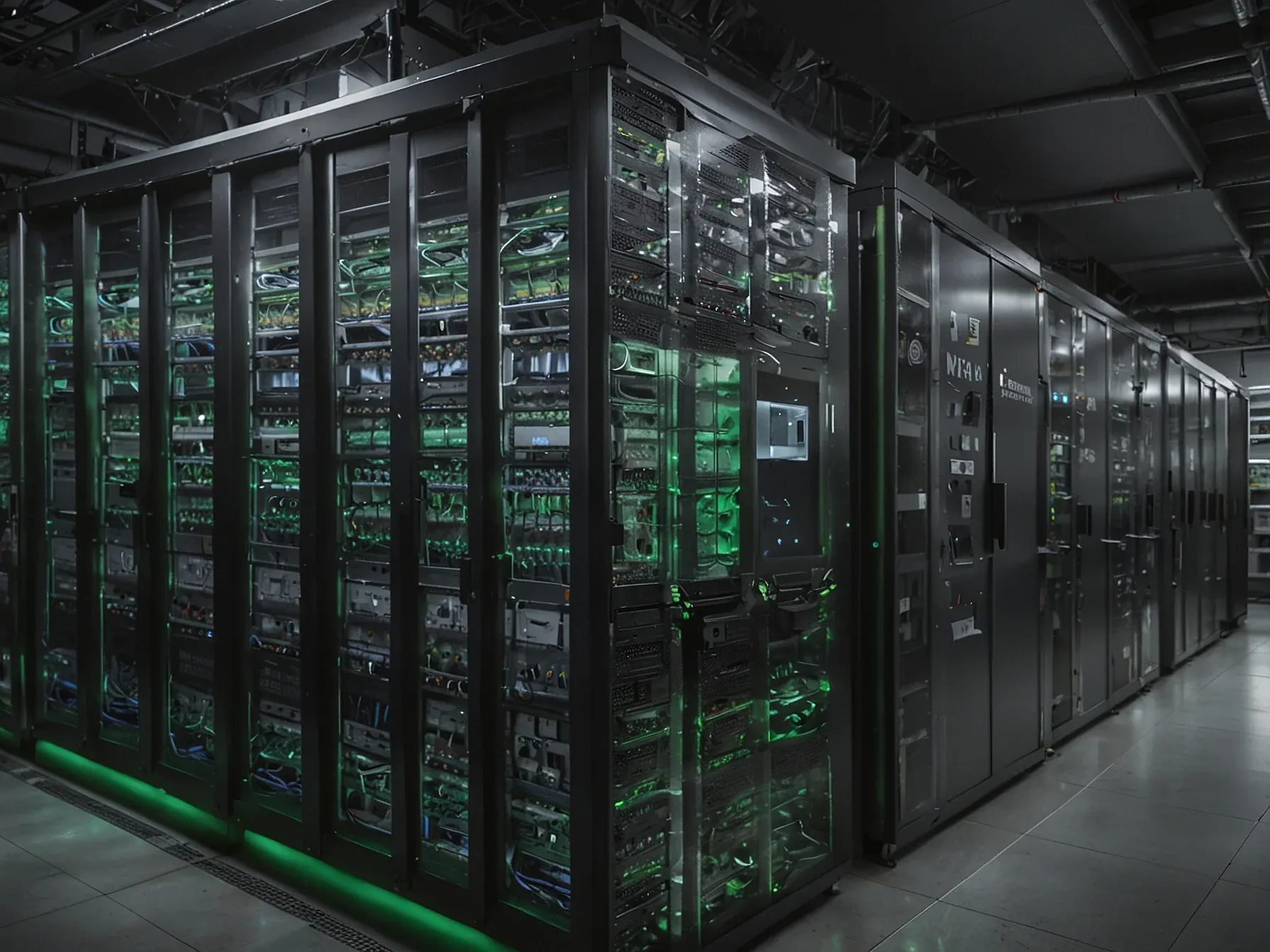
Editorial illustration for NVIDIA Cosmos Data Factory Blueprints Speed Physical World Model Training
NVIDIA Cosmos Data Factory Blueprints Speed Physical...
NVIDIA is adding new tools to its Cosmos platform aimed at the unglamorous but necessary work behind physical AI: building and testing world models that let robots, cars and factory systems understand real environments before they act in them. The company says Cosmos now ranks in the top five on six separate open models leaderboards, and the latest update bundles training tools, simulation checkpoints and a set of Cosmos Data Factory blueprints meant to cut down the time it takes to go from raw sensor data to a model ready for deployment.
The starting point for any of this is data, specifically the multimodal, multisensory kind that physical AI systems need to learn from. NVIDIA's answer is Cosmos Data Factory, a collection of tools for labeling, curating, augmenting and evaluating video and sensor data at scale. Cosmos Curator, the platform's GPU-accelerated data curation engine, now handles multimodal and multisensory inputs directly, with new processing blocks built for that kind of data. The blueprints that sit on top of Curator are designed to automate specific, often tedious data problems that have historically slowed down world model training pipelines.
Porsche is leading the development of a shared AV data flywheel across Volkswagen Group brands, using Cosmos Data Factory through Voxel51 on Microsoft Azure. This is expected to reduce repeated physical test drives by up to 90% and shorten development cycle times by up to 85%.
Why this matters
For teams building physical AI, the bottleneck has rarely been model architecture. It's data: collecting it, labeling it, generating synthetic variants that cover edge cases a robot or vehicle will actually hit on the road. NVIDIA packaging Cosmos Data Factory as a blueprint, rather than a one-off tool, signals it wants this to become infrastructure other companies build on top of, not just a demo.
Porsche's involvement in a shared AV data flywheel is the detail worth watching here. If automakers start pooling or standardizing data pipelines through Cosmos, that's a real shift in how competitive an advantage data curation remains versus becoming shared plumbing. The leaderboard rankings matter less than whether developers can actually plug Cosmos into existing workflows without rebuilding them.
For researchers, the open model access is the bigger draw: six leaderboards is a strong claim, but the real test is whether these models generalize outside NVIDIA's own benchmarks. Worth tracking which companies beyond Porsche adopt the blueprints, and whether "agentic skills" for data generation hold up under scrutiny once outside developers start poking at them.
Related Reading
 Research & Benchmarks
Microsoft AI Chief: "If It Isn't Safe We Shouldn't Build It
 Research & Benchmarks
Google's FACTS benchmark shows 70% factuality ceiling across four tests
 Research & Benchmarks
Nvidia's DLSS 4.5 beta adds 6x Multi Frame Generation for RTX 50 GPUs
 Related Topic
NVIDIA NeMo powers telco reasoning model for autonomous network workflows
Industry Applications
 Related Topic
China offers cheaper electricity to AI firms abandoning NVIDIA chips
Business & Startups
 From Archives
Shopify Gains 4.5x Speed Boost With NVIDIA AI Software
 From Archives
Jensen Huang Says Europe Can Lead Humanoid Robotics and Physical AI
 From Archives
Inception Mercury 3: 1,068 tokens/sec on Nvidia GPUs, quality on par or better
LLMs & Generative AI
 From Archives
Mistral and Nvidia Team Up to Speed Industrial Design With Physics AI
AI Tools & Apps
Further Reading
- NVIDIA Announces Open Physical AI Data Factory Blueprint to Accelerate Robotics, Vision AI Agents and Autonomous Vehicle Development - NVIDIA Newsroom
- NVIDIA Cosmos Opens New Tools to Train, Evaluate and Deploy World Models - NVIDIA Blog
- NVIDIA GTC Showcases Virtual Worlds Powering the Physical AI Revolution - NVIDIA Blog
- How Cosmos 3 Helps Physical AI Think Before It Acts - NVIDIA Blog
- How Open World Models Push the Frontier of Physical AI - NVIDIA Blog
