Editorial illustration for NVIDIA Agent Ports Weather Model to GPU, Speeds Routine 5x
NVIDIA Agent Speeds Weather Model 5x on GPU
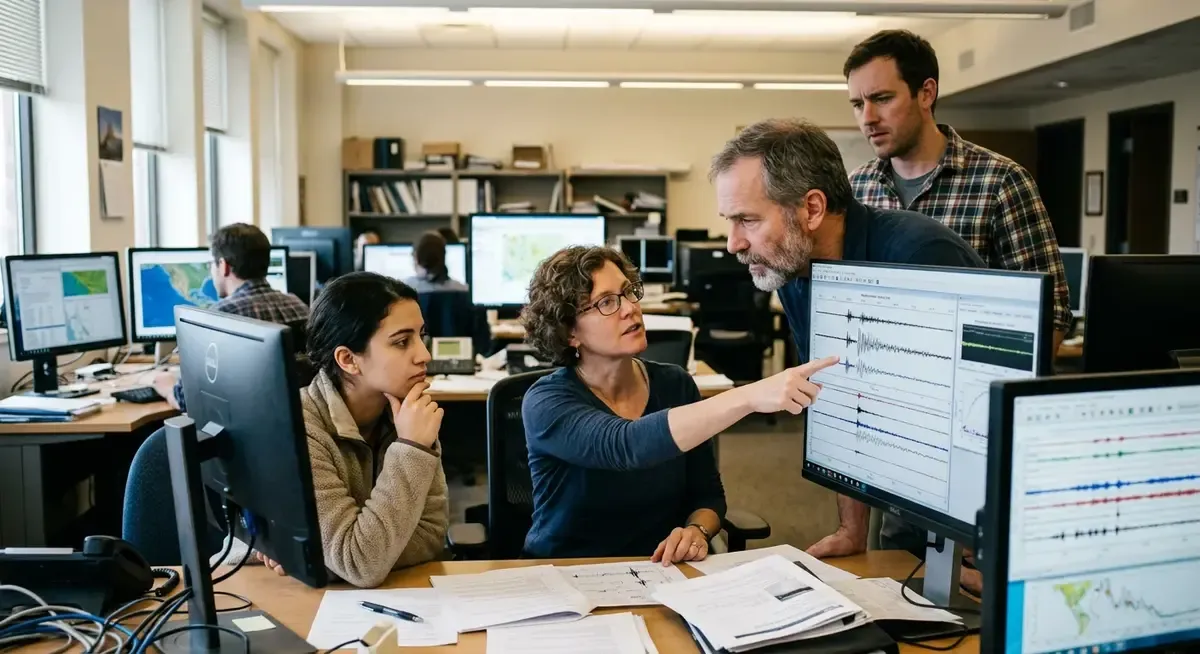
Ian Buck opened NVIDIA's lineup of talks at SC26 in Chicago on Monday with an announcement that an AI agent had ported a weather forecasting routine to GPUs and cut its runtime by a factor of five, a demonstration built on work with Argonne National Laboratory. Buck, NVIDIA's vice president of hyperscale and high-performance computing, used the result to frame a broader set of releases: Nemotron for Science, a new Rubin HPC GPU, an expanded Vera CPU platform, and a quantum computing collaboration with IBM and Fermi National Accelerator Laboratory. The weather model example mattered because it showed software handling a task that normally takes a specialist weeks of manual tuning, done instead by an agent that planned the port, wrote the code, and checked the results against the original output.
Buck traced the moment back twenty years, to his first public CUDA talk at an SC06 tutorial in Tampa, Florida, and noted NVIDIA now maintains more than 1,000 CUDA-X libraries. That history set up his argument that simulation still anchors scientific computing, but agents are changing how researchers actually operate their machines. The Argonne case was his opening proof point for what he called a new scientific stack.
Why this matters
A 5x speedup on one WRF routine, achieved by burning 150 million tokens, tells us two things at once: porting agents can do real scientific-computing grunt work, and that work still isn't cheap. For researchers sitting on decades of legacy Fortran and C codebases, that's the actual bottleneck, not whether GPUs are faster than CPUs (they are, obviously), but whether anyone has the time to rewrite the code to use them. If Nsight's agent can chew through that backlog even at today's token costs, it changes the math on which old models get modernized versus quietly left to run slow forever.
We'd want to see this applied to something messier than a single routine before calling it solved. Buck's framing of agents as CPU-bound tool-callers between model steps is also worth noting: it's a reminder that "AI for science" at SC26 isn't just bigger GPUs, it's an architecture argument about where the orchestration logic actually lives. Watch whether NVIDIA publishes token costs and wall-clock times on larger, messier ports, not just curated demos.
Related Reading
 Research & Benchmarks
Microsoft AI Chief: "If It Isn't Safe We Shouldn't Build It
 Research & Benchmarks
Google's FACTS benchmark shows 70% factuality ceiling across four tests
 Research & Benchmarks
Nvidia's DLSS 4.5 beta adds 6x Multi Frame Generation for RTX 50 GPUs
 Related Topic
NVIDIA NeMo powers telco reasoning model for autonomous network workflows
Industry Applications
 Related Topic
China offers cheaper electricity to AI firms abandoning NVIDIA chips
Business & Startups
 From Archives
Grok Bot ignored stop orders, made 31 unapproved requests, and denied it
 From Archives
AI Writing Tools Standardize Workplace Communication, Except for Women
 From Archives
NVIDIA HPC SDK Playbook Brings GPU-Accelerated Compilers to DGX Spark
 From Archives
Lambda Uses NVIDIA Photonics For 5x Power Efficiency In AI Factories
Industry Applications
Common Questions Answered
How much did NVIDIA's AI agent improve the weather forecasting routine performance?
NVIDIA's AI agent achieved a 5x speedup on the weather forecasting routine by porting it to GPUs. This significant performance improvement was demonstrated through collaboration with Argonne National Laboratory and represents a major advancement in accelerating scientific computing workloads.
What is Nemotron for Science and what role does it play in NVIDIA's announcements?
Nemotron for Science is one of NVIDIA's new releases announced by Ian Buck at SC26 in Chicago. It represents part of NVIDIA's broader strategy to enable AI agents to handle scientific computing tasks more efficiently across their expanded product lineup.
Why is the 5x speedup achievement significant despite the high token cost?
While the 5x speedup on the weather forecasting routine required burning 150 million tokens, it demonstrates that AI porting agents can perform real scientific-computing work. The real bottleneck for researchers is not GPU performance versus CPUs, but rather the time and resources needed to rewrite legacy Fortran and C codebases to utilize GPU acceleration.
What new hardware products did NVIDIA announce alongside Nemotron for Science?
NVIDIA announced the Rubin HPC GPU and an expanded Vera CPU platform for high-performance computing applications. Additionally, the company detailed a new quantum computing collaboration with IBM and Fermi National Accelerator Laboratory as part of their comprehensive product lineup.
Further Reading
- Ian Buck Kicks Off NVIDIA’s Week at SC26 as Science Enters the Age of Agents - NVIDIA Blog
- Nemotron for Science puts agents inside the HPC loop - StartupHub.ai
- NVIDIA SC26: Rubin HPC GPU With 50,000 CUDA Cores Due in 2028 - StorageReview
- Forecasting the Weather Beyond Two Weeks Using NVIDIA Earth-2 - NVIDIA Developer Blog
- NVIDIA Earth-2 Powers Regional AI Weather Forecasting in the United Arab Emirates - NVIDIA Developer Blog
