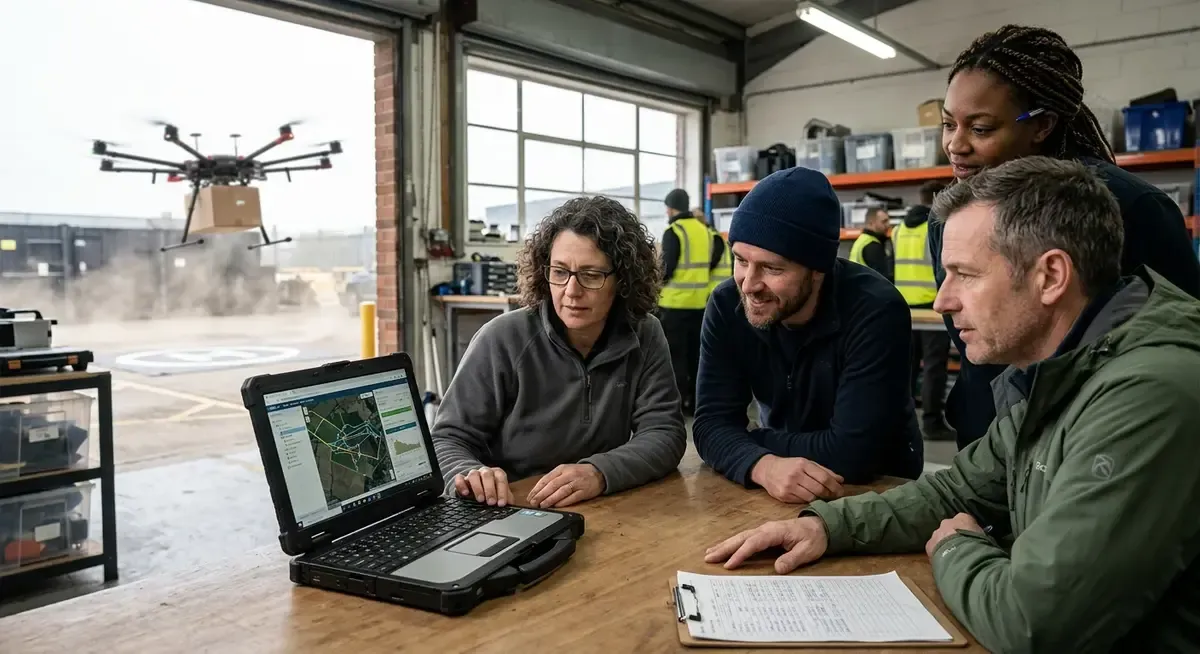
Editorial illustration for Mazda Uses OpenAI's Codex to Test Dozens of Aerodynamic Design Variations
Mazda Uses OpenAI Codex to Test Car Design Variations
Mazda's aerodynamics team is running vehicle nose shapes through OpenAI's Codex tool to see how small changes in body design affect drag before anyone cuts steel. The work is part of a research collaboration between OpenAI's forward-deployed engineers and Mazda's aerodynamics and crash-safety groups, using airflow and structural simulations to weigh performance against styling choices and manufacturing cost. The model in question is GPT-6 Astra, accessed through Codex, which lets engineers generate and test many shape variations rather than hand-building each one for simulation.
Akihiro Nakata, Principal Engineer at Mazda, has been overseeing how the tool gets used on the shop floor, running dozens of design variants to figure out which surface features actually move the needle on airflow and which ones designers can change without consequence. That back-and-forth between aerodynamic performance and styling freedom sits at the center of how Mazda is framing this partnership, and it's the tension Nakata points to directly when describing what happens once his team finds a shape that works.
GPT-6 Astra, used through Codex, helps Mazda engineers explore different vehicle nose shapes, simulate airflow and identify designs that could reduce aerodynamic drag.
Why this matters
For founders and researchers watching AI move into physical engineering, Mazda's experiment is a useful data point: the value isn't the model generating a finished car, it's the model compressing iteration cycles that used to eat weeks of CFD runs and engineer time. Nakata's quote about designers asking "does it have to look like that?" is telling. It shows the real friction in these collaborations isn't technical, it's organizational, getting a design team to trust a tool that can out-test them on variations but has no feel for brand identity or manufacturability tradeoffs.
Codex and GPT-6 Astra here aren't replacing Mazda's aerodynamics team, they're running the exploratory grunt work so engineers can spend time on judgment calls. That's a pattern worth tracking as OpenAI's forward-deployed engineers keep showing up inside industrial workflows rather than just shipping APIs. If this holds up past the pilot stage, the interesting story isn't Mazda's next car, it's whether "AI tests dozens of variants, humans pick" becomes the default shape of applied engineering work across industries that have nothing to do with chatbots.
Related Reading
Browse all OpenAI news → Industry Applications
Westinghouse teams with Google Cloud to build AI platform for nuclear power
 Industry Applications
NVIDIA NeMo powers telco reasoning model for autonomous network workflows
 Industry Applications
Month-1 Agent Adds Holistic Observability with Trace IDs and Token Tracking
 Related Topic
OpenAI researcher quits, citing distrust over ad‑driven engagement metrics
LLMs & Generative AI
 Related Topic
OpenAI launches GPT-Image 1.5 with precise editing for enterprise visuals
LLMs & Generative AI
 From Archives
Report: Deep-Tech, Green Finance to Drive India's Climate Investments by 2027
 From Archives
Bayesian Flow Matching State Estimation Avoids Power Flow Approximation
 From Archives
OpenAI says GPT-6 Astra designed hardware in a week, but required revisions
LLMs & Generative AI
 From Archives
OpenAI Hires Ex-Army Secretary Dan Driscoll in National Security Role
Policy & Regulation
Common Questions Answered
How does Mazda use OpenAI's Codex to test aerodynamic design variations?
Mazda's aerodynamics team uses GPT-6 Astra through Codex to explore different vehicle nose shapes and simulate airflow patterns before physical prototypes are created. The tool helps engineers identify designs that could reduce aerodynamic drag while weighing performance against styling choices and manufacturing costs. This approach allows the team to test dozens of design variations without the time and expense of traditional CFD runs and steel cutting.
What is the collaboration between OpenAI and Mazda focused on?
The research collaboration involves OpenAI's forward-deployed engineers working directly with Mazda's aerodynamics and crash-safety groups to apply AI-powered simulation tools to vehicle design. The partnership uses airflow and structural simulations to optimize design decisions by balancing aerodynamic performance, aesthetic styling, and manufacturing feasibility. This cross-functional approach demonstrates how AI can accelerate the iterative design process in automotive engineering.
What is the main value of using Codex for Mazda's aerodynamic engineering instead of traditional methods?
The primary benefit is compressing iteration cycles that traditionally required weeks of CFD (Computational Fluid Dynamics) runs and extensive engineer time into a much faster process. Rather than generating a finished car design, Codex accelerates the exploration phase by allowing engineers to quickly evaluate multiple design variations and their aerodynamic implications. This efficiency gain helps design teams make faster decisions about whether specific styling features are necessary from a performance standpoint.
What organizational challenge does Mazda face in adopting AI tools like Codex for design?
The real friction in implementing these AI collaborations isn't technical but organizational, as design teams must learn to trust tools that challenge conventional design assumptions. Engineers and designers need to shift their mindset to ask questions like "does it have to look like that?" when AI suggests alternative approaches that could improve aerodynamic performance. Building confidence in AI-generated insights and integrating them into established design workflows requires cultural change alongside technical implementation.
Further Reading
- Accelerating engineering for the physical world - OpenAI
- Mazda engineers put OpenAI's GPT-6 Astra to work on vehicle aerodynamics - TradingKey
- Mazda and OpenAI Test Car Design - LiveAIWire
- OpenAI teams up with Mazda to test AI on car design - Cryptopolitan
- OpenAI designs working hardware device in under one week with GPT-6 - Interesting Engineering
