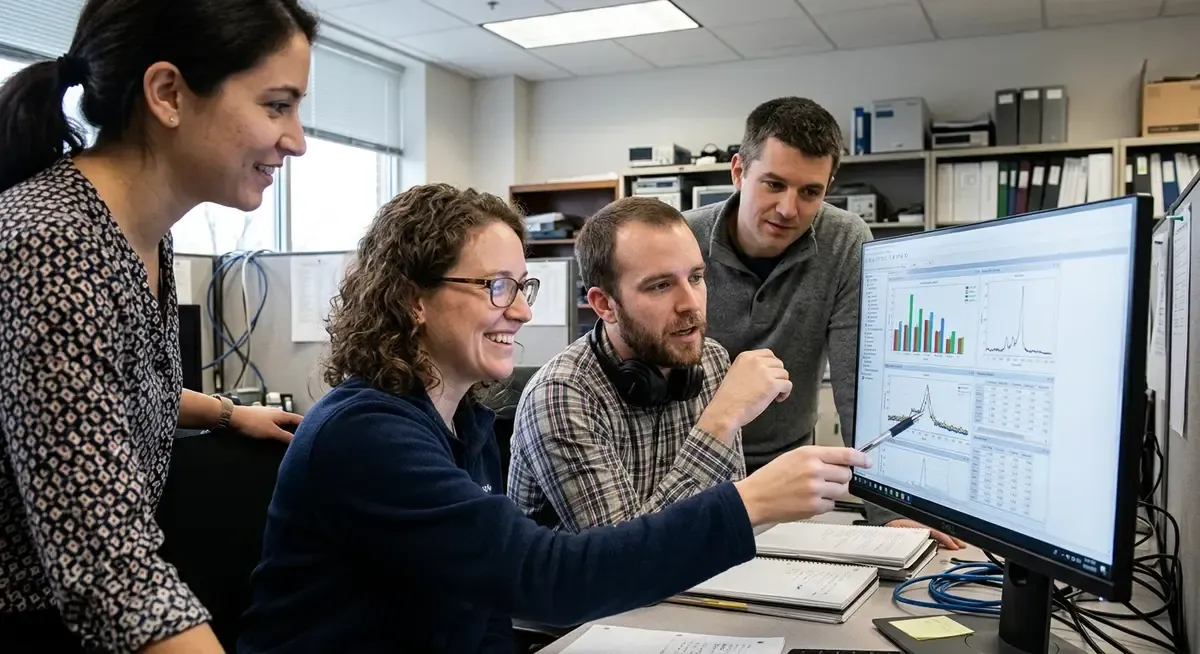
Editorial illustration for Michigan benchmark shows AI reasoning bottlenecks cloud operations
CloudOpsBench Exposes AI Reasoning Gaps in Cloud Ops
Michigan benchmark shows AI reasoning bottlenecks cloud operations
Researchers at the University of Michigan have released CloudOpsBench, an open-source benchmark built to test whether AI agents can actually handle the routine grind of cloud administration. The first version covers 45 tasks on AWS, each one written by DevOps engineers who do this work for a living: patching broken services, pulling unused resources, locking down access permissions, pushing updates, shutting down old projects. Nothing exotic, just the daily maintenance that keeps cloud infrastructure from falling apart.
The team, led by Ang Chen, ran current frontier models against these tasks and found plenty of room for failure. Claude Fable 5.1 and GPT-6 Astra were the top performers, but neither came close to solving everything. The benchmark runs every task twice, once in a live AWS environment and once in an emulator, so results can be checked against real infrastructure behavior rather than a sandbox approximation.
What stands out in the failure data is where things go wrong. The researchers traced most errors back to a specific weak point in how these agents approach a job, which the project's GitHub release and accompanying failure analysis break down in detail.
Claude Fable 5.1 solved 60 percent, GPT-6 Astra managed 53 percent. According to the team led by Ang Chen at the University of Michigan, the main problem isn't a lack of knowledge but reasoning. About 80 percent of failures happen because agents misjudge the scope of a task, don't check all the relevant services, or stop too early.
Why this matters
A 53-60 percent pass rate on 45 tasks is a rough grade for models being pitched as autonomous operators of production infrastructure. Ang Chen's team puts the blame squarely on reasoning, not knowledge gaps, which should worry anyone planning to hand an agent the keys to AWS. Knowing the right command isn't the issue; knowing when and whether to run it is.
That distinction matters a lot for founders building "self-healing" infrastructure products and for engineering teams evaluating whether to let agents touch IAM policies or decommission projects unsupervised. An 80 percent failure rate tied to misjudgment, not ignorance, suggests the current generation of models is better at reciting DevOps playbooks than actually applying judgment under real constraints. CloudOpsBench being open-source is the useful part here: it gives researchers a shared, concrete way to measure that gap instead of relying on vendor claims or anecdote.
Until scores on benchmarks like this climb well past the current ceiling, treating these agents as junior engineers who need review, not autonomous operators, seems like the sane default.
Related Reading
 Open Source
D&B rebuilds 642 million‑business database after AI agents hit limits
 Open Source
Box CEO Aaron Levie Says AI Will Drive "Biggest Cybersecurity Upgrade
 Open Source
Study: 6.7% of Deepfake Requests on Hugging Face Targeted Children
 From Archives
Bengaluru Leads India's FDE Talent at 34%; Pune 12%, Mumbai 11%
 From Archives
IndiaAI Mission Releases 3 Indigenous AI Models by Soket, ZenteiQ
Common Questions Answered
What is CloudOpsBench and what cloud tasks does it test?
CloudOpsBench is an open-source benchmark developed by University of Michigan researchers to evaluate whether AI agents can handle routine cloud administration tasks. The benchmark covers 45 tasks on AWS written by actual DevOps engineers, including patching broken services, removing unused resources, managing access permissions, deploying updates, and shutting down old projects.
Why did Claude Fable 5.1 and GPT-6 Astra fail most of the CloudOpsBench tasks?
According to Ang Chen's research team, the main reason for failures is not a lack of knowledge but poor reasoning capabilities in AI agents. Approximately 80 percent of failures occur because agents misjudge task scope, fail to check all relevant services, or stop executing too early in the process.
What performance scores did leading AI models achieve on CloudOpsBench?
Claude Fable 5.1 solved 60 percent of the CloudOpsBench tasks while GPT-6 Astra managed to solve 53 percent. These pass rates are considered concerning for AI models being positioned as autonomous operators of production infrastructure.
Why is the distinction between knowing commands and knowing when to use them important for cloud infrastructure?
The research shows that AI agents' failures stem from reasoning problems rather than knowledge gaps, meaning they may know the correct AWS commands but lack the judgment to determine when and whether to execute them. This distinction is critical for engineering teams evaluating self-healing infrastructure products and for founders building autonomous cloud operations tools.
Further Reading
- Cloud-OpsBench: A Reproducible Benchmark for Agentic Root Cause Analysis in Cloud Systems - arXiv
- How the benchmark works - CloudOpsBench
- Cloud-OpsBench: a reproducible State Snapshot benchmark for agentic root cause analysis - AI Infrastructure
- Can AI Agents Do Root Cause Analysis? What Cloud-OpsBench Measures - Groundy
- Cloud Opsbench - Lossless Group
