
Editorial illustration for Google backs 'vibe design' in Stitch as OAI juggles legal, IPO and Musk trial
Google Backs Stitch's Vibe Design Platform Revolution
Google backs 'vibe design' in Stitch as OAI juggles legal, IPO and Musk trial
The courtroom drama isn’t the only thing brewing in AI’s back alleys. As OpenAI wades through a Musk trial, a looming IPO, and a Microsoft partnership that feels more like a tightrope than a safety net, Google just counter-punched, not with a model, but with a mood. Stitch, its newly updated UI creation tool, is betting big on “vibe design.” It’s a calculated bet that the next frontier isn’t raw intelligence, but the feeling of it.
For Sam Altman’s crew, every new front in the AI war is a fresh legal headache they can ill afford. But Google’s move whispers a different strategy: make the interface so intuitive that the competition becomes irrelevant.
Last year, "Vibe coding" changed how the world built. Now, Google is hoping it can do the same for design.
The real story here isn’t Stitch’s aesthetic appeal or even Google’s play for design democracy. It’s the widening chasm between two strategies: one company betting on frictionless creation, the other drowning in friction of its own making. Google can afford to chase “vibe” because its legal docket is quiet and its revenue engine steady.
OpenAI, meanwhile, cannot afford to breathe. Every headline, Musk, the IPO, the Microsoft partnership gone sour, tightens the noose. Stitch is a signal, not a solution.
The future belongs to whoever can build a product without a lawsuit, a trial, or a shareholder revolt on the side. Right now, that’s not OpenAI.
Related Reading
Browse all Google news → Business & Startups
 Nordic pilot adds Gemini for Education, NotebookLM to boost AI literacy
 Business & Startups
 Kling launches Video O1, all-in-one model with MVL bridge using transformer
 Business & Startups
 DeepSeek Seeks More Capital Weeks After USD 7B Funding Round
 Related Topic
 NVIDIA and Google Cloud let developers scale AI from prototype to production
Market Trends
 Related Topic
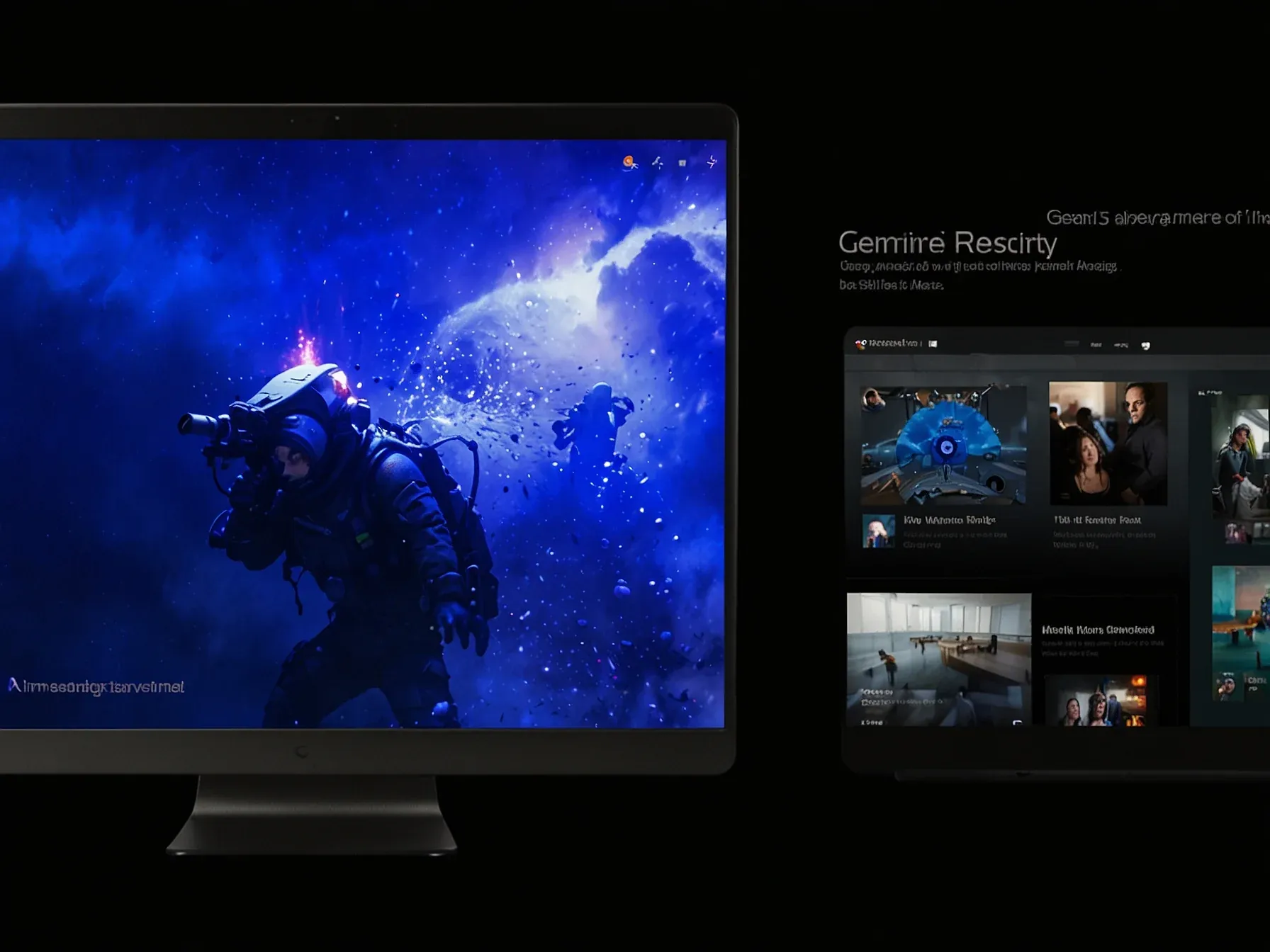
 Google tests visual 'magazine-style' UI for Gemini 3 Pro users
LLMs & Generative AI
 From Archives
 Simo warns OpenAI’s side quests like Adapt and GPT‑5.4 Mini/Nano distract focus
 From Archives
 World ID says 18 million verified users can link IDs to AI agents via Agent Kit
 From Archives
 Gemini 3 API adds cross‑tool context circulation, tool combos, Maps grounding
LLMs & Generative AI
 From Archives
 Google rolls out Gemini AI to all US users, free tier gets Personal Intelligence
LLMs & Generative AI
Common Questions Answered
How is Google's Stitch platform changing UI design approaches?
Google's Stitch introduces a 'vibe design' concept that aims to make UI creation more instinctive and conversational for designers. The platform promises to compress weeks of traditional UI work into a single interaction, potentially revolutionizing digital experience design.
What legal and business challenges is OpenAI currently navigating?
OpenAI is simultaneously managing a high-profile defamation trial involving Elon Musk, preparing for a potential public offering, and dealing with complex legal considerations. Additionally, the company's partnership with Microsoft is proving to be more complicated than a straightforward collaboration.
What unique capabilities does the new Stitch platform offer designers?
Stitch now includes advanced features like voice editing, agent interactions, and instant prototyping, which significantly streamline the UI design process. The platform aims to transform traditional design workflows by enabling designers to create digital experiences through more intuitive, conversational interactions.
Further Reading
- The Future of Vibe Design: An Exclusive Look at Google's Upcoming Stitch Tool — Coder Legion
- Exclusive: Early look at upcoming vibe design tool from Google — Testing Catalog
- From idea to app: Introducing Stitch, a new way to design UIs — Google Developers Blog
- Google Stitch: Complete Guide to AI UI Design Tool (2026) — ALM Corp
