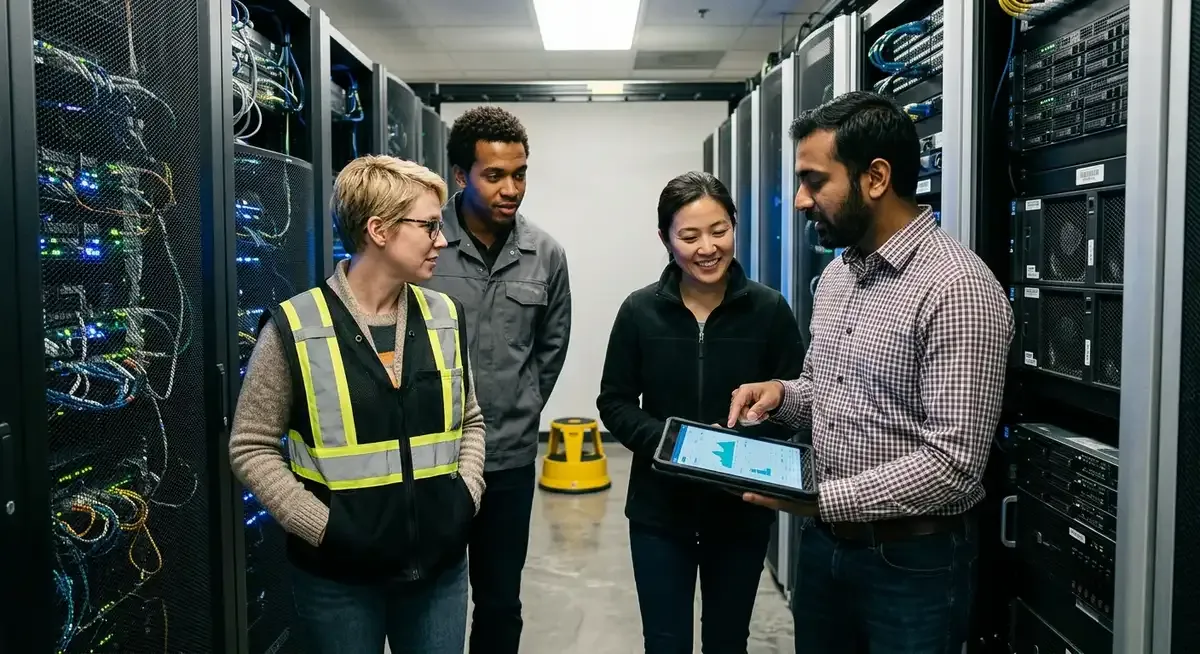
Editorial illustration for General Intuition CEO: A Single Foundation Model Will Redefine Robotics
One Foundation Model Will Transform Robotics: CEO
General Intuition CEO: A Single Foundation Model Will Redefine Robotics
Amulya Vishwanath spent seven years running product marketing for Nvidia's robotics platforms before leaving to start her own fund. Her read on the industry right now: robotics is stuck in what she calls its "Lego era." The basic pieces, actuators, robotic hands, software stacks, safety standards, are still being assembled from scratch, and nobody's agreed on the final shape yet.
That puts her at odds with a growing chorus in the field, including General Intuition CEO Pim de Witte, who told Equity earlier this year that robotics is on the verge of its own ChatGPT moment, the kind of sudden leap in capability that chatbots had in late 2022. De Witte's bet is that a single general foundation model will make most of today's specialized robotics work obsolete overnight.
Vishwanath isn't buying the timeline. On this episode of Equity, she talks with Dominic-Madori Davis about why she thinks the hardware and infrastructure gaps are bigger than the AI model problem, where she's writing checks as founder and managing partner of Techable VC, and what she's learned as one of the first women to spin out of Nvidia and launch an early-stage fund in physical AI, covering robotics, materials science and life sciences.
Amulya Vishwanath, who spent seven years leading product marketing for NVIDIA’s robotics platforms, says robotics is currently in its “Lego era,” with the basic building blocks like actuators, robotic hands, software, and safety standards still being rebuilt.
Why this matters
The disagreement between Vishwanath and de Witte isn't academic for anyone building robotics products right now. If Vishwanath is right that we're still in the "Lego era," founders chasing a single foundation model are betting on infrastructure that doesn't exist yet: actuators, hands, and safety standards that need years of unglamorous work before any model can generalize across them. That's a longer, costlier runway than the ChatGPT-moment narrative suggests, and it changes where capital and engineering talent should go.
Her seven years inside Nvidia's robotics platform team gives her view real weight; she's watched the hardware bottlenecks up close, not from a pitch deck. De Witte's bet, by contrast, assumes the hardware problem is secondary to the software one. We're skeptical of any claim that a single model will make specialized robotics work "redundant" when the physical substrate underneath it is still this unsettled.
Readers building in this space should watch which thesis actually attracts the next round of serious funding, that's the real signal, not the podcast debate itself.
Related Reading
 LLMs & Generative AI
 ChatGPT's 'Nerdy' tweak rewards goblin metaphors in answers, study finds
 LLMs & Generative AI
 Google to End Free Access to Gemini AI for Non-Subscribers
 LLMs & Generative AI
 AI Engineers Face Rising Costs, Need New Strategies for Efficiency
 From Archives
 Reflection's 501B Beam model is free on Ollama for a limited time
 From Archives
 Liquid AI releases multimodal d1-ultra, scores 65 on AA Decision Index
Common Questions Answered
What does Amulya Vishwanath mean by robotics being in its 'Lego era'?
Vishwanath describes robotics as being in a 'Lego era' because the fundamental building blocks—actuators, robotic hands, software stacks, and safety standards—are still being assembled from scratch without industry consensus on the final form. This means the basic infrastructure and standardization that the field needs haven't been established yet, unlike how Lego pieces are standardized and interchangeable.
How does Pim de Witte's vision for robotics differ from Amulya Vishwanath's perspective?
De Witte, as General Intuition CEO, believes that a single foundation model will redefine robotics, suggesting the field is ready for a transformative moment similar to ChatGPT's impact. This contrasts with Vishwanath's view that robotics is still in an early infrastructure phase where foundational components need years of development before any model can effectively generalize across different robotic systems.
What are the practical implications of the disagreement between Vishwanath and de Witte for robotics founders?
If Vishwanath is correct about the 'Lego era,' founders pursuing a single foundation model are betting on infrastructure that doesn't yet exist, requiring years of unglamorous work on actuators, hands, and safety standards. This would mean a longer and costlier development runway than the ChatGPT-moment narrative suggests, fundamentally changing how founders should approach their robotics product development strategy.
What was Amulya Vishwanath's professional background before starting her own fund?
Vishwanath spent seven years leading product marketing for NVIDIA's robotics platforms, giving her deep insider knowledge of the robotics industry. Her experience at NVIDIA positioned her to understand both the current state of robotics technology and the infrastructure gaps that still need to be addressed.
Further Reading
- Evolving Physical Intelligence via Embodied Foundation Models - arXiv
- EO-1: An Open Unified Embodied Foundation Model for General Robot Control - alphaXiv
- Embodied AI with Foundation Models for Mobile Service Robots - arXiv
- Robot Foundation Model Advances Embodied AI - OpenSourceForU
- Every 48 Hours, a New Embodied AI Model Arrived in June 2026 - eWEEK
