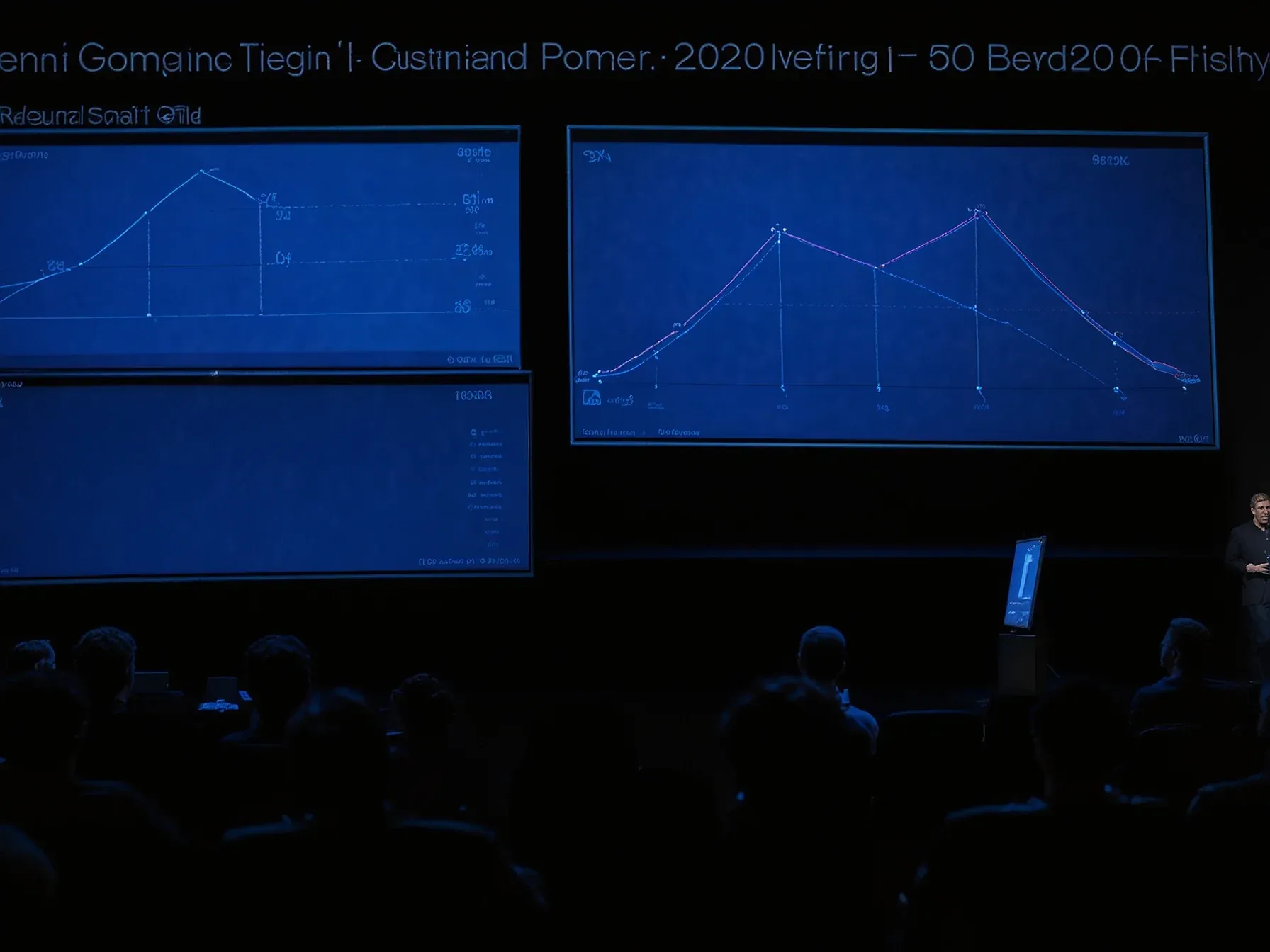
Editorial illustration for Google's Gemini 3 Pro Outperforms Rivals in Long-Term Planning and Returns
Gemini 3 Pro Crushes AI Rivals in Long-Term Planning
Gemini 3 Pro beats frontier models with long-horizon planning and higher returns
Google's latest model can actually finish a job. That's the claim. While other top AIs handle quick questions, they break down if a task requires planning over hours or dozens of steps.
Gemini 3 Pro is built for those long, tedious processes. It's designed to get from start to finish on complex workflows, which Google says results in better real-world outcomes. The company frames this as a shift from an AI that answers to an AI that acts.
Gemini 3 Pro demonstrates better long-horizon planning to generate significantly higher returns compared to other frontier models. This means Gemini 3 can better help you get things done in everyday life. By combining deeper reasoning with improved, more consistent tool use, Gemini 3 can take action on your behalf by navigating more complex, multi-step workflows from start to finish -- like booking local services or organizing your inbox -- all while under your control and guidance.
Google AI Ultra subscribers can try these agentic capabilities in the Gemini app with Gemini Agent today. We've learned a lot improving Gemini's agentic capabilities, and we're excited to see how you use it as we expand to more Google products soon.
The test will be whether it works. The promise of an AI assistant that books a plumber or sorts a chaotic inbox has been a persistent mirage. Google is now telling its paying Ultra subscribers they can test this "agentic" version in the Gemini app.
The company admits it's still learning. But the intent is clear: they want to move these capabilities into more products, quietly handling the boring multi-step tasks nobody wants to do. If it functions, it's a utility.
If it fails, it's just another chatbot with grand promises.
Related Reading
Browse all Google news → LLMs & Generative AI
 ChatGPT's 'Nerdy' tweak rewards goblin metaphors in answers, study finds
 LLMs & Generative AI
 Google to End Free Access to Gemini AI for Non-Subscribers
 LLMs & Generative AI
 AI Engineers Face Rising Costs, Need New Strategies for Efficiency
 Related Topic
 NVIDIA and Google Cloud let developers scale AI from prototype to production
Market Trends
 Related Topic
 Google's FACTS benchmark shows 70% factuality ceiling across four tests
Research & Benchmarks
 From Archives
 Learn to Classify Reviews, Tweets, and Feedback with BERT on Hugging Face
 From Archives
 Massive Cloudflare outage hits X, ChatGPT and Downdetector; fix in progress
 From Archives
 Google deploys new AI model to improve weather forecasts for users
Market Trends
 From Archives
 Google AI Mode auto-creates Canvas itineraries with flights, hotels and activities
Common Questions Answered
How does Gemini 3 Pro demonstrate improved long-horizon planning capabilities?
Gemini 3 Pro shows superior long-term planning by generating significantly higher returns and navigating complex multi-step workflows more effectively than previous AI models. The system can handle intricate tasks like booking local services or organizing inboxes with greater consistency and deeper reasoning.
What makes Gemini 3 Pro different from other AI frontier models in task execution?
Unlike previous AI models, Gemini 3 Pro can combine deeper reasoning with more consistent tool use to complete complex, multi-step tasks. The model excels at translating advanced reasoning into actionable steps while maintaining user control and guidance throughout the process.
What practical applications does Gemini 3 Pro's advanced planning suggest?
Gemini 3 Pro's capabilities indicate potential real-world applications such as autonomously managing service bookings, organizing digital workflows, and executing complex administrative tasks with improved accuracy and consistency. The model represents a significant step towards more practical and reliable artificial intelligence.
