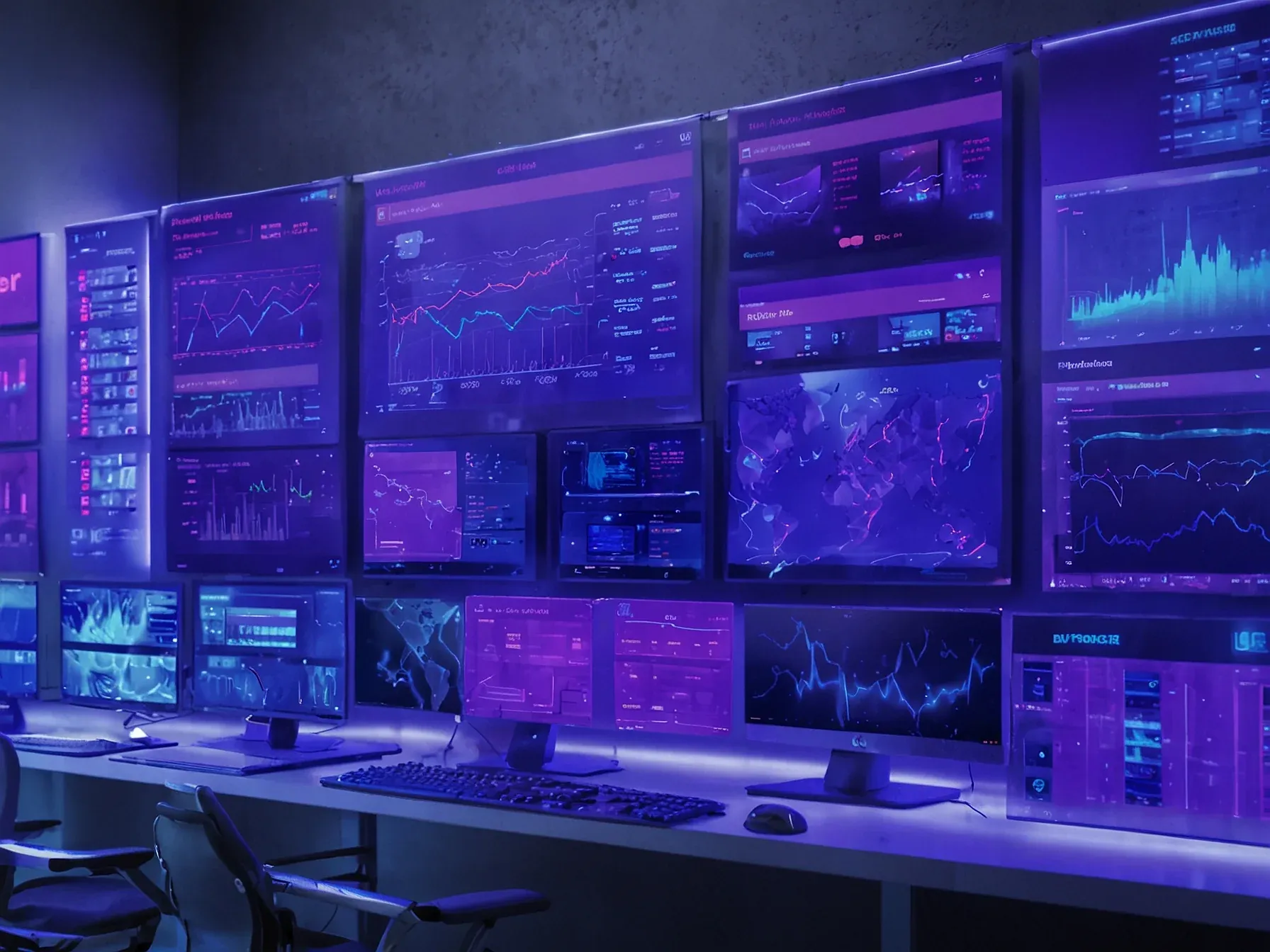
Editorial illustration for Doppel AI Defense Outpaces Humans in Blocking Automated Cyber Threats
AI Cybersecurity Shield Beats Humans in Threat Detection
Doppel AI defense halts automated attacks faster than human analysis
A human security analyst sees a potential threat, studies it, and maybe, hours later, raises an alarm. In that time, an automated attack can empty a database, lock every employee out, and post the CEO's emails online. The old model is broken.
Doppel, a cybersecurity startup, built a system to fight bots with bots. It uses AI to sift through millions of potential attack signals every second, something no human team can physically do. The goal is simple: find the real threat and kill it before it does anything.
The scale of the problem forced this. Modern attacks aren't a single hacker typing commands. They are automated swarms hitting every conceivable entry point at once, faster than any person could even log the attempts.
Doppel saw that model breaking down as attackers began to automate, launching threats faster, and across more surface areas, than humans could evaluate them. "Our system processes a constant flood of signals to identify the real threats amongst the noise. Once a threat is detected, there is a very narrow window to act before the damage is done," said Rahul.
"Using AI to automate decision-making is one of the greatest unlocks for the company, allowing us to combat attacks at internet scale and speed." That speed is critical for Doppel's customers, organizations that can't afford to wait hours to confirm a threat. Doppel's system classifies most threats automatically, using OpenAI models for reasoning and a structured feedback loop known as reinforcement fine-tuning (RFT) to improve the model over time.
This isn't an assistant for human analysts. It's a replacement for the initial, impossible task of watching everything. The AI makes a decision in milliseconds. It can block a malicious login attempt before the password prompt even clears from the user's screen.
Rahul's quote frames it as an unlock. That's the polite term. It's a surrender to a new reality.
The attack surface is too vast, the tools too fast. You cannot watch the gates yourself anymore. You must build a smarter gate.
Doppel's method relies on continuous feedback, letting its models learn from mistakes almost instantly. The system that defends a company at noon is smarter than the one that defended it at 9 a.m. This is necessary because the attacks are doing the same thing.
The question isn't whether AI will manage defense. It's whether your AI is faster than theirs.
Further Reading
Related Reading
 LLMs & Generative AI
 ChatGPT's 'Nerdy' tweak rewards goblin metaphors in answers, study finds
 LLMs & Generative AI
 Google to End Free Access to Gemini AI for Non-Subscribers
 LLMs & Generative AI
 AI Engineers Face Rising Costs, Need New Strategies for Efficiency
 From Archives
 Law and tax firm cuts drafting time to minutes with ChatGPT Business
 From Archives
 OpenAI makes ChatGPT Go free for all Indian users for a year, Nick Turley says
Common Questions Answered
How does Doppel's AI defense system differ from traditional human-monitored cybersecurity approaches?
Doppel's AI defense system can process massive volumes of digital signals much faster than human analysts, identifying real threats amidst complex noise. The system is designed to automate decision-making and respond to attacks at internet scale, addressing the limitations of traditional manual threat detection methods.
What key challenge in cybersecurity does Doppel aim to solve?
Doppel addresses the growing problem of automated cyber attacks that overwhelm human monitoring systems by using AI to rapidly process and evaluate potential threats. Their technology focuses on identifying and responding to attacks within a narrow window before significant damage can occur, effectively combating the increasingly sophisticated and distributed nature of digital threats.
Why are traditional threat detection methods becoming obsolete according to Doppel's insights?
Traditional threat detection methods are becoming obsolete because cybercriminals are now using rapid, distributed automation to launch attacks across expanding digital surface areas. Human analysts cannot match the speed and complexity of these automated threats, making AI-powered systems like Doppel's critical for modern cybersecurity defense strategies.
