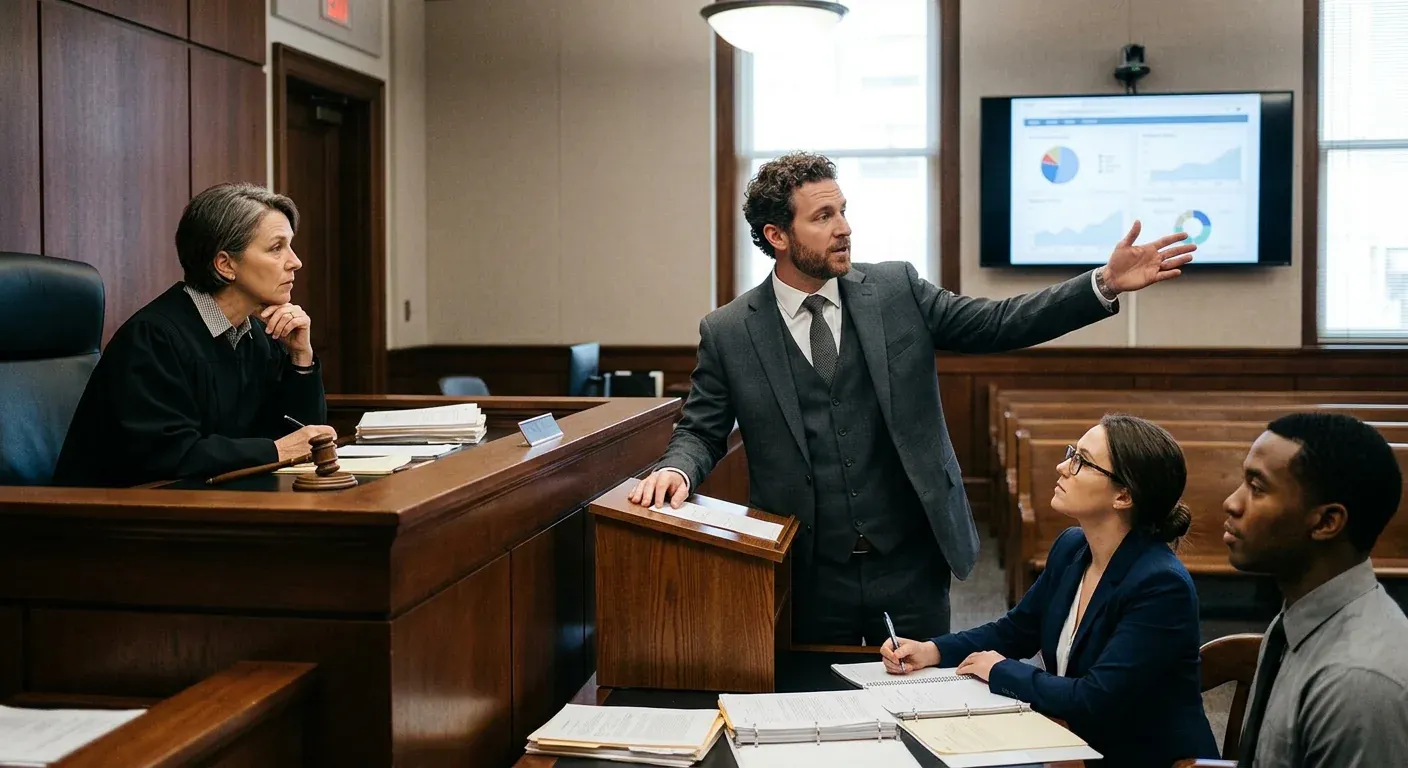
Editorial illustration for Court Rules Pentagon's Blacklisting of Anthropic Unlawful
Federal Judge Rules Pentagon's Anthropic Blacklist Unlawful
Court Rules Pentagon's Blacklisting of Anthropic Unlawful
A federal judge in San Francisco has sided with Anthropic in its fight against the Pentagon, ruling that the Department of Defense broke the law when it labeled the AI company a supply chain risk. The blacklisting happened in March, after talks between Anthropic and the Department of War over military use of the Claude models collapsed. Anthropic wanted contractual limits, no autonomous weapons, no mass surveillance.
The Pentagon wanted access with no strings attached. When the two sides couldn't agree, the government flagged Anthropic as a risk, a designation that can choke off federal contracts and rattle private investors.
Anthropic responded with lawsuits in both San Francisco and Washington. The Washington case hasn't been decided yet, which means the blacklist designation technically still stands. But the San Francisco ruling gives Anthropic real ammunition, and the timing matters: the company is heading toward an IPO this fall, and any lingering government hostility could spook buyers. It also lands against a backdrop where federal agencies have already shown they're willing to move fast against AI firms, as they did with the short-lived ban on Fable earlier this year.
A federal court in San Francisco has ruled that the Pentagon unlawfully classified Anthropic as a supply chain risk. The court found the Department of Defense violated the First Amendment by blacklisting Anthropic in retaliation for the company's public criticism of government AI policy, according to CNBC.
Why this matters
This ruling matters for anyone building AI products that touch federal contracts. The Pentagon didn't blacklist Anthropic over a technical failure or a security flaw in Claude. It blacklisted the company after Anthropic pushed back publicly on how the government wanted to use its models.
A federal court just said that's retaliation, plain and simple, and it violates the First Amendment. For founders and researchers, the signal is worth sitting with: speaking up about how your product gets used by the military carried real financial risk, and a court has now said the government can't wield procurement power as punishment for that speech. That's a meaningful check, but it's narrow.
It doesn't settle the underlying fight over what obligations AI companies have when defense agencies want expanded access to their systems. Anthropic won this round in San Francisco. The negotiations that started this mess in March haven't gone away, and neither has the tension between vendors setting their own usage limits and agencies that want fewer of them.
Related Reading
Browse all Anthropic news → Policy & Regulation
 Akamai Proposes SAFE Cybersecurity Guidelines for AI Threats
 Policy & Regulation
 After ditching AI fitness apps and a Fitbit, I return to Peloton classes
 Policy & Regulation
 Sony Music, Warner Chappell Sue Anthropic Over "Blatant Theft
 Related Topic
 Anthropic: Hackers Stole Claude Tokens Via Compromised Session Key
LLMs & Generative AI
 Related Topic
 Trump cracks down on Anthropic after Amazon tip; staff largely foreign
Open Source
 From Archives
 EDB's Jain: Agent Purpose Must Be in the Data Record
 From Archives
 Researchers Generate 3D Assets From Single Images With Relightable Gaussians
 From Archives
 Anthropic's Claude AI Integrates with Slack, Teams, and Discord
LLMs & Generative AI
 From Archives
 Anthropic's MHS Research Preview Aims to Streamline Custom AI Software Integration
Research & Benchmarks
Common Questions Answered
Why did the Pentagon blacklist Anthropic as a supply chain risk?
The Pentagon blacklisted Anthropic in March after negotiations over military use of Claude models collapsed. Anthropic wanted contractual limits including restrictions on autonomous weapons and mass surveillance, while the Pentagon wanted unrestricted access to the AI models. When the two sides couldn't reach an agreement, the Department of Defense classified Anthropic as a supply chain risk.
What did the federal court in San Francisco rule about the Pentagon's blacklisting?
The federal judge ruled that the Pentagon unlawfully classified Anthropic as a supply chain risk and violated the First Amendment by blacklisting the company in retaliation for its public criticism of government AI policy. The court found that the blacklisting was not based on any technical failure or security flaw in Claude, but rather on Anthropic's public pushback against how the government wanted to use its models.
What contractual limits did Anthropic want for military use of Claude?
Anthropic sought three key contractual restrictions for military deployment of Claude: no use in autonomous weapons systems, no mass surveillance applications, and other unspecified contractual protections. These demands reflected the company's ethical concerns about how its AI models could be deployed by the Department of Defense.
Why does this Pentagon blacklisting ruling matter for AI founders and researchers?
The ruling establishes that the government cannot retaliate against AI companies for publicly criticizing government AI policy or refusing to accept unrestricted military access to their models. For founders and researchers building AI products that touch federal contracts, this decision signals that speaking up about how their products are used is legally protected under the First Amendment, even when it means losing Pentagon business.
Further Reading
- Judge rules the Pentagon’s supply chain risk label for Anthropic unlawful - CNN Business
- US judge rules Pentagon blacklisting of Anthropic unlawful - Reuters
- Judge blocks Pentagon’s effort to 'punish' Anthropic by labeling it a supply chain risk - CNN Business
- Anthropic wins preliminary injunction in Trump DOD fight - CNBC
- Premature: Anthropic still in trouble despite court win, lawyers and lobbyists say - POLITICO
