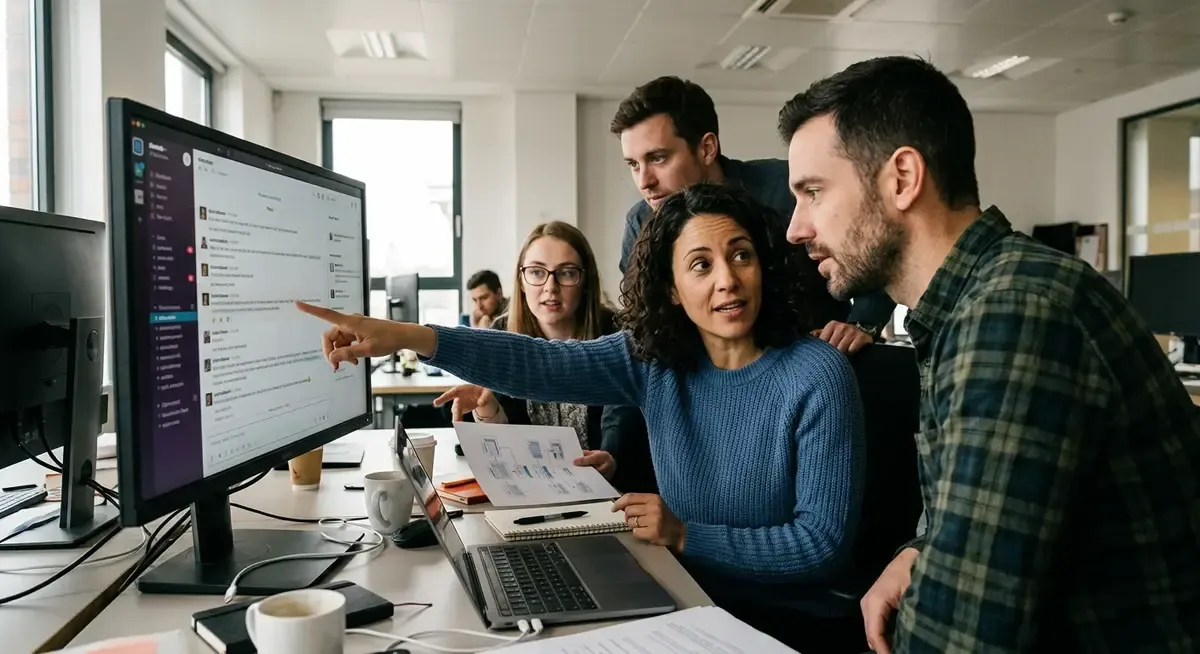
Editorial illustration for Anthropic's Claude AI Integrates with Slack, Teams, and Discord
Claude AI Integrates with Slack, Teams, Discord
Anthropic built its reputation on getting AI models to talk to software. Model Context Protocol, released as a connector tool, ended up becoming something close to a universal translator between AI agents and the apps people already use. Now the company wants that same trick to work on physical machines.
The new release is called the Model Hardware Standard, and it's built for hardware, not software. Microscopes, robotic arms, assembly-line gear. The kind of equipment that currently needs a specialist with weeks of free time to wire up to any kind of automated system. Anthropic says its new standard cuts that down to hours, sometimes minutes, by having machine owners describe their equipment in plain language, which then gets turned into a file an AI agent can read and act on.
The company already ran a test case: Claude figured out how to align a laser through trial and error, then wrote its own script to repeat the process automatically. An open-source release is coming, which means this won't stay confined to Anthropic's own tools for long.
The new Model Hardware Standard plugs agents into the microscopes, robot arms, and assembly lines the world already runs, a simple layer that could suddenly make every machine AI-ready.
Why this matters
MCP won a quiet but decisive battle: agents needed one way to talk to software, and Anthropic's connector became that default. The Model Hardware Standard is the same bet applied to physical gear, microscopes, robot arms, assembly lines, the stuff that never had an API in the first place. If this catches on the way MCP did, we're looking at a future where an agent doesn't just draft your Slack message, it also queues a lab instrument or nudges a factory line, using the same protocol either way.
That's a big claim to back with one standard, and we'd want to see actual hardware vendors, not just Anthropic's demo partners, commit before calling it inevitable. For developers and founders building agent tooling, the practical move is to watch which manufacturers adopt it first, since that list will tell you whether this becomes plumbing everyone builds on or another standard fighting for oxygen. The Slack, Teams, and Discord integrations are the easy part; getting a robot arm to trust a language model is the real test.
Related Reading
Browse all Anthropic news → LLMs & Generative AI
 ChatGPT's 'Nerdy' tweak rewards goblin metaphors in answers, study finds
 LLMs & Generative AI
 Google to End Free Access to Gemini AI for Non-Subscribers
 LLMs & Generative AI
 AI Engineers Face Rising Costs, Need New Strategies for Efficiency
 Related Topic
 Claude gains shared context in Excel, PowerPoint; Microsoft adds Copilot Cowork
AI Tools & Apps
 Related Topic
 Trump cracks down on Anthropic after Amazon tip; staff largely foreign
Open Source
 From Archives
 New CIFQA Framework Uses Multi-Agent LLMs for Financial Queries
 From Archives
 Google’s AI Notebook app adds full-text access to over 100,000 books
 From Archives
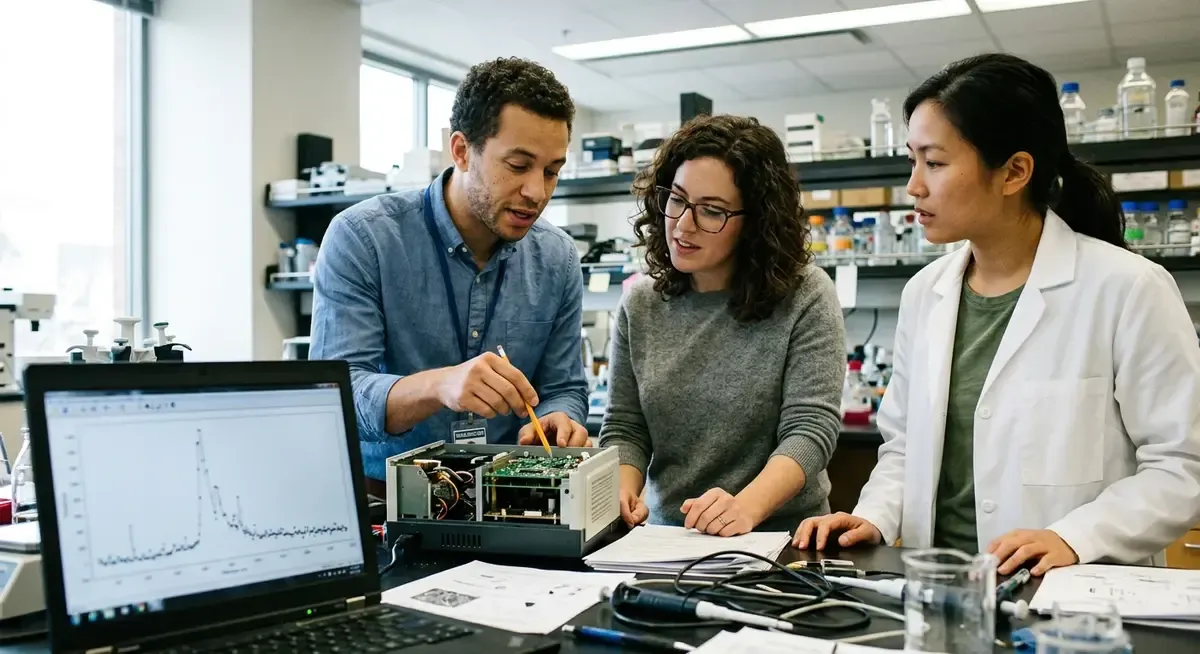
 Anthropic's MHS Research Preview Aims to Streamline Custom AI Software Integration
Research & Benchmarks
 From Archives
 Anthropic, OpenAI to speak at TechCrunch Disrupt 2026
Open Source
Common Questions Answered
What is the Model Hardware Standard that Anthropic released?
The Model Hardware Standard is Anthropic's new connector tool designed to integrate AI agents with physical hardware equipment like microscopes, robotic arms, and assembly-line machinery. Unlike the Model Context Protocol which connects AI to software applications, this standard creates a universal interface that makes machines AI-ready by providing a simple layer between AI agents and hardware that previously lacked API capabilities.
How does the Model Context Protocol relate to Anthropic's new hardware integration?
The Model Context Protocol (MCP) was Anthropic's earlier release that successfully became a universal translator between AI agents and software applications like Slack, Teams, and Discord. The Model Hardware Standard applies the same successful approach to physical equipment, extending Anthropic's vision of seamless AI integration from software to the machinery and instruments that industries already operate.
What types of equipment can be integrated with the Model Hardware Standard?
The Model Hardware Standard is designed to work with physical machinery and laboratory equipment including microscopes, robotic arms, and assembly-line gear. These are the types of equipment that traditionally never had API capabilities and required specialized integration, but can now be made AI-ready through this new standard.
Why does Anthropic believe the Model Hardware Standard will be significant?
Anthropic believes the Model Hardware Standard will be significant because it applies the same successful model that made MCP the default connector for software to physical hardware across industries. If adopted widely like MCP was, it would enable AI agents to perform both digital tasks like drafting messages and physical tasks like queuing lab instruments or adjusting factory lines using the same protocol.
Further Reading
- Claude and Slack - Anthropic
- Introducing Claude Tag - Anthropic
- Connectors overview - Claude.ai Documentation - Claude.ai Documentation
- Model Context Protocol (MCP) - Claude.ai Documentation - Claude.ai Documentation
- MCP connector - Claude Platform Docs - Claude Platform Docs
