
Editorial illustration for Congress Splits on AI Regulation, Partisan History Shapes Debate
AI Regulation Battle: Congress Splits Along Partisan Lines
Both parties reject AI moratorium, citing past partisan precedents
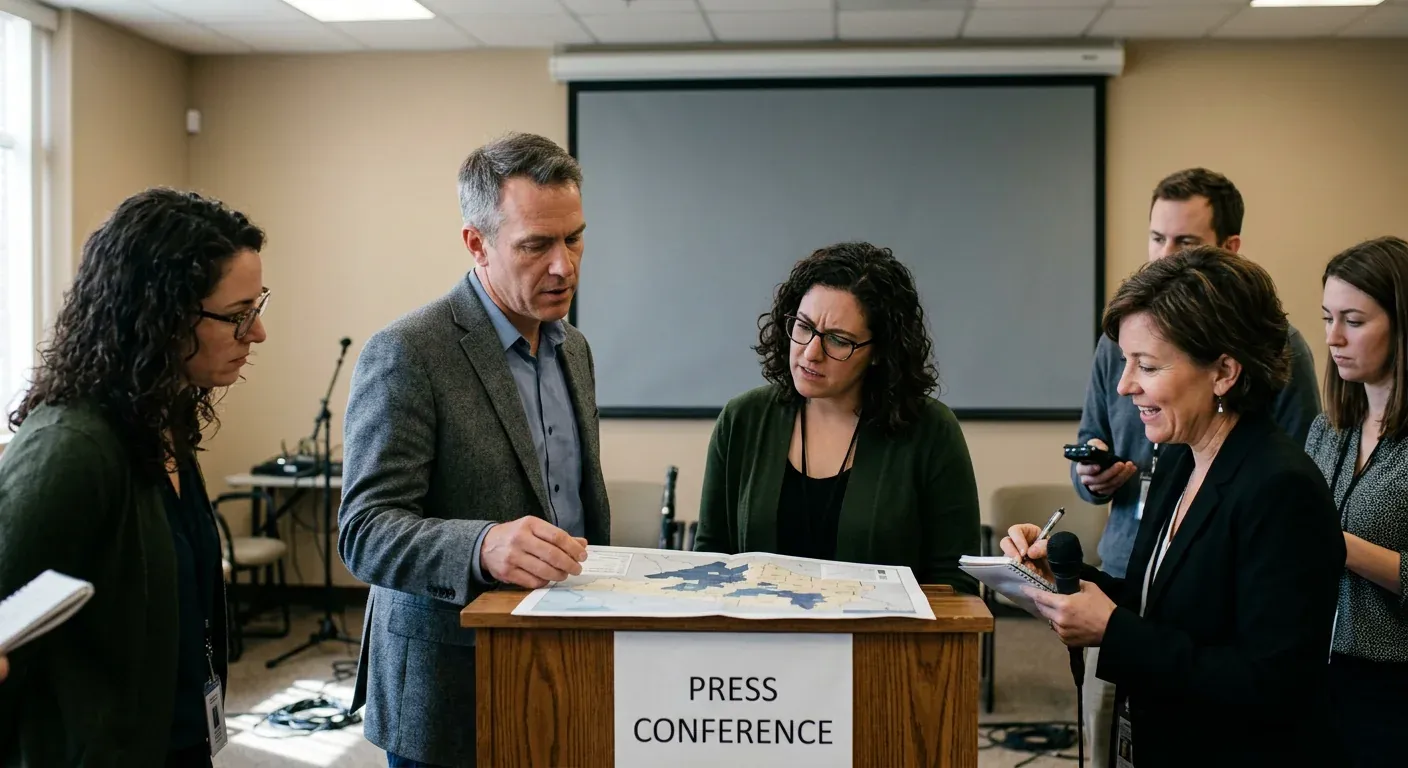
In Texas, far-right Republicans and far-left Democrats are holding hands. That’s not a metaphor for gridlock, it’s a snapshot of a rare, bipartisan consensus now hardening against an AI moratorium. The usual partisan reflexes have been suspended.
Lawmakers who can’t agree on voting rights or border policy are suddenly singing from the same hymn sheet when it comes to regulating artificial intelligence. Why? Because they’ve both seen this movie before.
Past precedents, from特朗普-era tech battles to Obama-era privacy fights, taught them that a blanket pause hands advantage to foreign adversaries and entrenches the very incumbents they distrust. So they’re rejecting the pause, not out of reckless ambition, but out of hard-won political memory. The result is a curious alliance: the spectrum’s extremes, united in their hatred of a moratorium.
We've seen this in a few instances in the Trump administration with Republicans here in power. But mostly, I've seen it on AI because I think it's an issue that these lawmakers want to get ahead of and make sure they're protecting their citizens. To be honest with you, I've been pleasantly surprised and somewhat encouraged by the bipartisan nature of this effort.
The fact that you have these very far-right Republicans in the legislature in Texas and these far-left Democrats getting together on this and joining hands has been pretty spectacular. So I think that really shows how powerful this movement can be.
And so, the very mechanism of partisan gridlock, the precedent of punishing the other side’s regulatory overreach, now becomes the shield for a bipartisan embrace of unfettered AI development. The left fears a Republican moratorium would weaponize caution; the right dreads a Democratic pause as a backdoor to control. Neither trusts the other to hold the knife, so both refuse to sheath it.
This is not a truce; it is a hostage standoff where the hostage is the public interest. The irony is sharp: a Congress that cannot agree on lunch has found unanimous contempt for a timeout. What emerges is not wisdom, but a fragile, reactive cohesion, a pause rejected not because it is unwise, but because the other side might have proposed it first.
The question that lingers, unasked in the clamor: if the only thing uniting this chamber is fear of the other party, what happens when the AI itself begins to run faster than either side’s politics can chase?
Related Reading
 Policy & Regulation
 Akamai Proposes SAFE Cybersecurity Guidelines for AI Threats
 Policy & Regulation
 After ditching AI fitness apps and a Fitbit, I return to Peloton classes
 Policy & Regulation
 Sony Music, Warner Chappell Sue Anthropic Over "Blatant Theft
 From Archives
 OpenAI, Anthropic and Block Form Foundation to Advance Action-Based AI Agents
 From Archives
 OpenAI drops 'cameo' label from Sora app after legal action, called 'characters
Common Questions Answered
How are Republicans and Democrats finding common ground on AI regulation?
Despite traditional political divisions, lawmakers from both parties are showing surprising alignment on technological oversight of AI. The debate is characterized by a shared desire to proactively protect citizens from potential technological risks, transcending typical partisan boundaries.
What makes AI regulation different from other policy debates in Congress?
AI regulation appears to be a unique policy area where far-right Republicans and far-left Democrats are finding unexpected collaboration. The issue seems to be driven by a mutual interest in getting ahead of technological challenges and implementing protective measures before potential risks escalate.
What historical precedent exists for bipartisan tech policy collaboration?
The Trump administration provided some early examples of cross-party technological oversight efforts. The current AI regulation discussions represent an even more pronounced instance of bipartisan cooperation, with lawmakers prioritizing citizen protection over traditional political divides.
Further Reading
- AI Regulation and Federalism: What the Moratorium (That Wasn't) Debate Revealed — George Washington University Regulatory Studies Center
- Moratoriums and Federal Preemption of State Artificial Intelligence Laws Pose Serious Risks — Center for American Progress
- AI Policy Already Exists, We Just Don’t Call It That: Generally Applicable Law for New Technology — Cato Institute
- Debate Over Regulating AI Remains Despite Being Stripped From Tax Bill — 13 WHAM/ABC via Northeastern University
- Eliminating State Law ‘Obstruction’ of National Artificial Intelligence Policy – Part I — Yale Journal on Regulation
